
Finance Teams Now Spend a Quarter of Their Week Fact-Checking AI, New Datarails Survey Finds
Source: PR Newswire
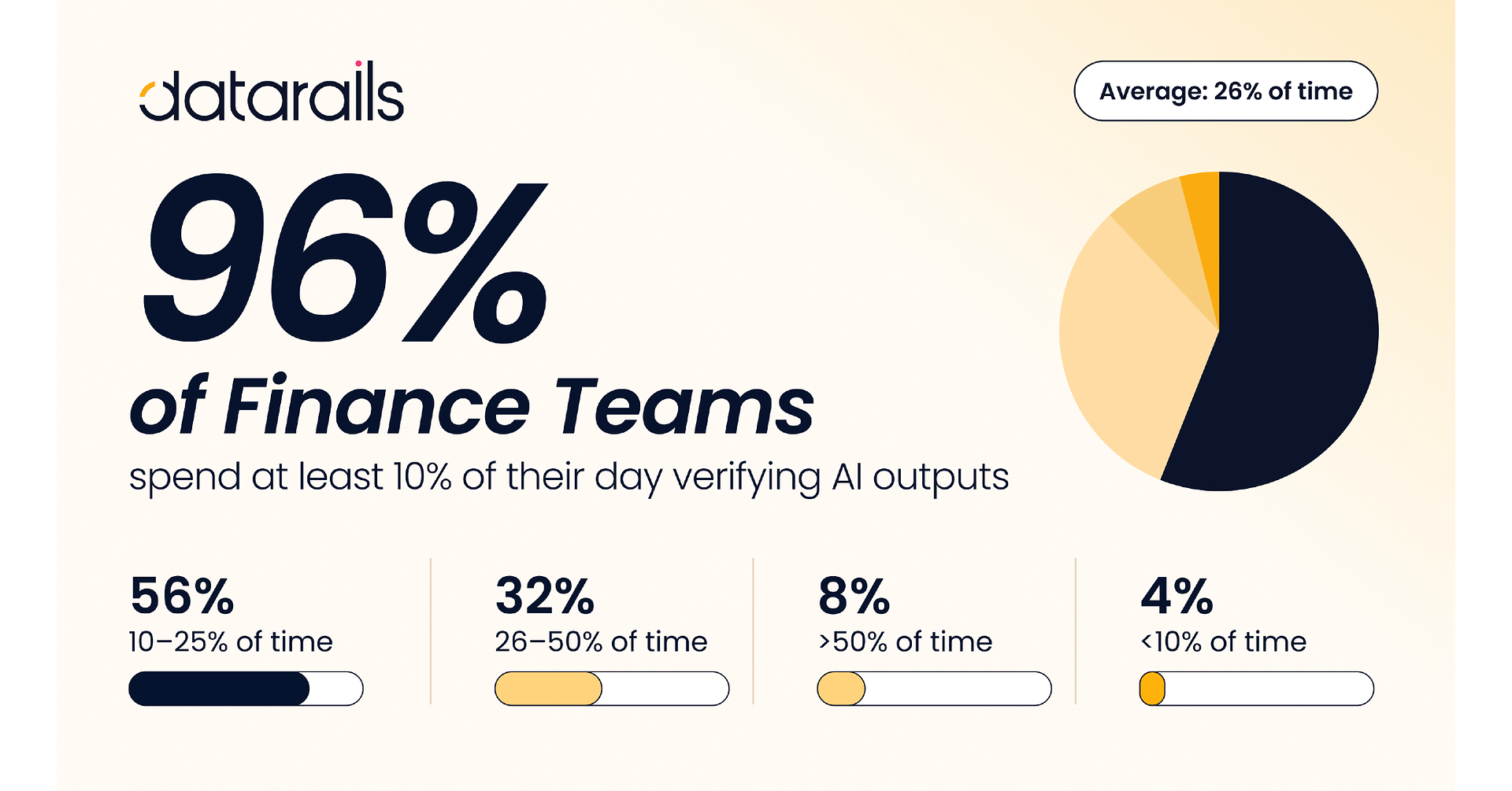
A July 2026 survey of 270 U.S. CFOs found AI use universal, but 96% spend at least 10% of their work time verifying or correcting finance AI outputs; 75% cite auditability as a barrier to trust. While 53% plan to expand AI licenses in the next 12 months and 60% are redeploying staff to higher-value work, just 7% say their finance function is fully ready for AI across workflows and only 4% trust AI to produce board-ready reports without human review. The findings point to continued adoption alongside material verification, data-governance and readiness gaps.
Analysis
The investable signal is not near-term AI headcount reduction; it is a longer, slower monetization path centered on governed data, workflow integration and audit trails. For Microsoft (MSFT), broad Copilot exposure inside finance workflows supports seat retention and cross-sell, but use of multiple LLMs and persistent human review weaken the case that license growth converts quickly into measurable labor savings or pricing power. Verification may also shift value toward data integration and controls vendors, including Datarails, rather than accrue solely to model providers. This is a vendor-sponsored survey of large U.S. organizations, not evidence of MSFT-specific bookings, renewal rates or realized productivity; avoid translating stated license plans directly into revenue estimates.
Over 1–3 months, watch enterprise software commentary for AI seat expansion versus realized usage, renewal/upsell, and customer ROI. Over 6–18 months, the key test is whether governed data layers make outputs repeatable enough to reduce reconciliation and review hours; if not, AI remains an added cost and control burden. The contrarian point: high adoption can coexist with weak economic value, so adoption statistics may overstate monetization. Conversely, finance’s low tolerance for error could make auditability a durable enterprise differentiator, not a reason to abandon AI. Thesis weakens if MSFT reports accelerating paid Copilot conversion and customer productivity gains; it is falsified if license growth fails to translate into recurring revenue/retention or if governance failures trigger material customer pullbacks.
AllMind Terminal
AI-powered research, real-time alerts, and portfolio analytics for institutional investors.
Request TrialMarket Sentiment
Overall Sentiment
mixed
Sentiment Score
0.00
Key Decisions for Investors
- No trade from this survey alone: keep MSFT exposure tied to company-level evidence, not reported CFO intentions. Track Copilot paid-seat conversion, renewal/expansion commentary, and quantified customer productivity claims at upcoming earnings and enterprise-software events.
- Treat finance data governance and auditability vendors, including Datarails, as a watchlist theme rather than a trade: verify independent customer adoption, recurring revenue growth, retention, and whether products reduce review/reconciliation time before underwriting winners.
- For the next 1–3 months, monitor whether AI license expansion is accompanied by disclosed usage and ROI rather than just budget allocation. A widening gap between spend and demonstrable productivity would argue against extrapolating AI adoption into software-sector earnings growth.
More News
- US stock market hits all-time high as investors bet big on AI
- Google teams with nuclear power giant to give reactors a tune-up
- Why is Broadcom stock rallying today?
- Meta Muse gives AMD a boost as AI momentum shifts to personal agents
- How the S&P 500 can be at record highs, while the market remains oversold
- Unsure how long this AI bull has? Bonds now offer a cushion at the best values in years