
Trump’s SEC wants to allow fund managers to charge extra fees for better performance. Here’s why it’s a terrible idea.
Source: MarketWatch
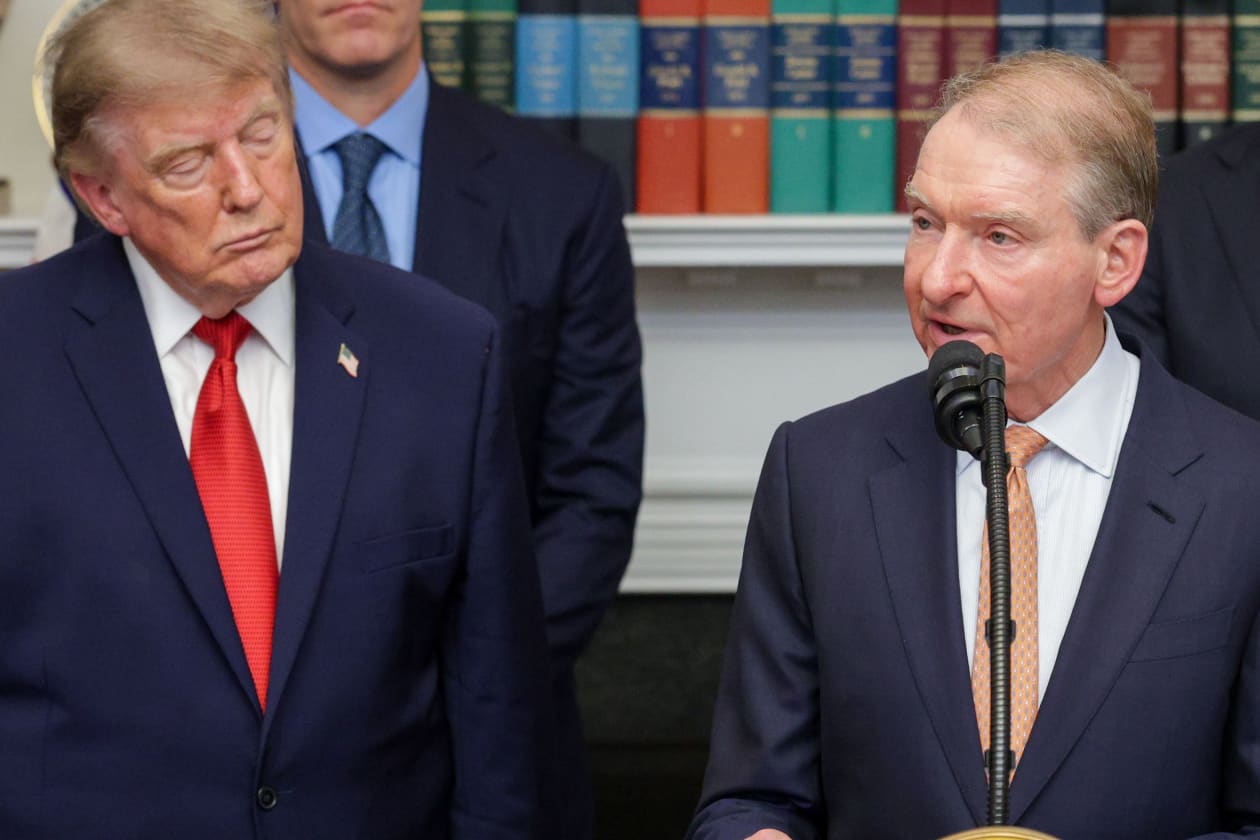
The SEC under the Trump administration has proposed allowing retail fund managers to charge additional performance-based fees. The article argues the change could harm 401(k) investors, warning that high performance-fee structures are likely to be detrimental in practice despite their theoretical appeal. The proposal could affect fee structures and investor protections across retail mutual-fund products.
Analysis
The proposal is more consequential for asset-gatherers than for public-market earnings near term: it potentially opens a higher-fee retail channel for alternative managers, but distribution economics—not investment skill—will determine value capture. Firms with established wealth platforms and permanent-capital products, including Blackstone (BX), KKR (KKR), Apollo (APO), Ares (ARES) and Blue Owl (OWL), are structurally better positioned than traditional long-only managers because they already have private-credit, infrastructure and semi-liquid vehicles that can be packaged for retirement accounts. The second-order risk is that a retail-performance-fee regime increases scrutiny of benchmarking, valuation marks and liquidity mismatches, raising future compliance costs and litigation tail risk for the same alternatives complex.
Over the next 1-3 months, this is principally a rulemaking and lobbying catalyst, not an earnings catalyst; the market should not capitalize hypothetical fee revenue before final language clarifies eligibility, fee caps, disclosure, high-water marks, clawbacks and plan-sponsor fiduciary protections. A permissive final rule could support 6-18 month multiple expansion for alternative managers by enlarging addressable defined-contribution assets, particularly private credit where fee-bearing AUM growth is already central to valuations. Conversely, a restrictive fiduciary framework or political backlash following poor retail outcomes would favor low-cost incumbents—Vanguard's private ownership limits direct expression, leaving T. Rowe Price (TROW) and Franklin Resources (BEN) as imperfect listed beneficiaries of a cost-and-transparency rotation.
Contrarian view: the incremental economic opportunity may be overstated. Defined-contribution consultants and recordkeepers are likely to impose institutional-style fee hurdles, while performance fees can reduce net returns precisely when retail adoption needs a clean value proposition. The more durable implication may be consolidation: scaled alternative platforms can absorb reporting, valuation and servicing costs, while smaller private-market managers lacking distribution become acquisition candidates or lose shelf access.
AllMind Terminal
AI-powered research, real-time alerts, and portfolio analytics for institutional investors.
Request TrialMarket Sentiment
Overall Sentiment
mildly negative
Sentiment Score
-0.35
Key Decisions for Investors
- Maintain a 6-12 month relative long BX/short TROW basket only after the SEC publishes operative fee and disclosure terms; BX has the strongest retail-distribution optionality, while TROW faces greater fee-pressure risk. Falsify if final rules impose tight fee caps, broad liquid-fund eligibility, or BX reports no acceleration in perpetual-capital inflows.
- Do not add directional exposure to APO, ARES or OWL solely on the proposal. Set an alert for final-rule publication and subsequent quarterly disclosures of retirement-channel fundraising, fee-related earnings margins and net inflows; these are required to convert regulatory optionality into an investable earnings revision.
- For portfolios already long alternatives, buy 6-9 month downside protection through a diversified financials/alternatives hedge rather than trimming immediately; the primary downside is reputational or regulatory reversal after implementation, not a near-term revenue shortfall. Reassess if management begins embedding material performance-fee assumptions in forward guidance before adoption data exist.
- Watch listed recordkeeping and retirement-platform proxies such as Empower owner Great-West Lifeco (GWO.TO) for implementation beneficiaries. A rule that increases product complexity can shift economics toward gatekeepers through administration, diligence and platform fees, even if underlying fund managers face fee constraints.
More News
- U.S. market regulator seeks to make it easier for funds, advisers to hold crypto
- The September jobs report will be released Friday. Here's what to expect
- See 'Skittishness' Around Credit: Annie Seelaus
- $8.2B acquisition validates AI-picked chip stock: +20% since June
- Nike Warns Sales Slump Will Worsen This Fiscal Year
- Nuveen CEO on Schroders Deal, Plans for Combined Company