
CATL globally launches ultra-high capacity energy storage system at All Energy 2026 and signs three Australian partnership MoUs
Source: PR Newswire
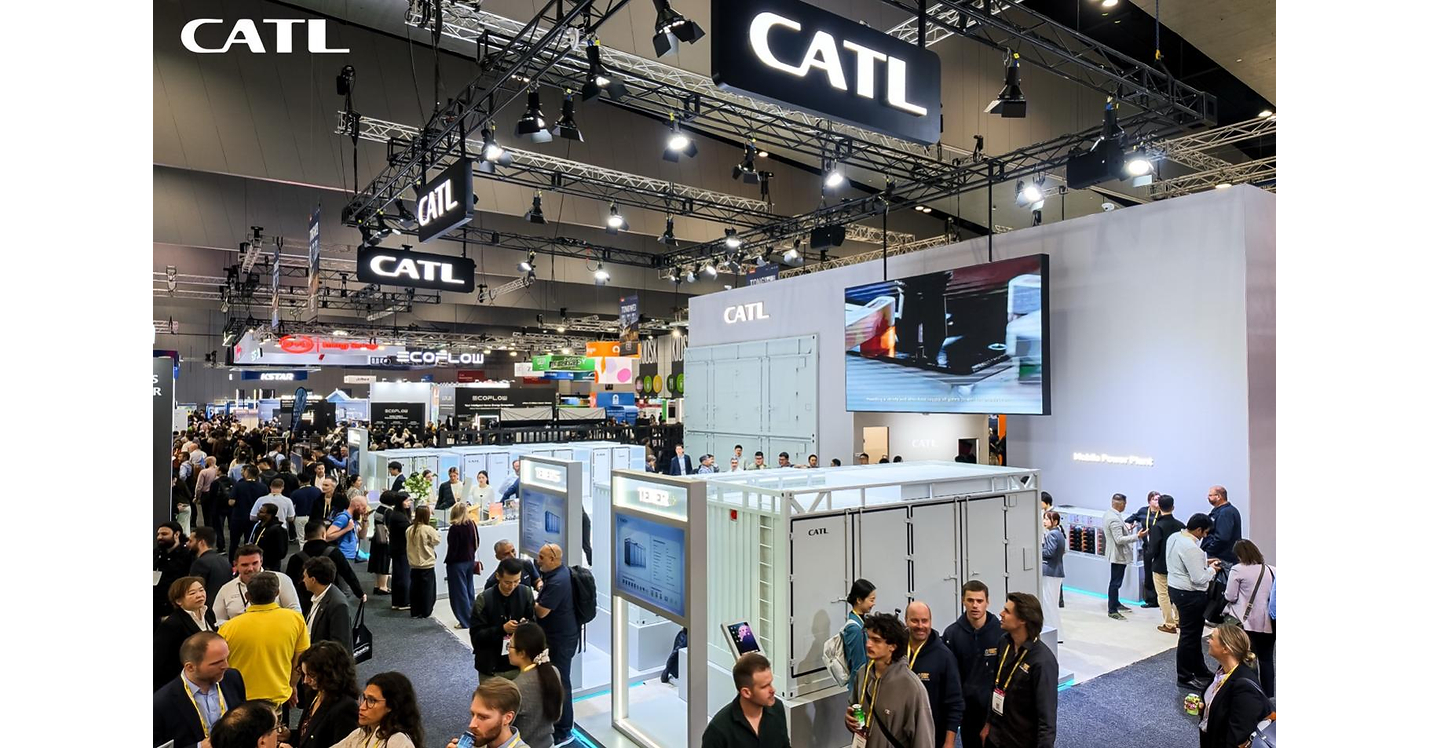
CATL launched its 9MWh TENER+ grid-storage system and showcased TENER Sodium, which delivers more than 30MWh, over 10,000 cycles at 45°C, and 95% round-trip efficiency. TENER+ is designed for a 25-year lifespan and can reduce container count by up to 40% and project footprint by 12%. CATL signed three Australian partnership MoUs covering system integration, project validation and renewable-energy training, building on more than 17GWh of installed Australian projects.
Analysis
The commercial edge is less the headline capacity than reducing integration and siting friction: if CATL’s DC systems work smoothly with Hitachi Energy’s conversion equipment and pass local validation, project developers may face fewer commissioning delays and financiers may require less execution-risk premium. That could win projects, but may also shift bargaining power toward turnkey integrators and intensify price competition among battery suppliers; product specifications alone do not establish a lower lifetime cost.
The revenue pool is not simply expanding with installed megawatt-hours. As batteries become a larger share of evening supply, simultaneous deployment can compress arbitrage spreads and cannibalize returns for existing storage assets. Project economics will increasingly depend on grid-forming and ancillary-service revenues, dispatch access and connection constraints—not just round-trip efficiency. This is a second-order risk for developers and lenders underwriting today’s merchant revenue assumptions.
Over the next 1–3 months, the key catalyst is conversion of the MoUs into binding supply/integration contracts and awarded projects, with disclosed pricing, delivery dates and warranty terms. Over 6–18 months, sodium-ion is credible supply-chain optionality, but the launch claims do not demonstrate bankable economics versus lithium systems; verify independently audited degradation, availability, safety and levelized cost. Fluence, Wärtsilä and Tesla’s storage businesses face a tougher bid environment if CATL’s integration claims translate into repeatable execution, but no immediate share shift is established.
Contrarian view: this is strategically positive but not yet earnings evidence. No trade on the launch alone; the market may overvalue technical specifications and undervalue merchant-margin compression. Falsify the cautious view with repeat orders, disclosed attractive project economics and demonstrated operating performance; falsify the competitive-threat thesis if integration delays or warranty/availability issues emerge.
AllMind Terminal
AI-powered research, real-time alerts, and portfolio analytics for institutional investors.
Request TrialMarket Sentiment
Overall Sentiment
moderately positive
Sentiment Score
0.45
Key Decisions for Investors
- Do not chase CATL on the product announcement alone. Treat the launch and nonbinding MoUs as option value until binding orders, pricing, delivery schedules and warranty obligations are disclosed.
- Set a 1–3 month watch alert for Australian project awards and signed integration contracts involving CATL and Hitachi Energy; reassess only if these show repeatable, bankable delivery rather than a one-off partnership announcement.
- Monitor Australian storage revenue assumptions: weaker NEM peak spreads or ancillary-service prices would pressure merchant-project returns even as deployment grows. Revisit exposure if realized battery revenues fall short of underwriting assumptions.
- Keep sodium-ion on a 6–18 month diligence list, not as a near-term lithium-displacement trade. Require independently verified degradation, availability, safety and cost data before assigning material substitution value.
More News
- Stocks slump, bonds leap as AI giants’ spending spooks investors
- DoorDash offers $17 billion for Instacart: ‘the largest companies are only eating more and more of the pie’
- Christine Lagarde, Boris Vujčić: Monetary policy statement
- Norwegian shares surge 13% on earnings beat, guidance raise
- Alphabet’s stock has worst day in over 20 years, dragging the S&P 500 to first loss in four days
- ECB’s Lagarde Steps Aside as European Economic Pressure Builds
From AllMind Research
- AllMind Platform Feature Updates - Fall 2026
- AI Credit Covenant Monitoring: From Clause to Review
- AI-Led Expert Interviews vs. Transcript Libraries
- Augmented Intelligence: AllMind, Elevate Human Judgement With an Accessible, Powerful, Data-Driven Financial AI Toolkit
- Choosing an AI Copilot for Equity Research