
SpaceX Proves Naysayers Wrong, Has Room To Rocket Higher
Source: seekingalpha.com
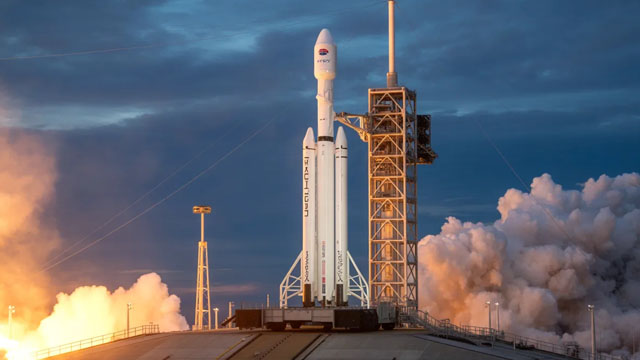
SpaceX growth accelerated to 161% and the company swung to an operating profit, with SI performance leading amid strong demand for compute. Year-end 2027 capacity targets suggest substantial room for growth, though elevated CapEx, EU pushback against Starlink and merger uncertainty remain risks.
Analysis
The bullish signal is not growth alone; it is whether incremental demand converts into durable cash generation after the capacity build. If compute-related demand is driving the reported acceleration, it may support network utilization and improve fixed-cost absorption, but it also raises the risk that investors capitalize a cyclical demand surge while underweighting the associated capex, power, and deployment constraints. Capacity targets are supply plans, not evidence of contracted demand.
Over the next 1–3 months, the key catalysts are evidence that demand is booked and monetizable, cash flow relative to capex, and clarity on merger structure and capital allocation. EU action against Starlink could constrain access or raise compliance costs; the effect depends on scope and timing, not the existence of pushback alone. Over 6–18 months, successful deployment could strengthen SpaceX’s competitive position against Amazon’s Project Kuiper and other satellite-network entrants, while delays or oversupply would leave a more capital-intensive asset base without commensurate returns.
Contrarian risk: the reported operating-profit inflection may be real but insufficient to establish free-cash-flow durability during a major buildout. Without valuation, backlog, segment economics, and capex/cash-flow detail, the article does not support chasing the optimism or setting a price target.
AllMind Terminal
AI-powered research, real-time alerts, and portfolio analytics for institutional investors.
Request TrialMarket Sentiment
Overall Sentiment
moderately positive
Sentiment Score
0.45
Ticker Sentiment
Key Decisions for Investors
- Do not chase SPCX solely on the reported growth and operating-profit inflection. Treat a long as conditional on upcoming disclosures showing demand conversion (backlog or contracted capacity), positive operating cash flow after capex, and no material deterioration in guidance.
- Set an alert for capex, free cash flow, and capacity utilization: if capacity spending accelerates while booked demand or cash conversion disappoints, fade the growth narrative; if cash generation improves alongside deployment, revisit a long. No numeric entry or stop is justified by the supplied information.
- Monitor EU regulatory developments and merger terms as discrete downside catalysts. A material restriction on Starlink access or merger-related dilution, leverage, or execution risk would falsify the constructive case; absent those details, avoid pricing either outcome as certain.
- Track Project Kuiper’s deployment and customer traction as a medium-term competitive check. Faster rival capacity additions without corresponding utilization at SpaceX would weaken the scarcity and pricing-power assumptions behind the bull case.
More News
- Why is Tesla stock falling after-hours today?
- Zuckerberg told Meta directors he might leave California, where he could lose billions to a wealth tax. Meta answered with a new class of stock
- Futures orbit around SpaceX as Tesla merger talk cheers investors
- Elon Musk Thinks $3.5 Trillion Tesla-SpaceX Mashup Is a Good Idea
- SpaceX gives the AI trade a shot in the arm. What it means for our stocks
- Apple's iPhone Duo in short supply — plus, the 2 stocks fueling an AI rebound