
Huawei Launches Fintelligent AI Solution to Help Global Financial Institutions Realize "Own Your AI, Own Your Intelligence"
Source: PR Newswire
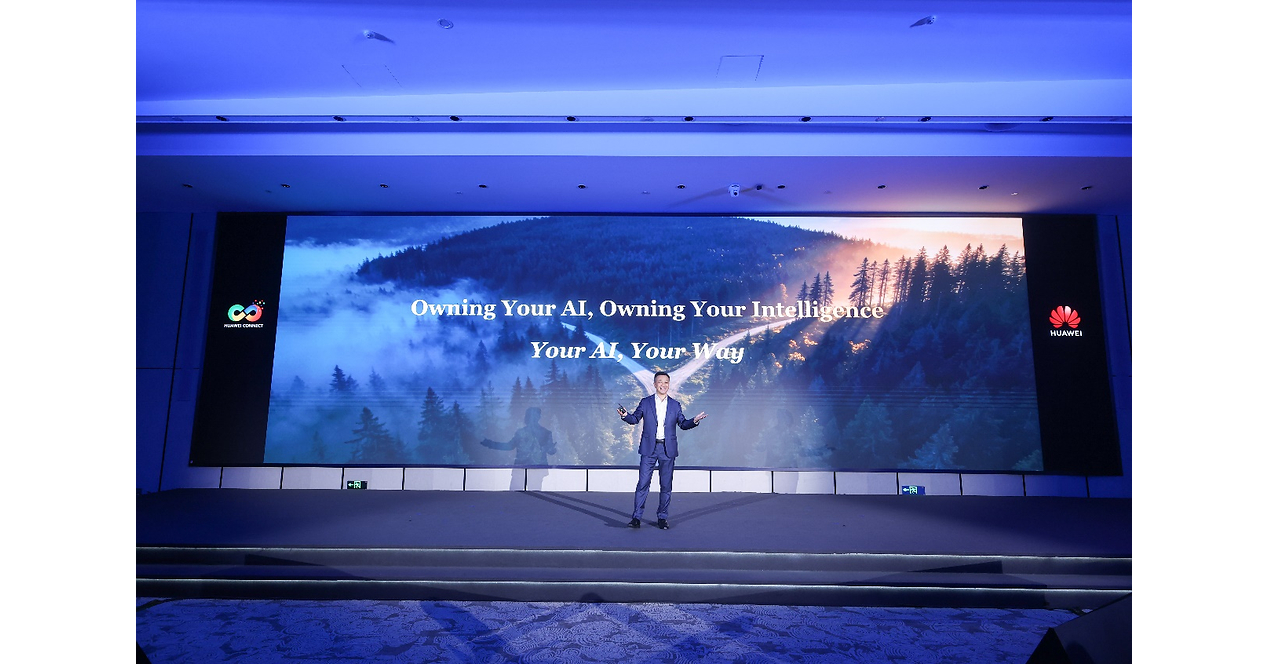
Huawei launched its Fintelligent AI Solution globally, targeting large-scale deployment of AI agents by financial institutions through its Agent Factory, Token Factory, and Data-Knowledge Factory. The offering includes the open-source openJiuwen multi-agent platform, TokeNexus token-lifecycle operations tools, and a Financial Agentic Data Solution designed to convert banks' data, documents, and legacy-code business rules into reusable AI knowledge assets. Huawei said it serves more than 7,100 financial customers in over 80 countries, including 54 of the world's top 100 banks, positioning the launch as an expansion of its enterprise financial-AI ecosystem.
Analysis
This is strategically relevant to non-U.S. banking IT procurement, but it has no demonstrated read-through to FISI: First Interstate BancSystem is a U.S. regional bank with no evident Huawei dependency. The near-term investable implication is instead a potential incremental competitive pressure on Western infrastructure and enterprise-software vendors selling sovereign/private AI stacks into emerging-market financial institutions—particularly where data-localization rules, sanctions risk, or hyperscaler cost make on-premise deployment more attractive.
The key second-order issue is AI compute utilization, not agent-platform announcements. If Huawei can bundle domestic compute, orchestration, and implementation into a lower total-cost-of-ownership offer, it could pressure pricing and attach rates for NVIDIA-adjacent server ecosystems and Western enterprise AI platforms in China, ASEAN, Middle East, Africa, and parts of Latin America over 6-18 months. The claimed cost-control layer is not independently quantified; without disclosed bank deployments, inference-volume economics, or conversion from pilots to production, this remains positioning rather than a revenue catalyst.
Consensus may overstate the threat to U.S.-listed AI leaders: regulated banks prioritize model quality, auditability, integration and long implementation cycles, while hardware export controls can constrain Huawei's access to leading-edge training capacity. The more immediate beneficiary could be Chinese AI infrastructure supply chains if lighthouse customers translate into standardized procurement, but the timing is likely tied to 2027 IT-budget cycles rather than a days-to-weeks equity event. Falsification of the competitive-risk thesis would be evidence that deployments remain limited to internal knowledge management rather than core risk, lending, payments, or customer-service workloads.
AllMind Terminal
AI-powered research, real-time alerts, and portfolio analytics for institutional investors.
Request TrialMarket Sentiment
Overall Sentiment
moderately positive
Sentiment Score
0.42
Key Decisions for Investors
- No trade in FISI from this development; maintain neutral. Reassess only if management identifies a material AI-capex program, vendor relationship, or operating-efficiency target tied to private AI deployment.
- Monitor 1-3 month disclosures for named production-bank wins, contract values, token/inference cost benchmarks, and evidence of deployment in regulated core workflows. Treat these as prerequisites before assigning revenue impact to Huawei ecosystem suppliers.
- For a China/EM technology book, place an alert—not a position—on Huawei-linked domestic AI infrastructure beneficiaries versus Western enterprise-AI vendors. Initiate only after verifiable customer conversion and procurement data establish that deployments are displacing, rather than supplementing, incumbent stacks.
- Risk trigger: any relaxation of advanced-compute export restrictions or clear evidence that banks retain multi-vendor architectures would reduce the premise of sustained Huawei pricing power and argue against a competitive-displacement trade.
More News
- Fed’s Goolsbee: Strong demand may be adding to US inflation, ’no ambiguity’ how Fed would react
- Trump administration sued over withheld federal grants for US community lenders
- Taiwan benchmark Taiex rises to record intraday high as tech stocks advance
- AMD joins the $1 trillion club as chip rally surges - our AI Strategy saw it early
- Jamie Dimon says hyperscaler AI spending could hit $1 trillion next year
- Factbox-Key issues for this week’s Trump-Xi summit in Washington