
HL Klemove and Lenovo Forge Partnership to Lead the Autonomous Driving Market
Source: PR Newswire
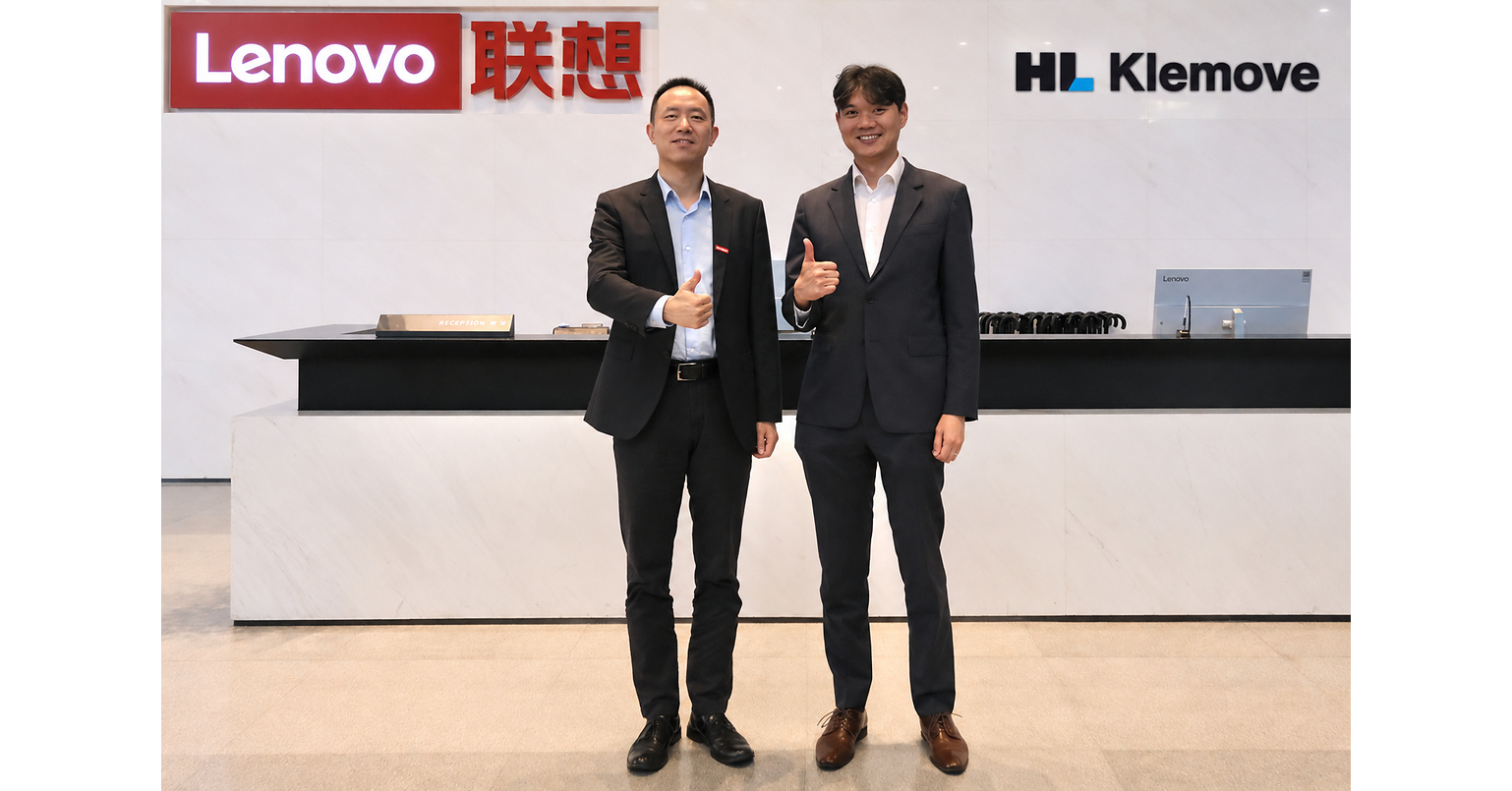
HL Klemove and Lenovo formed a strategic partnership to jointly develop high-performance AI computing solutions for autonomous-driving vehicles, targeting global OEM programs. The collaboration will progress from HPC development to order wins and mass production, combining Lenovo's autonomous-driving controller design with HL Klemove's ADAS production network across South Korea, China, India, and North America. HL Klemove, which has more than 2,700 patents and Level 2/2+ ADAS production experience, aims to expand its position in automotive computing, while Lenovo targets Level 4 autonomous driving and ADAS markets.
Analysis
The economic value of this partnership depends almost entirely on whether it converts into named design wins; a joint-development agreement alone does not alter near-term revenue or earnings. Automotive compute programs typically require 18-36 months from architecture selection to meaningful production revenue, while OEM validation, functional-safety certification and software integration can make the initial gross-margin profile materially worse than headline AI-compute demand implies. Lenovo's automotive ambitions could gain manufacturing credibility through an established Tier-1 route to market, but its likely role as a hardware/controller supplier leaves it exposed to OEM pricing pressure unless it captures recurring software or lifecycle-service revenue.
The more relevant read-through is competitive: incremental Chinese/Asian controller capacity raises the risk that ADAS compute hardware commoditizes faster, pressuring pure hardware suppliers such as Visteon (VC), Aptiv (APTV) and Magna (MGA), while favoring platforms with proprietary silicon, software ecosystems and developer adoption such as NVIDIA (NVDA), Qualcomm (QCOM) and Mobileye (MBLY). Consensus may overstate the Level-4 angle: global OEMs remain focused on monetizable Level-2+/Level-3 programs, where cost per vehicle and validated sensor-stack integration matter more than peak compute. A credible OEM nomination would be a positive signal for the broader ADAS supply chain, but absent disclosed program value, chip content, software ownership and production start date, this is an alert rather than a trade catalyst.
AllMind Terminal
AI-powered research, real-time alerts, and portfolio analytics for institutional investors.
Request TrialMarket Sentiment
Overall Sentiment
moderately positive
Sentiment Score
0.42
Key Decisions for Investors
- No directional position on the announcement. Monitor Lenovo Group (0992 HK) for disclosed OEM design wins, contract value, production start date and automotive segment margin; reassess only if management identifies revenue material enough to move consolidated estimates over the next 12-24 months.
- Maintain preference for long NVDA or QCOM versus short VC as a 6-18 month relative-value expression of compute-platform economics over controller-hardware commoditization. Falsify if VC demonstrates sustained ADAS backlog conversion with gross-margin expansion, or if OEMs materially reduce centralized-compute content.
- Use any broad ADAS enthusiasm-driven strength in APTV/MGA to evaluate short entry only after quarterly guidance: the thesis requires evidence of pricing pressure or elevated engineering expense without offsetting software revenue. Do not initiate solely on this release.
- Set an event alert for a named global OEM award or a disclosed Chinese OEM mass-production program. Confirmation that Lenovo retains high-value software, rather than supplying low-margin hardware, would invalidate the bearish hardware-commoditization read-through.
More News
- Ryanair CEO warns fares could rise by up to 20% in 2027 as fuel bill jumps by $2.2 billion
- Why is Alstom stock down 27% today?
- Alstom shares sink 28% after outlook cut on Coradia Max execution issues
- Amgen (AMGN) Bets on MariTide to Crack $120 Billion Obesity Market
- Aehr Test Systems earnings on deck amid AI chip boom
- Ryanair warns of €2 bln higher fuel bill next year as H1 profit falls 15%