
SDMC Showcases Deployable AI Home Services at IBC 2026
Source: PR Newswire
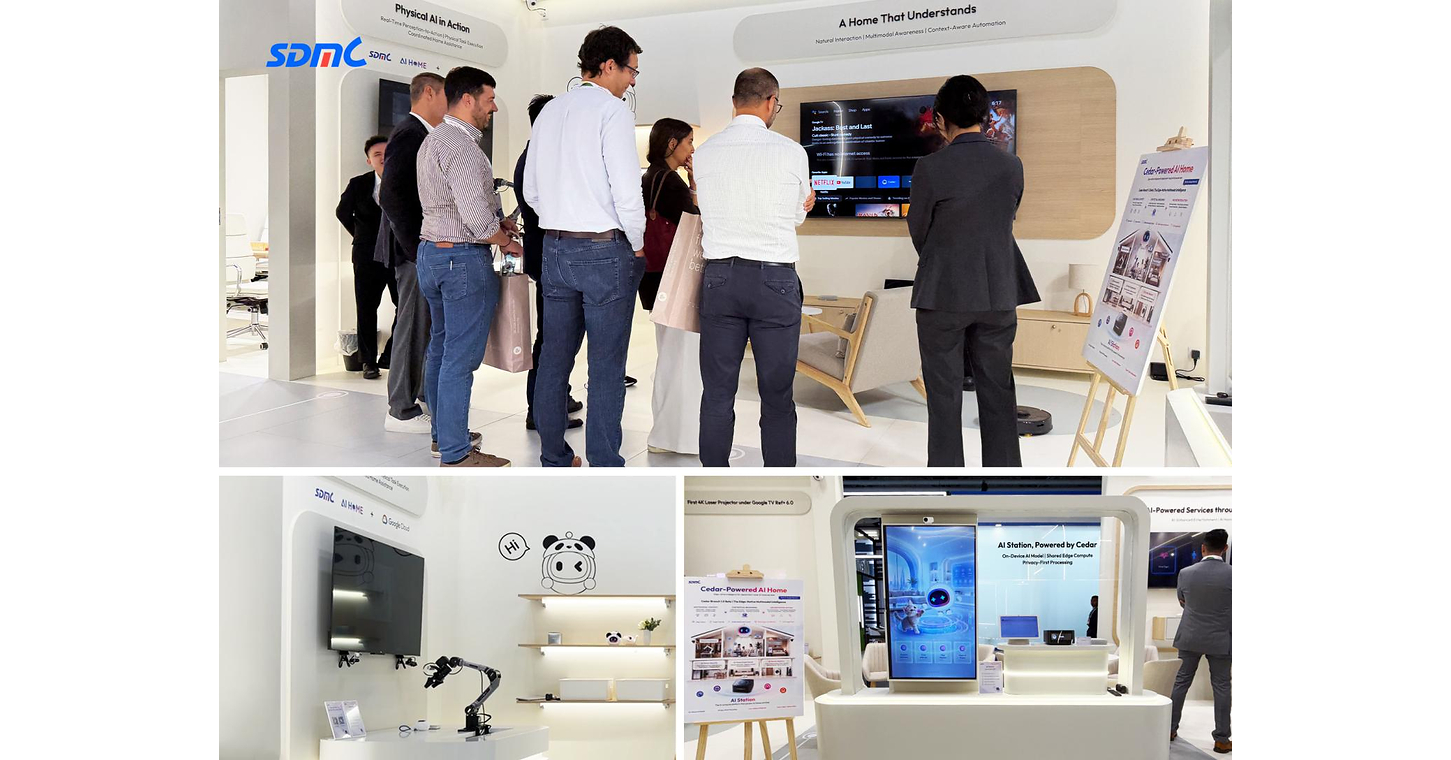
SDMC showcased its deployable AI Home architecture at IBC 2026, combining cloud-edge intelligence, Cedar multimodal AI, and AI Station shared edge computing. The company is collaborating with Google Cloud through its Proactive Physical AI Acceleration Program, while AI Station uses NVIDIA Jetson T5000 hardware to support privacy-sensitive home AI workloads. The announcement highlights product demonstrations and planned operator pilots across entertainment, security, connectivity, and home operations, but provides no financial targets, commercial contract values, or deployment volumes.
Analysis
This is not a near-term earnings driver for GOOG or NVDA: a vendor showcase and pilot-validation relationship lacks disclosed unit commitments, operator contracts, pricing, or deployment dates. For GOOG, the strategic value is incremental Gemini/Google Cloud workload pull-through and a route into operator-managed home devices, but edge-first inference structurally limits cloud token consumption versus a cloud-native assistant. For NVDA, shared edge appliances could expand the Jetson installed base, yet consumer/operator gateway volumes are unlikely to matter against data-center revenue unless deployments broaden across major European and Asian telcos.
The more relevant 6-18 month implication is competitive: centralized edge compute lowers the bill-of-materials hurdle for operators to add AI services without replacing every set-top box, gateway, or display. That can pressure incumbent CPE vendors whose differentiation is hardware integration rather than software orchestration, while creating recurring software/service revenue only if operators can monetize security, support, and premium-home features. The key gating variable is operator willingness to subsidize a new in-home compute box; failed willingness-to-pay, privacy concerns, or fragmented device standards would turn this into another low-volume demonstration cycle.
Consensus should resist extrapolating the "Physical AI" label into robotics revenue. Home robotics requires reliability, liability management, and service economics far beyond multimodal control demonstrations; those constraints make connected-device orchestration the plausible commercial opportunity, not autonomous manipulation. Watch for named operator pilots, installed-base conversion rates, attach pricing, and disclosed cloud usage before assigning financial significance.
AllMind Terminal
AI-powered research, real-time alerts, and portfolio analytics for institutional investors.
Request TrialMarket Sentiment
Overall Sentiment
mildly positive
Sentiment Score
0.32
Ticker Sentiment
Key Decisions for Investors
- No directional GOOG or NVDA trade on this announcement; the disclosed information is insufficient to alter either company's 1-3 month revenue outlook.
- Set an alert for a named tier-1 operator contract or deployment commitment with unit volumes and recurring service pricing. A multi-operator rollout exceeding roughly 100,000 edge units would be a more credible read-through for NVDA Jetson demand and GOOG Cloud/Gemini consumption.
- For AI-infrastructure exposure, retain NVDA exposure only through broader data-center thesis rather than edge-device optionality; reassess if management identifies edge/Jetson as a material growth contributor or if distributor/channel data show sustained operator appliance orders over two quarters.
- Monitor European operator capex guidance and consumer-premium service attach rates over the next 6-12 months. Capex cuts or weak broadband ARPU expansion would falsify the centralization-at-the-edge commercialization thesis before it becomes material to listed AI suppliers.
More News
- Investors react to Fed hike and market sell-off: Brace for 'higher for longer' rates
- The Fed decision, Clarity Act fails in Senate, Ford's truck prices and more in Morning Squawk
- Snap tries to bring AR glasses to enterprise market, partnering with Nvidia, AWS and Salesforce
- Hyperscaler debt signals warning sign, Apollo cautions
- Why Forgent Power Stock Keeps Going Up
- Banks provide $22 billion chip loan to Blackstone, Alphabet cloud venture, Bloomberg News reports