
Latam Airlines Secures $505M Loan to Finance New Aircraft
Source: Bloomberg
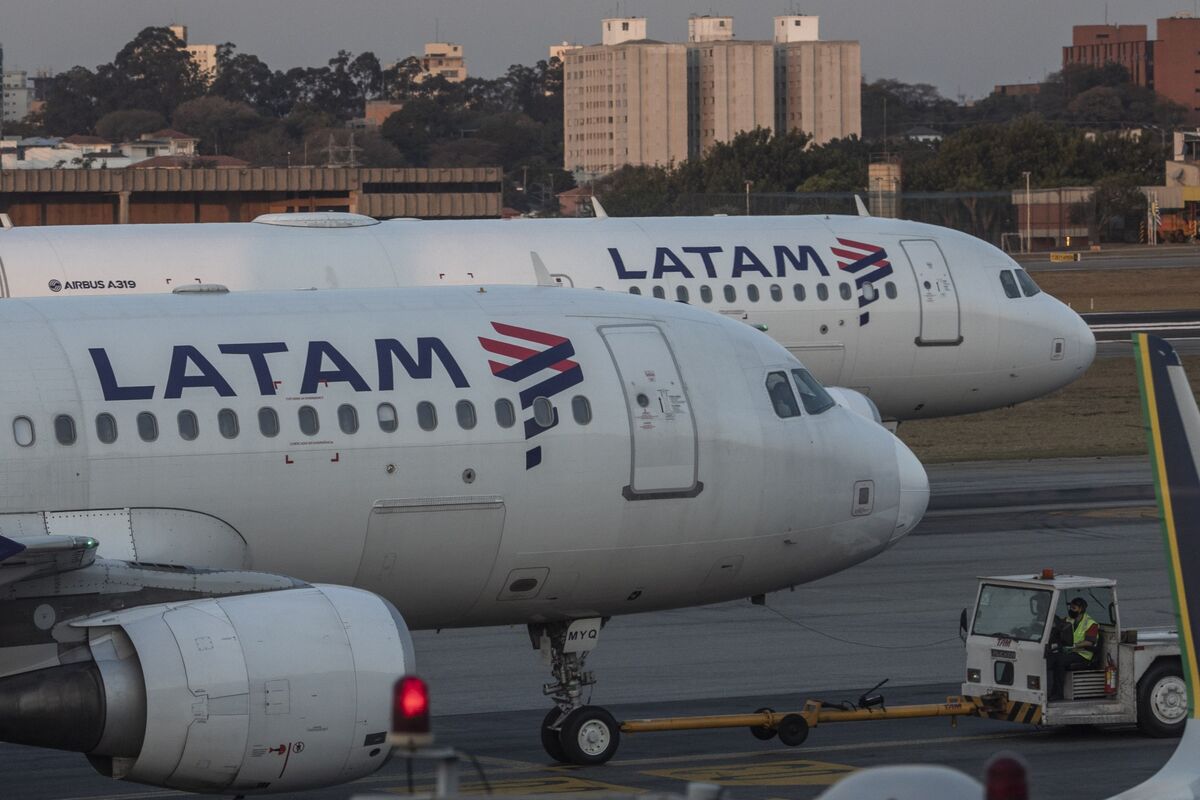
Latam Airlines secured approximately $505 million in financing to acquire 11 new aircraft. The funding supports fleet expansion and capacity growth, though the announcement does not disclose loan terms, delivery timing, or expected financial impact.
Analysis
The financing is incrementally constructive for LTM because it converts fleet growth from a capital-allocation question into an execution question: the relevant variables are lease/loan cost, aircraft utilization, and whether incremental seats clear at yields above cash operating cost. At roughly $46 million per aircraft, the structure appears consistent with secured aircraft financing rather than unrestricted corporate liquidity; investors should not capitalize the full amount as new enterprise value without the maturity, amortization, and fixed-versus-floating-rate details.
Over the next 1-3 months, the market is likely to reward evidence that capacity additions are directed toward constrained, high-margin international routes rather than competitive Brazilian domestic or intra-regional markets. The principal second-order risk is that LTM's added capacity provokes pricing responses from Azul (AZUL4) and Gol, potentially lowering regional yields even if passenger volumes remain healthy. Airbus and Boeing delivery timing also matters more than this financing headline: delayed deliveries would preserve near-term yields but defer growth, while on-time deliveries into weakening Latin American FX could pressure dollar-denominated returns.
The 6-18 month thesis depends on unit-revenue growth exceeding ownership and maintenance-cost inflation. A stronger USD versus BRL, CLP, and COP is a particular vulnerability because much of the fleet-related obligation base is dollar-linked while a meaningful portion of revenue is local-currency denominated. Consensus may overread the transaction as pure balance-sheet strength; it is more accurately a signal that asset-backed lenders remain comfortable with aircraft collateral and LTM's operating trajectory, not proof that incremental aircraft will earn attractive returns.
Falsification points are a sequential decline in passenger yield/RASK after capacity enters service, net leverage rising despite operating cash generation, or disclosure that the debt is predominantly floating-rate at materially higher all-in cost than existing fleet funding. Until those terms and route deployment are known, the news alone is insufficient for a high-conviction rerating trade.
AllMind Terminal
AI-powered research, real-time alerts, and portfolio analytics for institutional investors.
Request TrialMarket Sentiment
Overall Sentiment
mildly positive
Sentiment Score
0.30
Ticker Sentiment
Key Decisions for Investors
- Maintain a modest long bias in LTM rather than chase the announcement; add only after the next results release confirms capacity growth with stable-to-up unit revenue and no adverse net-leverage revision. Target a 6-12 month holding period; exit if yield/RASK declines materially while available-seat growth accelerates.
- Monitor LTM's financing disclosure for maturity, amortization, collateral terms, and fixed/floating mix. If all-in funding cost is below LTM's implied operating return on deployed aircraft and management identifies international route allocations, upgrade to a core long; absent this data, treat as a watch item rather than a catalyst.
- Use a relative-value monitor of long LTM versus AZUL4 rather than a directional airline basket: LTM should outperform if its network and balance-sheet access allow disciplined growth, but close the spread if regional fare competition emerges or Azul signals aggressive capacity additions.
- Hedge any LTM long with USD/BRL and USD/CLP risk monitoring over the next two quarters. A sharp regional-currency depreciation can impair dollar equity value and raise effective fleet obligations even if local passenger demand remains resilient.
More News
- What investors need to know about Alphabet's stock-busting earnings report
- Our next steps for Alphabet stock after earnings disappoint at nearly every turn
- Fortinet’s stock is taking a dive after earnings. Here’s why.
- Wendy's shares jump 15% as Nelson Peltz's Trian offers $1.4 billion to buy burger chain
- Microsoft's Big Bets on AI Start to Pay Off
- Google's Gemini 4 Carbon looks like a diamond in the rough