
Target Sees Underlying 2026 Margin Above 2025 as Profitability Improves
Source: zacks.com
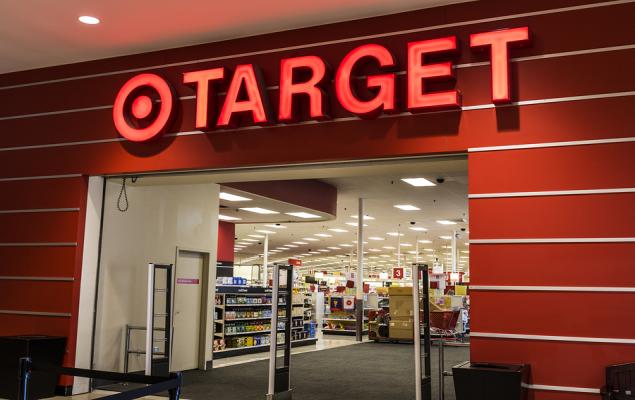
Target expects fiscal 2026 underlying operating margin, excluding tariff refunds, to exceed 2025's adjusted 4.6% by roughly 50bps, improving from prior guidance for an increase of more than 20bps. Including a roughly 90bp full-year benefit from tariff refunds, Target forecasts an approximately 6% operating margin; Q2 margin reached 9.6%, up from 5.2%, aided by $994M of pretax refunds and a 100bp underlying gross-margin improvement. Consensus EPS estimates rose $0.16 for the current year to $10.43 and $0.09 for the next year to $9.38, offsetting concern over a 30bp rise in SG&A rate to 21.6%.
Analysis
The investable issue is earnings quality, not the reported margin peak. A substantial portion of the quarterly upside is a discrete tariff-related recovery, while the recurring improvement appears to rest on lower markdowns, fewer sourcing disruptions, and higher-margin retail-media income. That mix supports a higher normalized EBIT base, but it does not justify capitalizing the quarter’s peak margin; the key 1-3 month catalyst is whether management converts the improved gross-margin rate into a durable full-year guide raise despite wage and capex deleverage.
TGT is positioned between COST’s membership-funded price investment model and DG’s low-income, consumables-heavy customer base. If discretionary demand remains stable, TGT has greater operating leverage than COST and less exposure than DG to financially stretched households; vendor-funded media and marketplace-style revenues also make incremental sales more profitable than traditional retail revenue. The second-order risk is that advertising growth can mask weak merchandise velocity: a favorable mix-driven margin outcome alongside soft comparable sales would eventually invite a lower earnings multiple rather than expansion.
Consensus has likely begun to price the margin recovery after the recent share move, but the valuation discount to COST leaves room for re-rating only if comparable-sales acceleration validates that the gains are not principally a reversal of prior execution errors. The contrarian view is that the next fiscal-year EPS trajectory remains softer than the current-year estimate, implying investors should demand evidence of sustainable sales and inventory discipline before underwriting a full multiple catch-up. A renewed tariff cost burden, promotional escalation from AMZN/WMT, or SG&A exceeding the gross-margin gain would falsify the constructive thesis over the next two earnings prints.
AllMind Terminal
AI-powered research, real-time alerts, and portfolio analytics for institutional investors.
Request TrialMarket Sentiment
Overall Sentiment
moderately positive
Sentiment Score
0.58
Ticker Sentiment
Key Decisions for Investors
- Maintain or initiate a modest 3-6 month long TGT position only on post-results weakness; underwrite normalized operating margin near management’s underlying target rather than the reported quarterly level. Target a 15-20% upside from multiple normalization and earnings revision, with a stop/review if full-year underlying margin guidance falls below the prior-year level or comparable sales weaken materially.
- Prefer a 3-6 month pair of long TGT / short DG for a consumer bifurcation and execution-quality expression. TGT has more upside to discretionary stabilization and non-merchandise margin, while DG remains more exposed to labor, shrink, and lower-income demand pressure; exit if DG’s traffic and gross-margin recovery outpaces TGT for two consecutive monthly or quarterly disclosures.
- Do not short COST solely as a TGT funding leg. COST’s premium reflects a structurally different membership-income model and defensive traffic profile; use DG or XRT as the hedge, and reassess the pair if broad retail sales data deteriorate sharply.
- Set an alert around the next TGT earnings release for three missing datapoints: comparable-sales growth, inventory growth versus sales, and retail-media revenue growth. A margin beat without improvement in those indicators is a signal to trim rather than add, because the market will treat the benefit as nonrecurring.
More News
- Meta is breaking out after introducing Muse AI agent. Where the stock is going, according to the charts
- Meta’s Muse AI is exploding in popularity—and already drawing heated backlash from another tech giant
- Meta's quick success with Muse puts consumers back in the driver's seat of the AI trade
- Qualcomm releases Android chip built for AI as memory shortage weighs on smartphone market
- S&P 500 Profits Are on Track for a Third Straight Quarter of 25%+ Growth. The Index Hasn't Kept Up.
- Anthropic and OpenAI roll out cheaper models in first release since call for slowdown
From AllMind Research
- Anthropic IPO Preview: Valuation, Timing, and What to Watch
- Shein After the IPO: Venue, Valuation, and What Must Be Proved
- What AI Research Tools Should a Small Hedge Fund Buy First?
- Alternative Data Due Diligence for Institutional Investors
- Introducing AllMind: A New Data & AI Workspace for Institutional Investors