
The Deal: Jordy Leiser (Podcast)
Source: Bloomberg
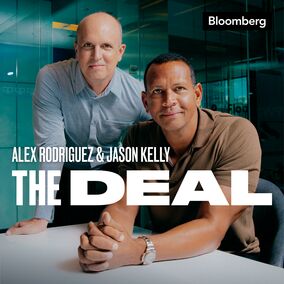
Jordy Leiser, co-founder of AI-powered fan-experience and ticketing platform Jump alongside Marc Lore and Alex Rodriguez, highlighted AI’s potential to improve how sports fans engage with teams and players. The discussion also points to technology-sector-backed sports owners as a catalyst for innovation in fan engagement and ticketing, though it includes no financial results, valuation, or transaction details.
Analysis
This is not yet a public-markets earnings catalyst: a private, early-stage fan-engagement platform has limited direct read-through for listed sports, media, or AI infrastructure names. The investable implication is instead that teams are increasingly treating first-party fan data, dynamic ticket pricing, merchandise, and sponsorship inventory as a unified revenue-management stack. If adoption scales, the highest-value use case is not conversational fan content but improved yield on premium inventory and lower paid-acquisition cost—economics that can raise venue EBITDA without requiring broader media-rights growth.
The likely near-term beneficiaries are public live-entertainment platforms with proprietary demand data and direct-ticketing relationships, notably TKO, LYV and MSGE; LYV has the clearest monetization path through pricing, CRM, and advertising tools, although its regulatory overhang limits multiple expansion. Incumbent ticketing and venue operators could face modest long-term margin pressure if leagues and teams build more direct distribution and loyalty capabilities, but fragmented team ownership makes full disintermediation unlikely over the next 12-24 months. AI infrastructure exposure through NVDA, MSFT or ORCL is too diffuse for this development to be material.
Consensus may overestimate the speed of AI-led ticketing disruption. Sports demand is constrained by finite premium-seat supply, contractual ticketing arrangements, privacy restrictions, and reputational risk around algorithmic price discrimination; thus, adoption may improve conversion rather than create step-function revenue. The thesis becomes investable only when teams disclose measurable uplift in per-cap ticket revenue, renewal rates, sponsorship yield, or customer-acquisition expense over one to three seasons.
AllMind Terminal
AI-powered research, real-time alerts, and portfolio analytics for institutional investors.
Request TrialMarket Sentiment
Overall Sentiment
mildly positive
Sentiment Score
0.30
Key Decisions for Investors
- No standalone position on this announcement; treat it as a 6-18 month thematic watch item rather than an immediate catalyst.
- Maintain a watchlist long bias toward LYV versus a broad media proxy (short XLC) only if quarterly disclosures show accelerating venue revenue per fan or monetization from digital/CRM products; target a 6-12 month horizon, with thesis invalidated by weaker concert demand or renewed antitrust remedies affecting Ticketmaster economics.
- Monitor TKO and MSGE for evidence that AI-enabled premium inventory, betting-adjacent engagement, or direct-to-fan data initiatives lift sponsorship and ticket yield faster than attendance; initiate only after two quarters of KPI confirmation, as current evidence is promotional rather than independently verified.
- Avoid using NVDA, MSFT, ORCL, or AI ETFs as a proxy trade: incremental sports-fan workloads are immaterial to revenue and create unfavorable signal-to-noise relative to enterprise AI demand catalysts.
More News
- China's AI chip blitz arms Xi with a message for Trump: 'You can't choke us off'
- OpenAI’s agent hacked Australia’s Medicare website—the latest rogue AI incident that the company didn’t know about for months
- Meta announces new lightweight virtual reality glasses to one-up Apple’s Vision Pro
- Markets are rapidly coming around to the reality that the Fed has a lot more work to do
- Chinese authorities reportedly in possession of F-35 components in Hong Kong
- SoftBank shares jump over 7% after $11.1 billion bond issuance to fund OpenAI bet
From AllMind Research
- Anthropic IPO Preview: Valuation, Timing, and What to Watch
- Shein After the IPO: Venue, Valuation, and What Must Be Proved
- What AI Research Tools Should a Small Hedge Fund Buy First?
- AI Research Tools for Pension Funds and Allocators
- AllMind's Data Standardization Methodology: Our Approach to Fundamentals