
TENNIIX Unveils Embodied AI Tennis Robot at Billie Jean King Cup Finals, Advancing a New Era of Tennis Training
Source: PR Newswire
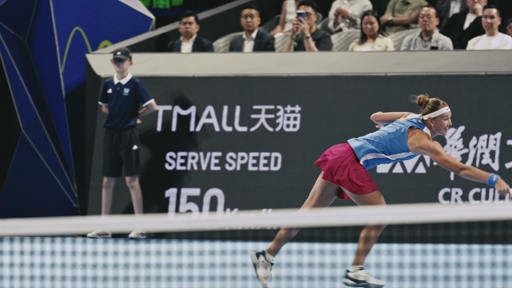
TENNIIX unveiled its ULTRA MAX embodied AI tennis robot at the 2026 Billie Jean King Cup Finals, combining its AI training system with LimX Dynamics' TRON 2 wheeled-leg mobility platform. The robot autonomously tracks ball trajectory, spin, landing points and player movement, then adapts shots and placement through voice-directed training programs. TENNIIX plans future deployment at tennis clubs and facilities, positioning the product as a complement to coaching and a more accessible source of adaptive practice.
Analysis
This is not yet an investable public-equity catalyst; it is a sponsored product demonstration with no disclosed unit economics, manufacturing capacity, pricing, customer commitments, or independently validated performance metrics. The more relevant read-through is that sports-training robotics is moving from stationary hardware toward a recurring-revenue model: facility operators could monetize premium court hours, while vendors seek software subscriptions, fleet maintenance, and training-data advantages rather than one-time equipment sales.
Near term, the principal beneficiaries are likely private Chinese robotics suppliers rather than listed global sporting-goods companies. A credible commercial rollout could eventually pressure conventional ball-machine vendors and lower the labor intensity of entry-level coaching, but it is unlikely to displace human instruction at the premium end; the product's economic value depends on whether clubs can raise utilization during off-peak hours enough to offset hardware depreciation, repair costs, and liability insurance.
The contrarian view is that the autonomy claim may be technologically impressive but commercially premature. Tennis environments are unusually punishing for mobile robotics—loose balls, variable court surfaces, weather, player safety, and collision risk—and a high-performance demonstration does not establish reliability across thousands of operating hours. Over the next 6-18 months, the decisive proof points are paid installations, disclosed price/service terms, utilization data, and whether the platform achieves a maintenance burden low enough for club-level returns on invested capital.
AllMind Terminal
AI-powered research, real-time alerts, and portfolio analytics for institutional investors.
Request TrialMarket Sentiment
Overall Sentiment
moderately positive
Sentiment Score
0.45
Key Decisions for Investors
- No directional trade in public equities at present: neither developer is identified as listed, and the release provides insufficient evidence to underwrite revenue or margin impact.
- Create a 1-3 month diligence alert for LimX Dynamics and Shenzhen Enhanced Power Technology financing, partnership, or listing activity; actionable evidence would be named club deployments, unit pricing, contracted recurring revenue, and third-party uptime data.
- Monitor listed sports-equipment and connected-fitness proxies for strategic responses rather than shorting on this announcement alone. A short thesis against incumbent ball-machine exposure requires evidence that autonomous units are being leased below the effective cost of legacy machines plus coaching labor.
- For China embodied-AI exposure, wait for confirmation through commercial orders rather than extrapolating from exhibition visibility. Falsify the commercialization thesis if deployments remain promotional through the next tennis season or if safety/maintenance disclosures prevent facility-scale adoption.
More News
- OpenAI’s agent hacked Australia’s Medicare website—the latest rogue AI incident that the company didn’t know about for months
- Chinese authorities reportedly in possession of F-35 components in Hong Kong
- Meta announces new lightweight virtual reality glasses to one-up Apple’s Vision Pro
- How Meta took the lead in the race for the post-smartphone world
- Markets are rapidly coming around to the reality that the Fed has a lot more work to do
- SoftBank shares jump over 7% after $11.1 billion bond issuance to fund OpenAI bet