
Ken Griffin Says AI ‘Almost Certainly’ in a Bubble Right Now
Source: Bloomberg
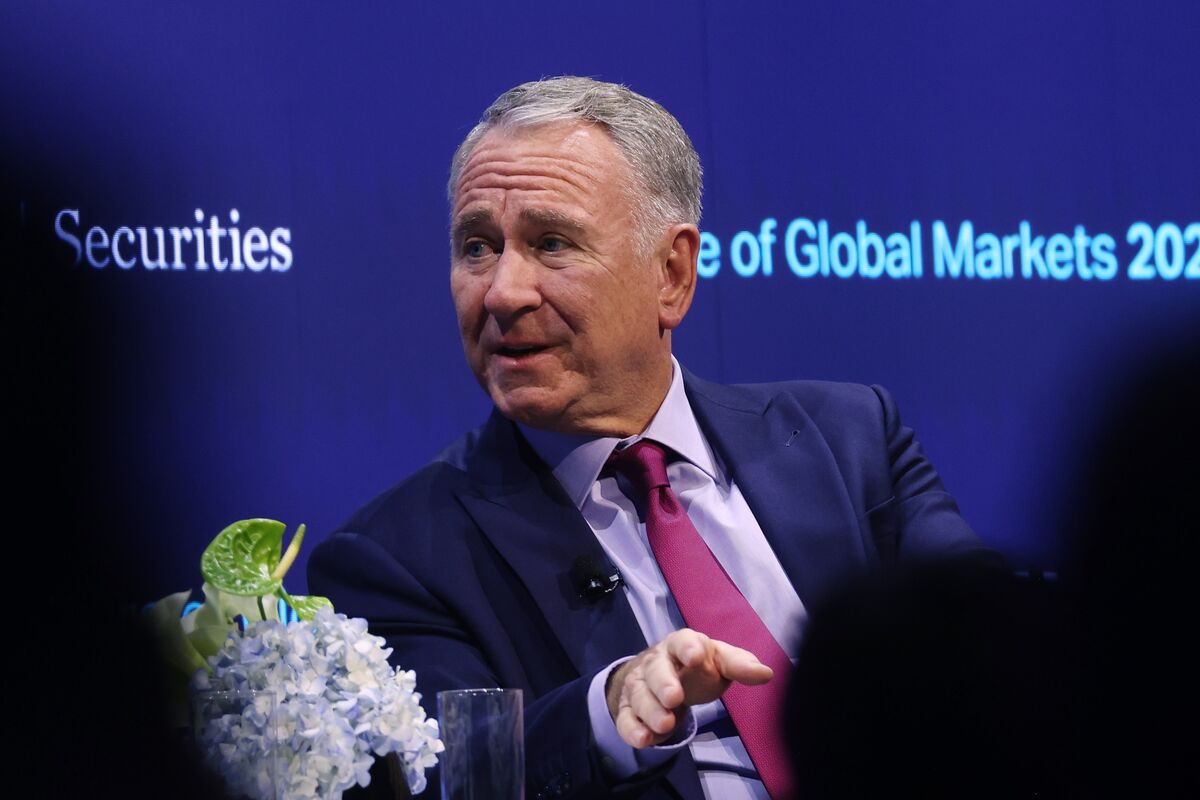
Ken Griffin said investors are “almost certainly” in an artificial intelligence bubble, speaking Tuesday at the Future of Global Markets Conference in New York. He argued that radical transformations of the economy are generally intertwined with bubbles.
Analysis
Treat the comment as a sentiment catalyst, not new evidence about AI demand or valuations. Its market impact is likely asymmetric: crowded, long-duration AI beneficiaries may react more to incremental skepticism than diversified firms with demonstrable cash flows. A pullback in expected AI returns could travel beyond chipmakers to data-center equipment, power infrastructure, and suppliers whose investment cases depend on sustained hyperscaler capex; it could also pressure broad growth indices through correlated positioning.
The counterpoint is that a speculative financing cycle and durable productivity gains can coexist. The key 1–3 month test is not the rhetoric but whether earnings calls and spending plans show capex continuing without credible monetization. Over 6–18 months, adoption and realized customer ROI matter more than conference commentary. A reversal in sentiment alone would not falsify the bubble concern; accelerating customer revenue, improving returns on AI investment, and sustained orders would.
No single-company conclusion or valuation claim is supported here. With no company-level data or positioning evidence supplied, the signal is too weak to justify an outright short; use it to manage exposure and monitor capex-to-revenue conversion.
AllMind Terminal
AI-powered research, real-time alerts, and portfolio analytics for institutional investors.
Request TrialMarket Sentiment
Overall Sentiment
mildly negative
Sentiment Score
-0.20
Key Decisions for Investors
- Near term: avoid adding to high-beta AI infrastructure exposure solely on thematic momentum; consider reducing oversized positions or using defined-risk hedges rather than initiating an unhedged sector short.
- For a 1–3 month relative-value watchlist, compare AI infrastructure beneficiaries with diversified software and industrial firms that can capture productivity gains without relying on incremental AI capex. Enter only if earnings guidance or order data confirm a widening gap between spending and monetization.
- Track hyperscaler capex plans, AI-related backlog and order conversion, customer ROI disclosures, and financing conditions. Sustained spending alongside improving monetization weakens the bearish thesis; capex restraint, cancellations, or deteriorating conversion strengthens it.
- Reassess any hedge if AI-linked earnings and orders remain resilient through the next reporting cycle while broader growth positioning unwinds; that combination would suggest the sentiment shock is creating a relative-value opportunity rather than confirming a demand break.
More News
- Jio’s Record $3.2 Billion IPO Puts India’s Market Muscle to the Test
- Elon Musk says Tesla and SpaceX are weighing a $3.5 trillion merger—without him in the room
- Neoclouds Lose Silver Lining as Elice, CoreWeave Dive: Evening Briefing Americas
- Anthropic May Spend $750 Billion on Computing Costs, WSJ Reports
- This Janus Henderson fund manager owns CoreWeave debt — here's why he's sticking with it
- Super Micro’s stock soars after surprise update — with Dell and HPE shares joining the rally