
Jim Cramer says Nvidia and Salesforce earnings upended two bear narratives
Source: CNBC
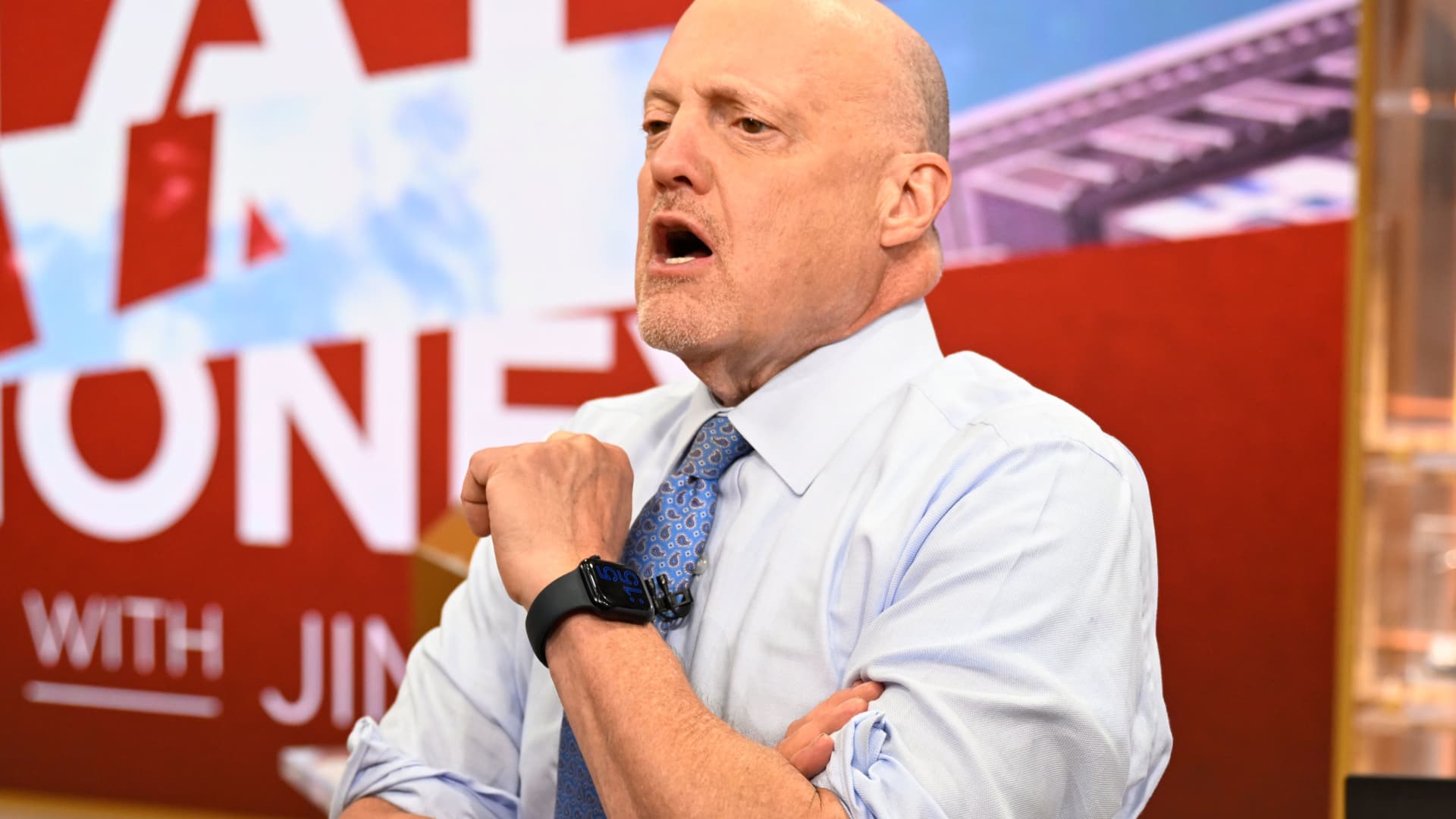
Nvidia shares surged 8% and Salesforce jumped 22% after both reported better-than-expected quarterly results that invalidated major Wall Street bear narratives. Salesforce delivered its strongest sales growth in four years, with customer attrition near historic lows and AI bundle bookings more than doubling, while a deeper Anthropic partnership (Claudeforce) reduced fears of pricing erosion from capable AI models. Nvidia’s outlook also outperformed expectations, signaling roughly 70% revenue growth potential for fiscal 2028 versus ~45% expected, supported by diversified customers and continued on-schedule progress for its Vera Rubin platform.
Analysis
The market is still underestimating how quickly AI spend converts from “capex story” into operating leverage for a narrow set of platform vendors. On the software side, the key signal is not just demand retention but that AI features are expanding monetization without forcing broad seat compression; that supports CRM multiple re-rating versus slower-growth enterprise software where AI is more easily bundled away. The risk is that this becomes a bifurcated market: winners with embedded workflows and data moats, losers where AI is an overlay rather than a usage driver.
For semis, the deeper takeaway is that the demand debate has shifted from unit growth to duration of the replacement cycle. If installed compute stays economically productive for years, the near-term effect is less about cannibalizing demand and more about extending visibility, which benefits NVDA and downstream infrastructure suppliers that can sustain pricing power. The second-order loser is the “custom silicon will fully displace merchant GPUs” trade; that narrative likely remains too early, especially if customers care more about time-to-revenue than lowest theoretical cost.
The contrarian risk is that the current reaction may pull forward too much good news into one print cycle. If hyperscaler capex guidance pauses, AI attach rates plateau, or incremental AI revenue fails to offset inference costs, the market can quickly re-rate these names back to “expensive growth” rather than “durable compounding.” The next 1-3 months matter most: follow-through from other cloud, software, and chip prints will determine whether this is a one-day squeeze or the start of a broader de-risking of the AI bear case.
AllMind Terminal
AI-powered research, real-time alerts, and portfolio analytics for institutional investors.
Request TrialMarket Sentiment
Overall Sentiment
strongly positive
Sentiment Score
0.68
Ticker Sentiment
Key Decisions for Investors
- Add to CRM on pullbacks over the next 1-2 weeks; thesis is that AI is becoming a pricing/attach-rate driver rather than a seat-destruction threat. Risk/reward improves if management confirms AI bundle conversion in the next quarter; thesis fails if net retention or bookings decelerate.
- Stay long NVDA into the next hyperscaler earnings window, but treat it as a momentum trade rather than a valuation call. Best entry is on post-gap consolidation; invalidation is any sign that 2025-2026 revenue visibility is being pulled forward without follow-through in capex commentary.
- Pair long NVDA / short an AI-skeptic software basket or broad software ETF if you need cleaner relative expression; the trade works if capital keeps concentrating in infrastructure and workflow winners. Cover if software breadth improves or if enterprise buyers slow AI adoption budgets.
- Watch AMZN as a second-order beneficiary rather than a direct headline trade: if external GPU demand stays strong, AWS capex discipline can coexist with AI monetization. Use it as a confirmation signal for the broader AI infrastructure complex, not as the primary long.
- Avoid shorting the obvious AI hardware names here; the more attractive fade would be later, on evidence that customer monetization lags capex. The near-term squeeze risk is high until the next round of guidance updates.
More News
- Nvidia GPUs are everywhere. Here are the ways companies are accessing them
- Stocks saw new highs and big declines: How the volatile AI trade moved last week's market
- Will Warner Bros. kill Skydance — or will David Ellison kill Warner Bros?
- Cerebras Is About as Big as Nvidia's Data Center Business Was Nearly a Decade Ago. The Similarities Mostly End There.
- Nvidia in talks to acquire Reflection AI or increase investment, FT reports
- As companies pour billions into Earth-based AI infrastructure, Google is taking the data center race off-planet