
JASCI Introduces Phoenix™, the AI-Native Warehouse Management System
Source: PR Newswire
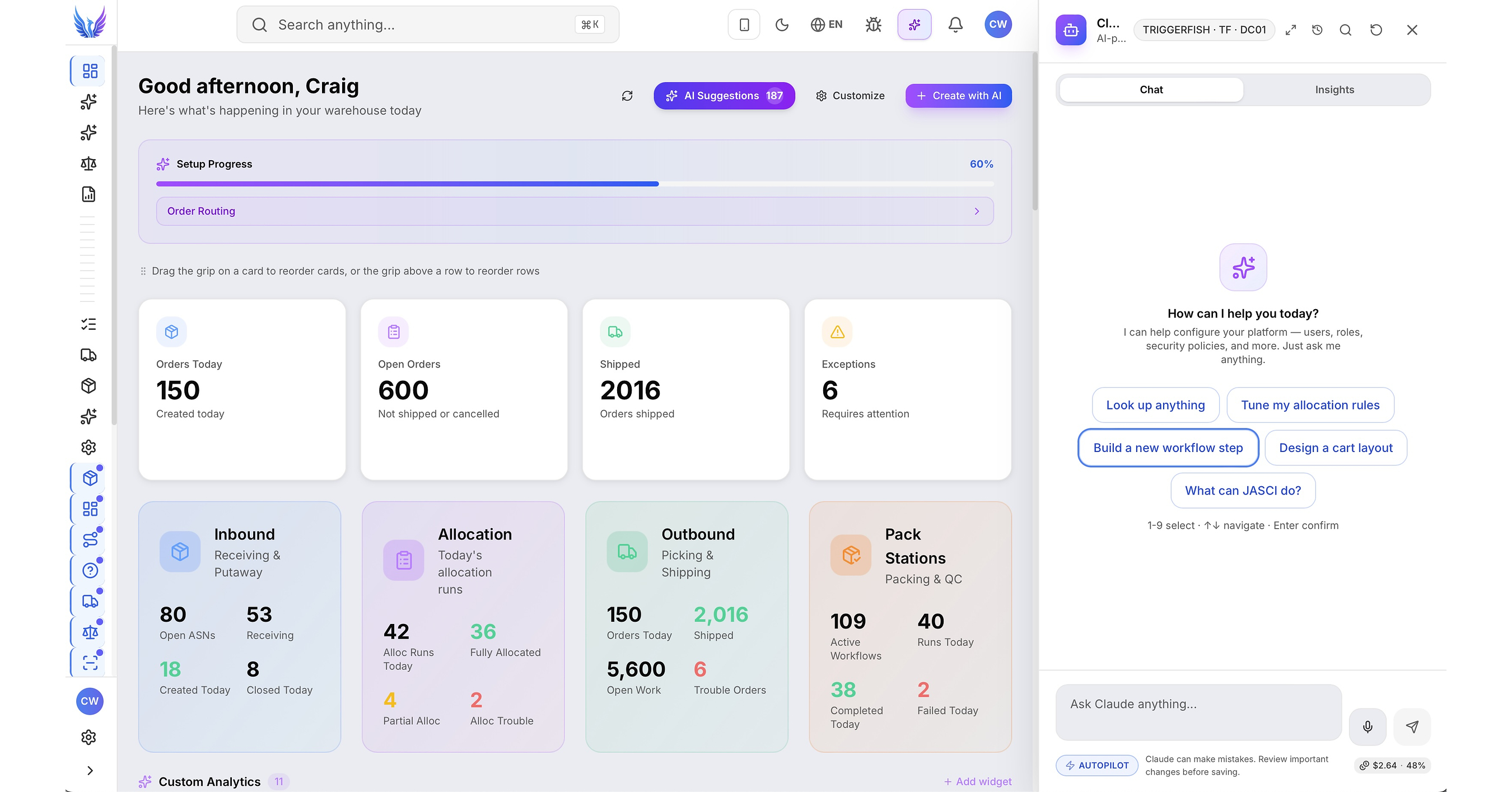
JASCI Software launched Phoenix, an AI-native warehouse management system that uses specialized agents to coordinate orders, inventory, labor, automation, shipping and service workflows. The company says its AI-native engineering process enables product releases roughly 50x faster than traditional WMS development cycles; its existing platform has been refactored across more than 3.5 million lines of code and processes over 4 billion transactions annually. The announcement is a product-positioning update with potential relevance for warehouse-software automation, but no financial results, customer contracts, or revenue impact were disclosed.
Analysis
This is not independently investable news, but it reinforces a medium-term risk to incumbent warehouse-management vendors: AI automation shifts value from seat-based workflow software toward platforms that can optimize labor, inventory, fulfillment and transportation decisions in a closed loop. The most exposed public proxies are Manhattan Associates (MANH), Blue Yonder parent Panasonic Holdings (PCRFY), SAP (SAP) and Oracle (ORCL); however, switching costs, implementation risk and customers’ reluctance to grant autonomous systems write access make near-term revenue displacement unlikely.
The economically relevant question is whether AI-native deployments produce measurable reductions in labor hours per order, inventory errors, split shipments and expedited freight. A credible 5-10% warehouse labor productivity gain would improve payback periods enough to accelerate replacement cycles among 3PLs, retailers and distributors, pressuring incumbents’ services revenue and legacy-module attach rates over 6-18 months. The vendor’s claimed development velocity is not itself a durable moat: enterprise WMS differentiation depends on integration reliability, uptime, compliance, implementation capacity and reference customers rather than feature-release cadence.
Near term, the likely beneficiary is warehouse automation demand rather than a pure-play software disruption. If AI orchestration increases utilization of existing robotics and material-handling equipment, customers may pull forward spending with Symbotic (SYM), GXO Logistics (GXO), Honeywell (HON) and Zebra Technologies (ZBRA). Conversely, a high-profile autonomous-workflow error involving inventory allocation, shipping compliance or safety would rapidly reset adoption expectations and favor incumbent systems with established controls.
Consensus risk is overstating the immediacy of AI-led WMS replacement. Enterprise buyers typically adopt AI first as a decision-support layer alongside existing systems, creating a partnership/API opportunity for incumbents rather than immediate share loss. Monitor MANH, SAP and ORCL commentary for AI-driven implementation backlog, services utilization, renewal pricing and customer references; absent evidence of competitive losses or materially shorter deployment cycles, this remains a thematic watch item rather than a directional software short.
AllMind Terminal
AI-powered research, real-time alerts, and portfolio analytics for institutional investors.
Request TrialMarket Sentiment
Overall Sentiment
mildly positive
Sentiment Score
0.35
Key Decisions for Investors
- No standalone position on this release; treat it as an alert for WMS competitive displacement rather than a catalyst with sufficient public-market price discovery.
- Over the next 1-3 quarters, monitor MANH earnings for services-margin pressure, lower implementation backlog conversion, AI-related pricing concessions or named competitive losses. A confirmed guidance cut tied to replacement-cycle acceleration would support a tactical MANH short or long ORCL/MANH pair.
- Maintain a 6-18 month watchlist long bias toward SYM and GXO if customer case studies demonstrate labor-hours-per-order reductions above 5% and faster warehouse automation utilization; use post-earnings entries rather than paying for AI-launch headlines.
- For incumbent software exposure, favor ORCL over MANH on a relative basis if AI adoption remains additive: ORCL can monetize cloud infrastructure, data and application integration even where WMS buyers retain legacy workflows. Falsify if Oracle reports slowing Fusion/SCM cloud bookings or meaningful customer migration to specialist WMS platforms.
More News
- Italy to deploy warships to protect shipping through Bab al-Mandeb
- Oil prices fall for 3rd day as supply concerns ease, diplomacy in focus
- Australia’s central bank chief warns inflation risks materialising
- Saudi Pivots Oil Routes After Pipeline Attack
- This AI-picked stock jumps 18% on Amazon’s $8 billion power deal
- Asian stocks rise as oil retreat eases inflation fears, BOJ in focus