
California Jury Assesses $67.7 Million Verdict in Favor of Artificial Stone Fabricator with Silicosis Following Double-Lung Transplant
Source: PR Newswire
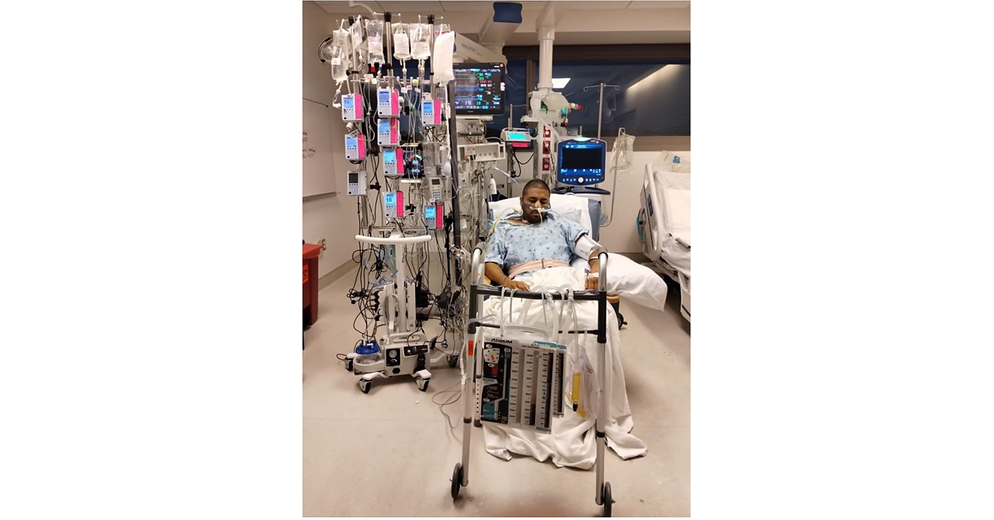
A Los Angeles jury awarded $67.716 million to the family of artificial-stone silicosis victim Dennys Rene Rivas Williams, finding Caesarstone Ltd. and Caesarstone USA, Inc. liable for a defective design and assigning the two entities a combined 69.1% of responsibility; Primus Marble was assigned 30%, and other slab suppliers collectively 0.9%. The verdict came five days after a separate $33 million verdict involving the Caesarstone entities, bringing the two awards to more than $100 million. The article is a law-firm press release; it does not report whether either verdict has been appealed or any market reaction.
Analysis
The key risk is not the headline award in isolation; it is whether repeated plaintiff verdicts change Caesarstone’s expected cost of selling high-silica products. A second large verdict in five days raises the chance that plaintiffs’ counsel, insurers, and customers treat these cases as a repeatable liability pattern. That can pressure CSTE through defense costs, settlement leverage, insurance disputes, and a faster shift away from legacy products—not just the amount ultimately collected on this award. The 69.1% allocation is also a warning that a jury may not accept fabrication-shop conditions as a complete defense.
The signal is material but not yet a reliable estimate of consolidated liability. This is a plaintiff-firm press release; the verdict may be appealed, the collectible amount may differ from the award, and it does not establish the size or merits of other claims. The firm’s seven-trial sample is selected, not a measure of all cases. Verify the judgment, appeal posture, company disclosures on claims and insurance, product revenue mix, and the actual scope and effective dates of cited restrictions before underwriting a reserve.
Days: expect event-driven volatility and potentially wider downside skew. Over 1–3 months, watch for further verdicts, settlements, reserve changes, and guidance on the shift to lower-silica products. Over 6–18 months, substitution could benefit alternative-surface suppliers, while Caesarstone may face transition costs or weaker economics; the direction depends on customer acceptance and replacement-product margins, which are not established here. Contrarian risk: if the award is reduced or reversed and exposure proves insured or limited, the stock could rebound sharply. No valuation or price data are provided, so avoid a price target.
AllMind Terminal
AI-powered research, real-time alerts, and portfolio analytics for institutional investors.
Request TrialMarket Sentiment
Overall Sentiment
strongly negative
Sentiment Score
-0.65
Ticker Sentiment
Key Decisions for Investors
- Tactical bias: consider a small, beta-aware short CSTE after the open once liquidity and the initial price reaction are observable; pair with a long XHB only if the objective is to reduce broad housing-cycle exposure. Keep the position modest: appeal, insurance, and claim aggregation are unresolved, and a legal headline can gap both ways.
- Do not extrapolate the $67.7 million award into a per-share liability estimate. Before adding, verify the judgment and appeal status, CSTE’s disclosed case inventory and insurance coverage, and whether management changes reserves or guidance. A reserve increase or additional adverse verdicts would strengthen the thesis; reversal, material reduction, or credible coverage evidence would weaken it.
- Set an alert for further verdicts or settlements and for verified regulatory restrictions affecting high-silica slabs. Also monitor revenue mix and customer uptake of lower-silica or alternative surfaces: successful substitution could contain liability but still dilute revenue or margins; weak adoption could prolong both exposure and uncertainty.
- Falsification / cover signal: the verdict is vacated or materially reduced, filings show bounded and substantially insured exposure, and CSTE maintains guidance without a meaningful reserve revision. Conversely, another adverse verdict or disclosed reserve increase would support reassessing the short, not mechanically extrapolating this award.
More News
- What investors need to know about Alphabet's stock-busting earnings report
- Our next steps for Alphabet stock after earnings disappoint at nearly every turn
- SK Hynix says the memory-chip shortage will last until 2030—and more than half its production is booked for the next two years
- China’s tech darlings are losing their shine. Here’s what’s behind the sell-off
- GE Vernova shares slip despite a beat-and-raise. What the sellers are getting wrong
- Microsoft’s strong quarter backs up its stock rebound. Here's our new price target