
Handmade businesses have a new marketplace - and they own it
Source: PRWeb
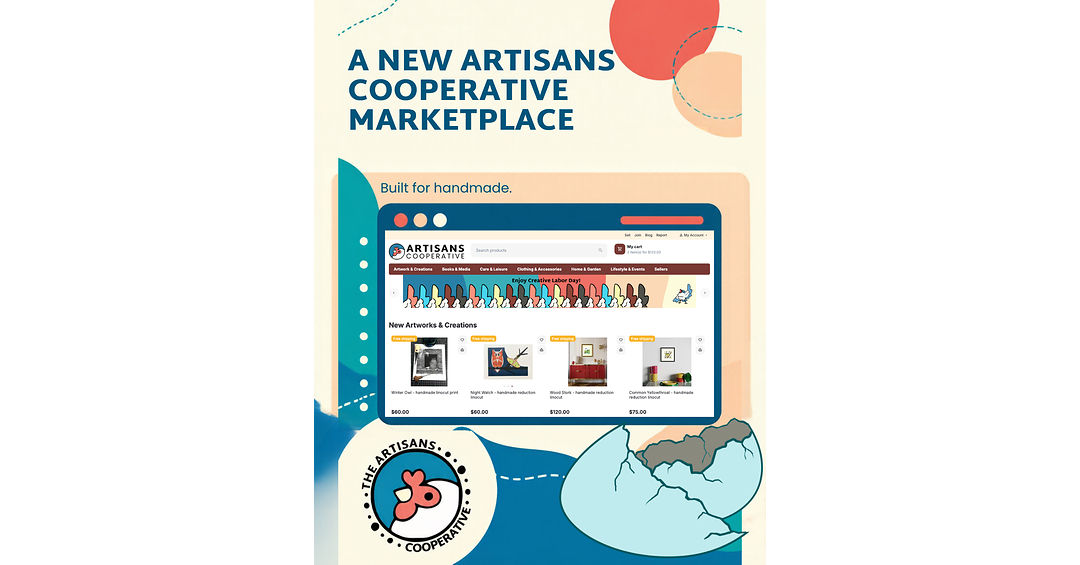
Artisans Cooperative opened its artisan-owned online handmade-goods marketplace to the general public, three years after launching its beta platform. The cooperative positions itself as an alternative to Etsy and Amazon, using free listings and transparent commissions while prohibiting mass-produced and drop-shipped products. The launch is positive for participating sellers and niche conscious-consumer demand, but is unlikely to materially affect major public marketplace operators.
Analysis
This is not yet a revenue threat to ETSY or AMZN; it is a signal that the highest-intent handmade sellers remain structurally dissatisfied with marketplace search quality, fee economics, and perceived platform governance. The near-term financial effect is immaterial absent evidence of seller migration, buyer acquisition efficiency, or GMV liquidity. More relevant is that Etsy’s trust-and-safety effort to suppress low-quality listings can raise enforcement costs and reduce reported active listings before it improves conversion, creating a potentially awkward 1-3 quarter trade-off between take-rate protection and GMV growth.
The competitive risk is concentrated in Etsy’s differentiated, higher-AOV artisan cohort rather than commodity craft supplies or personalized mass production. If specialist alternatives aggregate credible supply, Etsy may need heavier offsite-marketing subsidies, seller incentives, or lower effective fees to retain this cohort, pressuring contribution margin; Shopify (SHOP) is a secondary beneficiary because displaced sellers may prefer owned storefronts over another marketplace. Amazon faces negligible direct exposure, but its increasingly broad handmade assortment reinforces the discovery problem that weakens Etsy’s brand moat.
Consensus should not extrapolate a cooperative launch into a share-loss event: two-sided marketplaces are distribution businesses, and a values-led venue without meaningful paid acquisition, buyer repeat rates, payments infrastructure, and dispute-resolution scale is more likely to fragment supply than pull demand. The actionable catalyst is not membership claims but a sustained deterioration in Etsy active-seller retention, GMS per active buyer, or marketing efficiency over the next two earnings cycles. Conversely, improved conversion and stable GMS despite listing cleanup would falsify the disintermediation concern and support multiple expansion.
Over 6-18 months, the broader risk to ETSY is category polarization: low-price discovery migrates toward AMZN/TEMU-like channels while premium artisans build direct audiences through SHOP, leaving Etsy with a less scalable middle. That outcome would lower long-run GMS growth and justify a lower terminal multiple even if near-term margins hold.
AllMind Terminal
AI-powered research, real-time alerts, and portfolio analytics for institutional investors.
Request TrialMarket Sentiment
Overall Sentiment
mildly positive
Sentiment Score
0.30
Ticker Sentiment
Key Decisions for Investors
- No standalone trade on Artisans Cooperative; treat it as a qualitative watch item until third-party traffic, seller count, repeat-purchase data, or funding disclosures establish marketplace liquidity.
- Maintain a cautious 1-3 month bias on ETSY versus SHOP: consider long SHOP / short ETSY only if Etsy’s next results show active-seller declines or incremental marketing spend without GMS-per-buyer acceleration. Target 10-15% relative upside; exit if Etsy guides GMS growth above consensus while holding adjusted EBITDA margin.
- For existing ETSY longs, use the next earnings print as the decision point: reduce exposure if take-rate gains are accompanied by worsening buyer frequency or a material step-up in sales-and-marketing expense, as that indicates retention costs are replacing organic demand.
- Monitor Etsy search-quality and enforcement disclosures, app-review trends, and direct-to-consumer migration indicators for high-end sellers. A demonstrated premium-seller attrition trend would strengthen the SHOP-over-ETSY pair; absent that evidence, avoid assigning valuation impact to this launch.
- AMZN remains unaffected operationally; do not express this thesis through AMZN. Any handmade-category share shift is too small relative to consolidated retail, AWS, and advertising earnings drivers.
More News
- Tesla’s Cybercab had a rocky first month in Austin. Now comes the hard part: expanding
- Meta's Muse AI: Good or Bad for E-Commerce? Shopify and Amazon Are Taking Opposite Approaches.
- ASML Holding vs. Qualcomm: What Revenue Trends Tell Investors About These Semiconductor Industry Giants
- This Stock Posted the Best Performance in the “Magnificent Seven” in September. (Hint: It’s Not Nvidia.)
- The S&P 500 Is Not Enough: My 3-Stock Starter Portfolio for New Investors
- ‘We need to trust our employees’: This billionaire CEO went from counting cars in the parking lot past 6pm to embracing hybrid work
From AllMind Research
- Anthropic IPO Preview: Valuation, Timing, and What to Watch
- Shein After the IPO: Venue, Valuation, and What Must Be Proved
- What AI Research Tools Should a Small Hedge Fund Buy First?
- Alternative Data Due Diligence for Institutional Investors
- Introducing AllMind: A New Data & AI Workspace for Institutional Investors