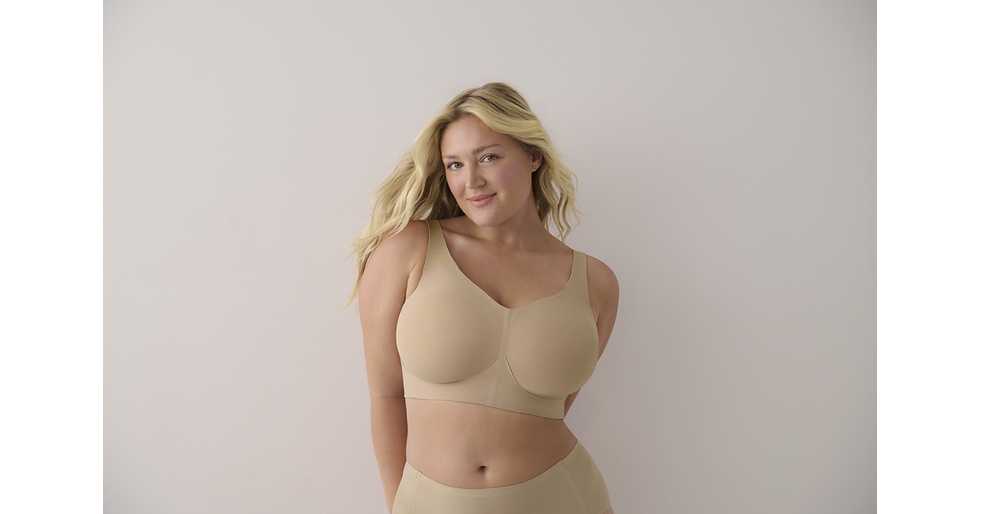
Evelyn & Bobbie launched “The Busty Bra,” a wire-free bra engineered for smaller band sizes and larger cup sizes, built from two patented technologies (EB FlexTech™ band and EB Core+™ deeper firmer hold sling) after 33 months of development and 100+ fittings. The company positions the product as a non-surgical alternative for women reporting chronic neck and shoulder pain, citing a >50% rise in breast reduction surgeries over the past five years. This is a category-focused innovation/brand update with limited likely near-term market impact.
This reads more like a category-validation event than an earnings-relevant catalyst. The investable signal is that technical fit can support premium pricing in intimates, which matters for gross margin more than unit volume; if this works, the margin pool shifts away from mass-market brands that rely on broad, less-engineered sizing. The immediate market impact is probably negligible, but over 1-3 quarters it can incrementally pressure incumbents whose product architecture depends on legacy molds, higher return rates, and markdown-heavy inventory clears.
The second-order winner is the premium, direct-to-consumer end of the category: brands that can prove fit via proprietary construction should see higher repeat rates and lower customer acquisition waste. The losers are mainstream incumbents exposed to the same consumer need but without differentiated engineering; for public comps, Victoria's Secret (VSCO) is the obvious watch item because fuller-bust consumers are typically a loyalty test rather than a traffic driver, and failures there can quietly raise returns and inventory obsolescence. Hanesbrands (HBI) is a looser proxy, but its basic-apparel exposure makes it less likely to capture the premium margin uplift.
The contrarian view is that the market may overread the TAM: the addressable segment is real but narrow, and scaling intimate-fit products is constrained by SKU complexity, education costs, and channel fit, not just IP. The key falsifier is sell-through: if direct online conversion and repeat purchase do not improve over the next 1-2 quarters, the brand story stays niche and the patent angle won’t translate into meaningful unit economics. Conversely, if return rates fall and ASP holds, this becomes evidence that technical apparel can sustain premiumization in a category where most innovation has been cosmetic.
AI-powered research, real-time alerts, and portfolio analytics for institutional investors.
Request TrialOverall Sentiment
mildly positive
Sentiment Score
0.25
