
Flanagan-White Merges with Zipp Express to Create a Midwestern Logistics & Transportation Powerhouse
Source: PR Newswire
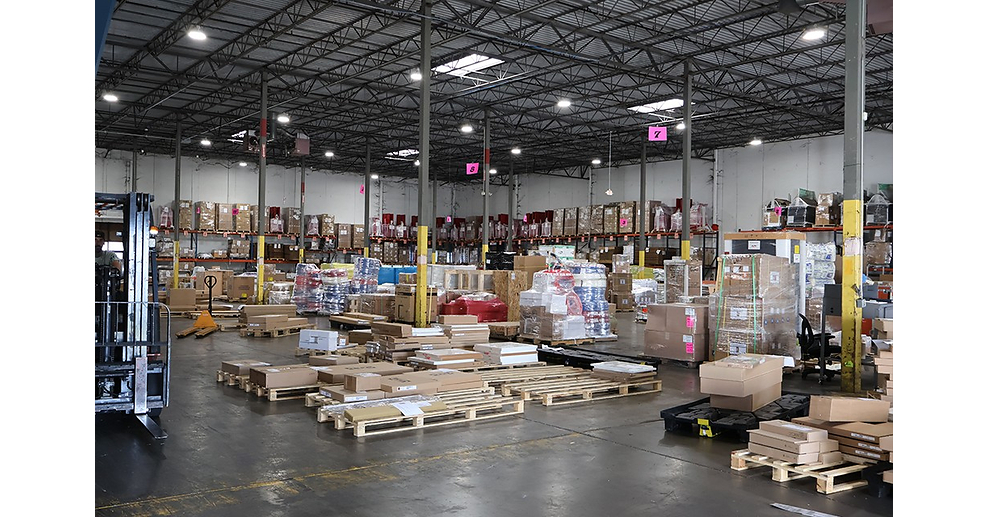
Zipp Express merged with Flanagan-White Delivery/Express, combining two St. Louis-area freight networks into one of the Midwest's largest locally owned trucking, expedited-delivery and logistics providers. Flanagan-White customers will gain access to Zipp's fleet of more than 30 vehicles and its 50,000-square-foot Earth City, Missouri warehouse, expanding capacity across expedited freight, final-mile delivery, specialized transport and storage. The privately held regional transaction is positioned as a succession-driven combination following Flanagan-White President Matt Carswell's planned retirement.
Analysis
This is private, subscale regional consolidation rather than a read-through on public freight earnings. The economically relevant mechanism is potential density improvement: combining dispatch, warehouse utilization, and local pickup-and-delivery routes can lift asset turns and reduce empty miles, but the stated fleet scale remains too small to affect public LTL or truckload pricing. There is no standalone investable catalyst without customer concentration, revenue, utilization, or transaction-value disclosure.
Second-order, the combined operator may take share in St. Louis expedited, hazmat, and final-mile lanes from fragmented independents, while also becoming a more credible local fulfillment partner for national 3PLs. That modestly favors asset-light brokers with regional carrier networks—CHRW and RXO—if they can use the added capacity without internalizing fixed fleet costs; it is immaterial to ODFL, SAIA, XPO, JBHT, and KNX absent evidence of broader Midwest rate disruption.
Near term, treat this as a private-market signal that succession-driven acquisitions remain available in fragmented local logistics. Over 6-18 months, the important question is whether consolidation produces durable density or merely adds fixed costs during a soft freight environment; wage inflation, insurance, and maintenance can consume synergy benefits quickly. The company’s operational claims are not independently verifiable, and no valuation, leverage, or retention data are available.
Contrarian view: regional consolidation is often presented as inherently margin-accretive, but expedited and final-mile customers can be highly relationship-sensitive. If service levels slip during system migration or legacy drivers leave, the acquired book may prove less transferable than advertised, turning apparent scale into underutilized capacity rather than pricing power.
AllMind Terminal
AI-powered research, real-time alerts, and portfolio analytics for institutional investors.
Request TrialMarket Sentiment
Overall Sentiment
moderately positive
Sentiment Score
0.58
Key Decisions for Investors
- No directional public-equity trade warranted from this announcement; impact on listed transportation earnings and freight-rate benchmarks should be negligible.
- Add CHRW and RXO to a Midwest final-mile/expedited-capacity watchlist for 1-3 months; only consider a tactical long if quarterly commentary identifies improving regional carrier availability without corresponding gross-margin pressure.
- For existing long positions in SAIA, ODFL, XPO, JBHT, or KNX, make no allocation change. Reassess only if private regional consolidation is accompanied by measurable St. Louis/Midwest spot-rate tightening or competitor pricing commentary.
- Monitor any future disclosed customer wins, warehouse occupancy, driver-retention data, or additional acquisitions by the combined private company. A failure to retain drivers or legacy accounts would validate the view that local-service integration risk offsets expected density gains.
More News
- South Korea’s exports hit record high on AI boom
- US judge approves settlement allowing Paramount to acquire Warner Bros
- RAM supply set to worsen, says Micron, as CEO celebrates ‘much higher’ prices
- Tencent leases 100,000 chips from Oracle for $7 bln- FT
- Paramount Skydance prices $42 billion debt for Warner Bros deal
- Asia stocks rise on chipmaker gains, soft U.S. inflation; Nikkei outperforms