
Elon Musk, Worth More Than $900 Billion, Says Saving for Retirement Is Pointless. Try Living on a $2,095 Social Security Check
Source: 247wallst.com
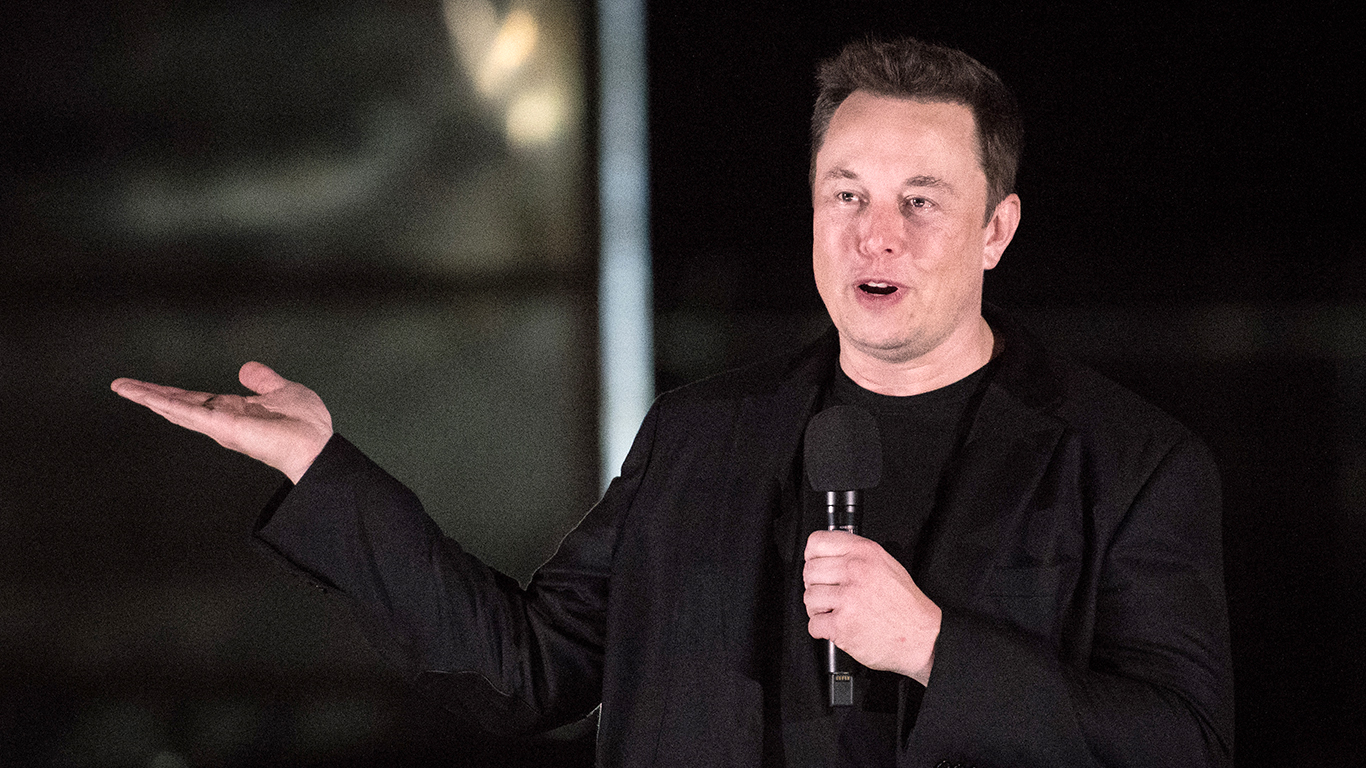
Elon Musk said on October 29 that AI and robotics could create abundance within 10 to 20 years, making retirement savings unnecessary, and described saving for the distant future as pointless. The article cites Bloomberg's recent estimate of Musk's fortune at $924 billion; the provided text ends before elaborating on the implications for Social Security recipients.
Analysis
Investment read-through: this is a long-dated productivity narrative, not an earnings catalyst. The key market mechanism is whether AI and robotics raise output broadly enough to offset labor displacement and support household incomes—not simply whether technology improves. If gains accrue mainly to capital owners, weaker retirement saving could coexist with greater income inequality, political pressure for transfers, and a larger fiscal burden on Social Security. That would be a headwind to the “abundance removes scarcity” framing and could ultimately benefit firms exposed to government-funded income support more than consumer-finance businesses.
In the next few days, the quote may reinforce AI enthusiasm but offers no independently verifiable change in capex, adoption, or cash flows. Over 1–3 months, watch corporate guidance for automation spending and evidence of productivity gains reaching operating margins. Over 6–18 months, the relevant test is whether deployment expands beyond pilots while employment, wage growth, and consumer demand remain resilient. Automation and AI infrastructure suppliers are potential beneficiaries; retirement-focused asset managers and financial firms are only indirect, long-horizon exposures, not a clean short on this statement.
Contrarian view: the claim assumes productivity gains translate into broad, affordable abundance and that institutions adapt smoothly. Both are uncertain. The near-term risk is treating a speculative social forecast as a financial forecast; the longer-term risk is underestimating distributional and fiscal consequences. No company-specific valuation or earnings impact can be inferred from the supplied material.
AllMind Terminal
AI-powered research, real-time alerts, and portfolio analytics for institutional investors.
Request TrialMarket Sentiment
Overall Sentiment
neutral
Sentiment Score
0.10
Key Decisions for Investors
- No directional trade on the statement alone. Do not alter retirement-services or AI exposure without evidence of changed client flows, adoption, or guidance.
- Put AI/robotics infrastructure and industrial automation on a 1–3 month catalyst watchlist; require rising deployment evidence and measurable productivity or margin commentary before adding exposure.
- Track employment, real wage growth, and consumer demand alongside automation adoption. Broad productivity gains with resilient incomes support the abundance thesis; displacement without income growth would falsify it and raise fiscal-policy risk.
- Reassess any long-term thesis if company guidance shows automation investment failing to convert into realized productivity, or if labor-market deterioration and transfer-policy debate intensify.
More News
- Stocks slump, bonds leap as AI giants’ spending spooks investors
- Alphabet Erases $500 Billion as ChatGPT, Google AI Cut into Search
- Alphabet just had its worst day as a public company. BofA now values Google search at a lower multiple than fossil fuel stocks
- Alphabet’s stock has worst day in over 20 years, dragging the S&P 500 to first loss in four days
- Taiwan Stocks Heads for Correction as Global AI Selloff Deepens
- Asia stocks tumble as AI spending concerns deepen; BOJ holds rates