
American Savings Bank Jumps More Than 6% in Trading Debut: NYSE Content Update
Source: PR Newswire
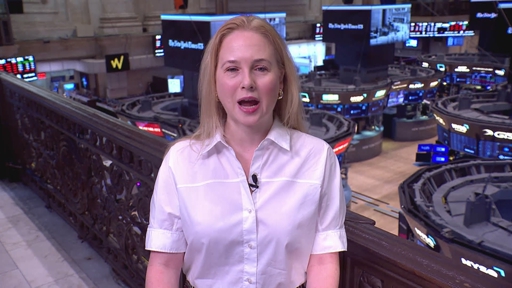
The Federal Reserve raised interest rates by 25bps, its first hike since 2023, and signaled another increase could follow later this year as Chair Kevin Warsh said inflation remains too high. American Savings Bank rose 6.25% in its public-market debut, while AI startups Profound and Sequen AI raised $180 million and $90 million, respectively, at valuations of $1.8 billion and $1.44 billion. The Fed's renewed tightening stance is the dominant market-relevant development and could pressure risk assets and rate-sensitive sectors.
Analysis
The relevant transmission is not the 25bp move itself but the repricing of the terminal-rate distribution: a second hike would push long-duration equity multiples lower while lifting volatility, cash-equity turnover, and rates-hedging demand. This favors exchange and market-infrastructure exposure more than broad banks; NMR can benefit from higher client activity and wealth-management yields, but its global fixed-income inventory and underwriting book make the net sensitivity less clean than that of ICE or CME. The next 1-3 months hinge on whether 2-year Treasury yields remain above the pre-meeting range after inflation data rather than on the initial equity-index reaction.
ASBH's opening gain is not yet evidence of a durable regional-bank rerating. A successful new issue can improve IPO risk appetite at the margin, but the key test is secondary liquidity, deposit beta, and commercial-real-estate concentration disclosed in subsequent filings; absent those data, chasing a small newly public bank introduces asymmetric lockup and float risk. If rate expectations stay restrictive for 6-18 months, deposit competition and CRE refinancing losses should separate well-capitalized, granular-deposit banks from lower-quality regional-bank ETFs.
Private AI financing at elevated valuations is a weak public-market read-through until revenue retention, gross-margin durability, and enterprise procurement budgets are independently visible. The contrarian implication is that hawkish discount rates can widen the gap between profitable AI enablers and venture-backed application-layer peers: private marks may remain high while eventual public comparables face lower valuation ceilings. NYT has limited direct rate upside; a higher real-rate environment is more likely to pressure its premium valuation unless subscription and advertising trends offset multiple compression.
AllMind Terminal
AI-powered research, real-time alerts, and portfolio analytics for institutional investors.
Request TrialMarket Sentiment
Overall Sentiment
mildly negative
Sentiment Score
-0.15
Ticker Sentiment
Key Decisions for Investors
- Initiate a 1-3 month long ICE / short KRE pair, sized market-neutral: ICE has cleaner volume and data-revenue leverage to sustained rate volatility, while KRE retains deposit-cost and CRE-refinancing exposure. Target 8-12% relative return; exit if the 2-year Treasury yield falls below its pre-decision level for two consecutive weeks or if the Fed explicitly signals the hike cycle is complete.
- Keep NMR on a catalyst watch rather than buy immediately; enter only if post-meeting rates volatility and trading volumes remain elevated through month-end and management does not flag material fixed-income mark-to-market pressure. Use a 5-7% stop because a rapid yield reversal would remove the activity tailwind and reintroduce underwriting risk.
- Avoid ASBH until the first post-listing liquidity and fundamentals disclosures establish deposit mix, CRE exposure, and tangible-common-equity durability. A close below the IPO price on rising volume would be a negative signal for the broader small-bank issuance window, not an automatic short.
- Reduce or hedge premium-duration media exposure, including NYT, over the next 1-3 months if real yields continue rising; consider a modest NYT short against a broad communications-services long only after a technical break below the pre-Fed trading range. Cover on an upside subscription-guidance revision or a sustained decline in 10-year real yields.
More News
- OpenAI, Microsoft executives’ quotes on AI training threaten copyright defense, news outlets argue
- Microsoft AI CEO says AI threats are real, and Anthropic is making it worse
- Trump administration approves sale of F-35 jets to Saudi Arabia
- How Bessent, America’s bond salesman, cornered Japan on big spending
- Crusoe raises $3.9B to build massive data centers and small modular “AI factories”
- US approves visas for top Iranian leaders to attend UN General Assembly