
Being Big in Banking Doesn’t Guarantee You’ll Control Your Own Fate
Source: Bloomberg
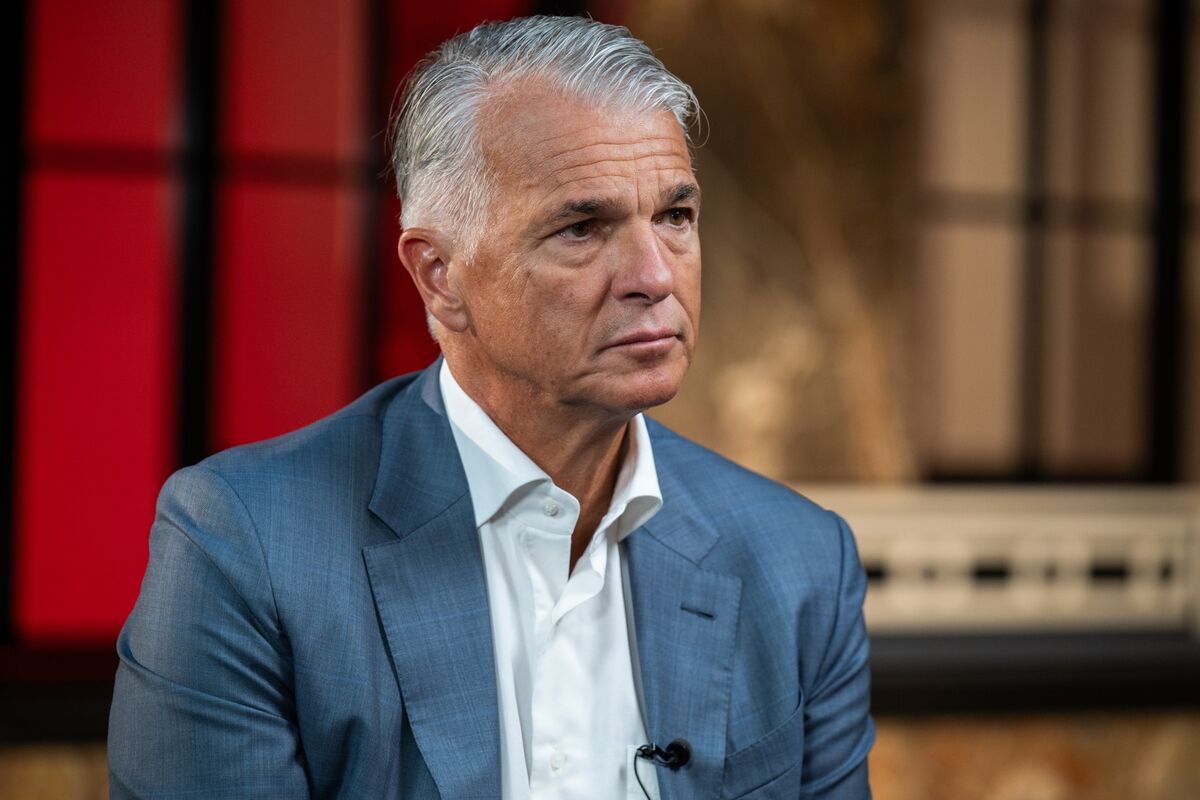
UBS remains in focus as the Swiss government pushes higher capital levels, with the Swiss finance chief warning a negotiated capital-compromise deal may not survive the legislative process—keeping pressure on capital planning. The article also flags spillovers from Mark Walter’s federal investigations into his broader insurance/financial empire, including pauses on certain product distributions and hesitation in commercial paper activity. Across banking, management/governance changes (e.g., potential supervisory-board shifts at Commerzbank) and a push to manage lending for AI data centers are additional cross-currents for credit and liquidity conditions.
Analysis
UBS is facing a classic multiple-ceiling problem: when a regulator can force materially more capital, the market starts discounting buybacks, ROE durability, and management’s ability to run the balance sheet for growth rather than safety. That is not an insolvency story; it is a distribution-story, which typically shows up first in the valuation gap versus global peers and then in lower EPS leverage over the next 6-18 months. If the legislative process hardens, UBS should trade like a permanently constrained wealth manager rather than a premium franchise.
The spillover from investigations into a financier’s empire is a reminder that funding stress often starts in the shadows before it hits headline credit metrics. When banks hesitate on product distribution and money-market desks get cautious, the second-order effect is tighter terms for adjacent lenders, insurers, and specialty finance names that rely on short-duration wholesale funding. That usually matters over days to weeks in spreads, but it can become a months-long earnings issue if commercial paper and repo counterparties keep pulling back.
Commerzbank and Truist are more about governance than fundamentals: in both cases, the stock is hostage to execution credibility and control fights rather than near-term macro. For CRZBY, takeover optionality can support the downside, but the political overhang makes the timing path messy and likely multi-month; for TFC, a new CEO can improve sentiment, but the stock needs evidence on expense discipline and net interest income before the market assigns anything other than a reclaim-the-burden multiple. Contrarian take: the UBS move may be less about fear than about forcing a lower payout profile; the better short is relative-value UBS versus stronger-capitalized money-center banks, not broad bank beta.
AllMind Terminal
AI-powered research, real-time alerts, and portfolio analytics for institutional investors.
Request TrialMarket Sentiment
Overall Sentiment
mildly negative
Sentiment Score
-0.20
Ticker Sentiment
Key Decisions for Investors
- Short UBS ADR on regulatory overhang; target a 1-3 month horizon and use any relief rally into policy optimism to add. Falsifier: Swiss lawmakers soften capital demands or UBS announces offsetting buybacks / capital actions that preserve ROE.
- Pair trade: short UBS vs long JPM or XLF to isolate idiosyncratic capital-regime risk from general bank sentiment. Risk/reward is better than outright shorting bank beta because the issue is valuation compression, not system stress.
- Do not chase TFC on the CEO transition alone; wait 1-2 quarters for measurable improvement in efficiency ratio and deposit betas. If those metrics fail to inflect, it stays a dead-money multiple trap rather than a turnaround.
- Set a watch item on CRZBY for governance milestones, not headlines. Only consider a tactical long if board-control terms become concrete enough to re-rate takeover probability; otherwise the spread can stay range-bound for months.
More News
- Tech Rally Loses Steam In Europe as Oil Rises
- Peloton is revamping its treadmills with new features in the next phase of its turnaround
- Mizuho comments on Quest, LabCorp after Medicare rate proposal
- What to watch: KB Home earnings amid homebuilder pressures
- UBS CEO calls 90% capital proposal no real compromise
- UBS reiterates Buy on Option Care Health stock on execution focus