
Microsoft: Don't Let The Smaller Dividend Hike Fool You
Source: seekingalpha.com
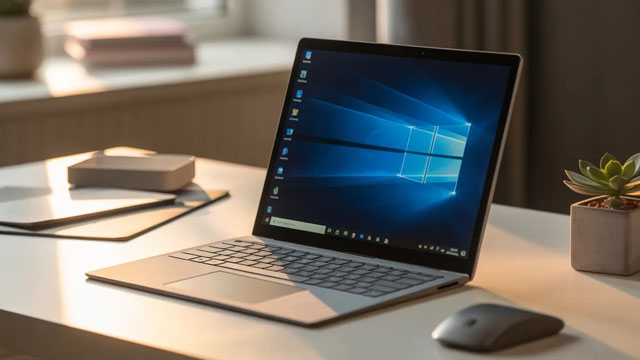
Microsoft remains rated Buy despite recent underperformance, as FY26 revenue rose 18% and Azure revenue grew 43%, supported by aggressive AI and cloud investment. Elevated hyperscaler CAPEX is pressuring margins and free cash flow, while dividend growth slowed to 8%; however, the 52% payout ratio and strong balance sheet preserve substantial dividend coverage.
Analysis
The key valuation question is no longer Azure growth durability but whether incremental AI revenue earns above the cost of the capacity required to serve it. If depreciation, power, and networking costs continue rising faster than AI monetization, MSFT can sustain top-line momentum while consensus trims FY27 operating-margin and FCF estimates; that combination limits near-term multiple expansion even with strong reported growth. The more attractive second-order beneficiary may be Oracle (ORCL), which can capture AI infrastructure demand with a smaller installed-base monetization hurdle, while data-center equipment and power suppliers retain pricing power until hyperscaler capex budgets normalize.
Over the next 1-3 months, MSFT is likely to trade on capex guidance, Azure growth reacceleration, and evidence that Copilot converts from seats deployed to paid, recurring usage. A favorable setup requires Azure growth to remain above roughly 40% while capital intensity stabilizes; otherwise the market will increasingly treat AI spending as a lower-return utility buildout. The 6-18 month upside case is material if Copilot raises ARPU across Microsoft 365 and GitHub without proportionate inference costs, because the company can then leverage its distribution advantage over standalone AI vendors.
Consensus may be too focused on dividend-growth deceleration as a signal of financial strain. The more relevant issue is capital-allocation optionality: a strong balance sheet permits MSFT to fund capacity through the build phase while smaller cloud competitors face financing constraints. That said, this is not a clean immediate long absent visibility into depreciation schedules, contractual power commitments, and AI-specific gross-margin disclosure; those data determine whether current capex is value-accretive or simply defensive.
AllMind Terminal
AI-powered research, real-time alerts, and portfolio analytics for institutional investors.
Request TrialMarket Sentiment
Overall Sentiment
mildly positive
Sentiment Score
0.28
Ticker Sentiment
Key Decisions for Investors
- Maintain MSFT as a core long but stage additions around the next earnings/capex update rather than chase strength. Add only if Azure growth remains above 40% and management indicates FY27 capex growth is moderating; target a 6-12 month rerating from improving FCF conversion. Falsifier: Azure decelerates below 35% alongside another material increase in capex guidance.
- Express the relative AI-infrastructure view via long MSFT / short Google (GOOGL) in equal-dollar size for 3-6 months. MSFT has a clearer enterprise distribution path for paid AI features, while Google has greater search-monetization disruption risk and comparatively less transparent AI return disclosure. Exit if Google demonstrates sustained Cloud margin expansion plus Search resilience, or if MSFT Copilot monetization fails to appear in commercial ARPU.
- Use a defined-risk options structure rather than outright upside exposure before results: buy MSFT 6-month call spreads, financed only partially with out-of-the-money puts. This captures evidence of capex discipline and Copilot monetization while limiting exposure to a multiple reset if FCF disappoints; avoid short-dated calls because the catalyst is likely to require multiple reporting periods.
- Monitor ORCL as a watch-list long rather than a substitute recommendation: initiate only if backlog/RPO conversion translates into cloud gross-margin improvement. The trade benefits from AI capacity scarcity, but is falsified by continued financing-driven capex escalation without operating leverage.
More News
- AI almost led the US military to start a war with China, report says
- Traders Wary Of Rising AI Risks: Market Snapshot
- Trump’s Anti-Bias AI Order Is Just More Bias
- Microsoft executive called OpenAI's web scraping the 'largest theft of labor in human history'
- Who gets to decide how quickly AI moves?
- Stocks are headed for another losing week. One group is limiting the decline