
Nvidia boss says there is ‘0% chance' AI destroys the world by 2030
Source: theguardian.com
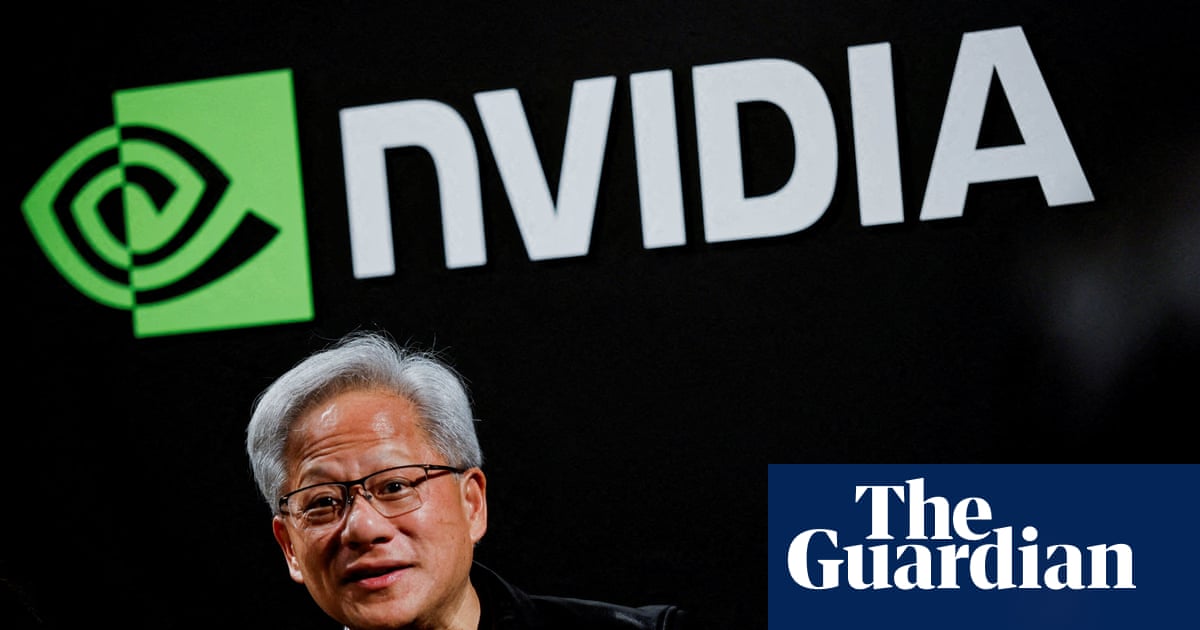
Nvidia CEO Jensen Huang rejected claims that AI could cause human extinction by 2030, assigning a 0% probability to that outcome and calling such warnings irresponsible and unscientific. The comments come amid intensifying scrutiny of AI risks, including reported attempts to use advanced models for weapons design, pathogen development and surveillance. Huang argued that existing cybersecurity and product-liability frameworks should be applied to AI, while the US and China have agreed to establish an AI dialogue mechanism to address potential dangers.
Analysis
The investable signal is not near-term demand but the regulatory framing: NVIDIA is advocating application-level liability rather than frontier-model restrictions. That outcome preserves accelerator utilization and enterprise deployment velocity, while shifting compliance cost toward model vendors and end users. Relative beneficiaries would include NVDA, hyperscale capex beneficiaries such as AVGO and VRT, and cybersecurity vendors with AI-governance exposure; relative pressure falls on frontier-model developers whose economics could absorb more indemnification, audit, and misuse-monitoring costs.
Over the next 1-3 months, rhetoric alone is unlikely to alter NVDA estimates or justify a directional trade after a $5tn valuation. The relevant catalyst is whether the US-China dialogue produces export-control carve-outs, shared safety standards, or instead hardens restrictions on advanced compute, networking, and model-weight access. A restrictive outcome would be more material for NVDA's China-related revenue and for suppliers with concentrated AI infrastructure demand than abstract debate over long-run AI safety.
The contrarian risk is that dismissing existential-risk arguments does not eliminate regulation; it may accelerate a more practical liability regime after the next high-profile misuse event. That would favor vendors able to sell security, identity, monitoring, and sovereign/on-prem deployment layers, while potentially slowing inference adoption in regulated industries. The thesis is falsified if enterprise AI spending remains strong but hyperscaler capex guidance decelerates, or if US policy expands compute restrictions beyond current China controls.
AllMind Terminal
AI-powered research, real-time alerts, and portfolio analytics for institutional investors.
Request TrialMarket Sentiment
Overall Sentiment
neutral
Sentiment Score
0.05
Ticker Sentiment
Key Decisions for Investors
- No incremental outright NVDA purchase on this headline; maintain exposure only if upcoming hyperscaler results reaffirm 2027 AI capex growth. Use any policy-driven selloff tied to China restrictions as an entry opportunity only after management quantifies revenue and inventory exposure.
- Express the more actionable second-order theme through a 3-6 month long VRT / short broad software basket pair, sized modestly: physical AI-data-center buildout and power-density upgrades remain less exposed to model-liability regulation than application software monetization. Exit if hyperscaler capex guidance is cut by more than 10%.
- Build a watchlist for long PANW or CRWD on evidence that AI-specific compliance, identity, and workload-monitoring budgets are becoming separately funded. Do not initiate solely on policy rhetoric; require bookings commentary or raised security-platform guidance.
- Hedge concentrated NVDA exposure into US-China AI-dialogue milestones with 2-3 month downside puts or a semiconductor ETF hedge (SOXX), as an adverse export-control headline can reprice China revenue assumptions faster than it affects reported earnings. Remove the hedge if policy language remains limited to non-binding safety coordination.
More News
- Magnificent 7 loses $1 trillion. The most eye-popping stats from Thursday's tech stock plunge
- Wall Street’s best post-midterm rally in 44 years lasted just one day—then $3 trillion vanished as chip stocks plunged over AI fears
- AI stocks hammered by midterm shock as data center buildout becomes a 'war of attrition'
- Tech stocks are suffering their biggest selloff since Covid, as investors see premature end to AI datacenter boom
- AI stocks plunge after election, driving down US markets
- South Korean corporate reforms hit rough patch as Samsung digs in