
Rubio’s Diplomatic Finesse Has Been Most Effective With Trump
Source: Bloomberg
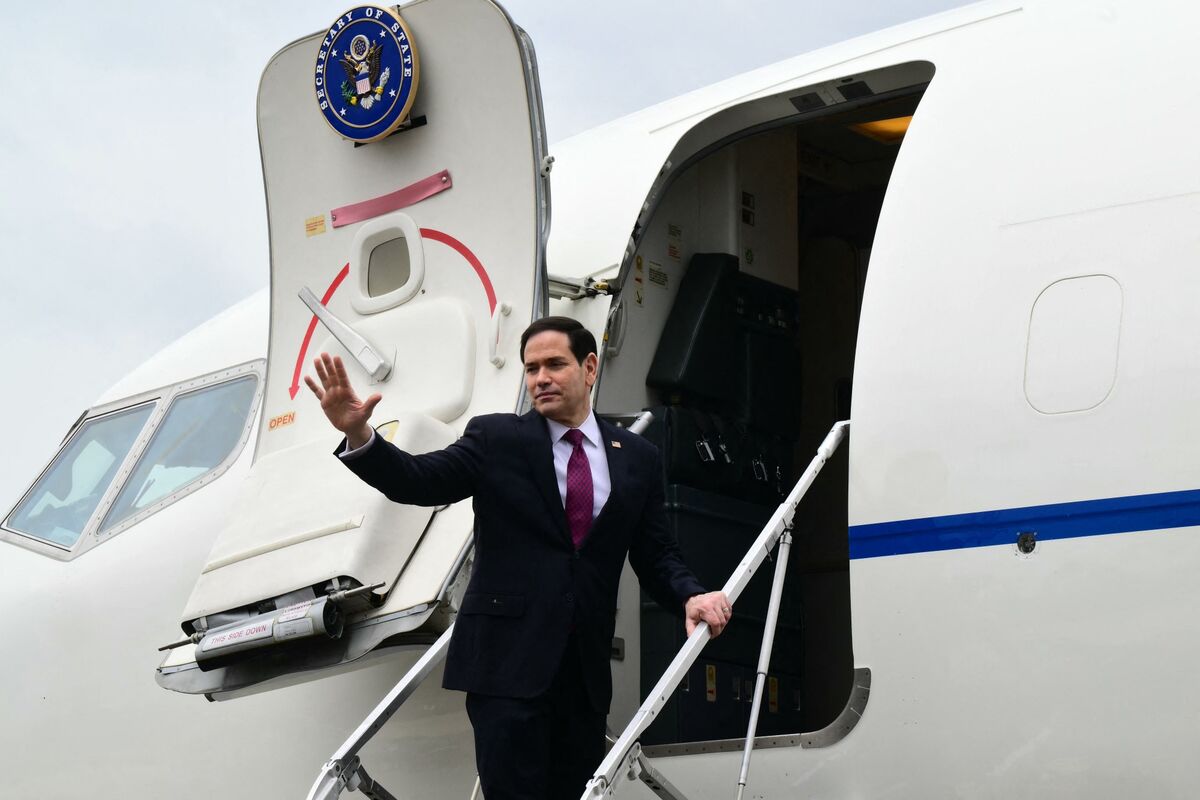
The article examines Secretary of State Marco Rubio's influence within the Trump administration, particularly his effectiveness in Oval Office diplomacy and speculation surrounding potential 2028 political ambitions. The excerpt provides no specific policy decisions, economic measures, or market-moving developments.
Analysis
This is primarily personnel-positioning noise rather than a monetizable policy signal. With no identified shift in tariffs, sanctions, fiscal policy, agency leadership, or legislative vote count, the market should not assign an earnings or valuation impact to speculation around future political ambitions.
The relevant second-order risk is that an unusually concentrated foreign-policy and national-security decision process can raise the variance of event-driven outcomes: abrupt sanctions, trade restrictions, export-control changes, or diplomatic reversals would most directly affect defense, energy, semiconductors, and China-exposed industrial supply chains. That is a regime-risk consideration over 6-18 months, not a near-term catalyst.
Consensus is prone to overread proximity to the Oval Office as a durable policy mandate. Cabinet influence is contingent on presidential alignment and can change quickly; absent concrete executive actions, agency directives, or confirmation of authority over specific portfolios, there is no basis to reposition sector exposure. The actionable signal would be observable policy implementation, not political-profile commentary.
AllMind Terminal
AI-powered research, real-time alerts, and portfolio analytics for institutional investors.
Request TrialMarket Sentiment
Overall Sentiment
neutral
Sentiment Score
0.00
Key Decisions for Investors
- No directional trade recommended on this item; treat as low-impact political commentary rather than a sector catalyst over the next 1-3 months.
- Maintain an event watchlist for semiconductor export-control announcements (SMH, NVDA, AMD, ASML), Iran/Russia sanctions actions (XLE, LNG, defense primes), and tariff directives affecting China-exposed industrials (XLI, CAT, DE). Reassess only upon a formal policy action.
- For portfolios with concentrated China technology exposure, retain existing geopolitical hedges rather than add risk: a modest SMH put-spread overlay can protect against an abrupt export-control escalation, but entry should be driven by implied-volatility pricing and confirmed policy signals, not this report.
More News
- California AG Says Paramount-WBD Merger Would Hurt the State
- How Bessent, America’s bond salesman, cornered Japan on big spending
- ‘It’s a raise against Trump:’ Despite inflation being ahead of target for five years, Trump says the Fed’s latest hike is political
- Trump administration approves sale of F-35 jets to Saudi Arabia
- ‘They called us’: Has Trump abandoned Bab al-Mandeb to the Houthis?
- Treasury yields move lower after Fed kicks off hiking cycle
From AllMind Research
- Anthropic IPO Preview: Valuation, Timing, and What to Watch
- Shein After the IPO: Venue, Valuation, and What Must Be Proved
- What AI Research Tools Should a Small Hedge Fund Buy First?
- AI Tools for Private Equity Due Diligence: A Buyer Workflow
- Weekly Update: In-App Tutorials, Futures Data, and Watchlist Enhancements