
ZestyAI Surpasses 500 Regulatory Approvals as Carriers Accelerate Adoption of Its AI Risk Models
Source: PR Newswire
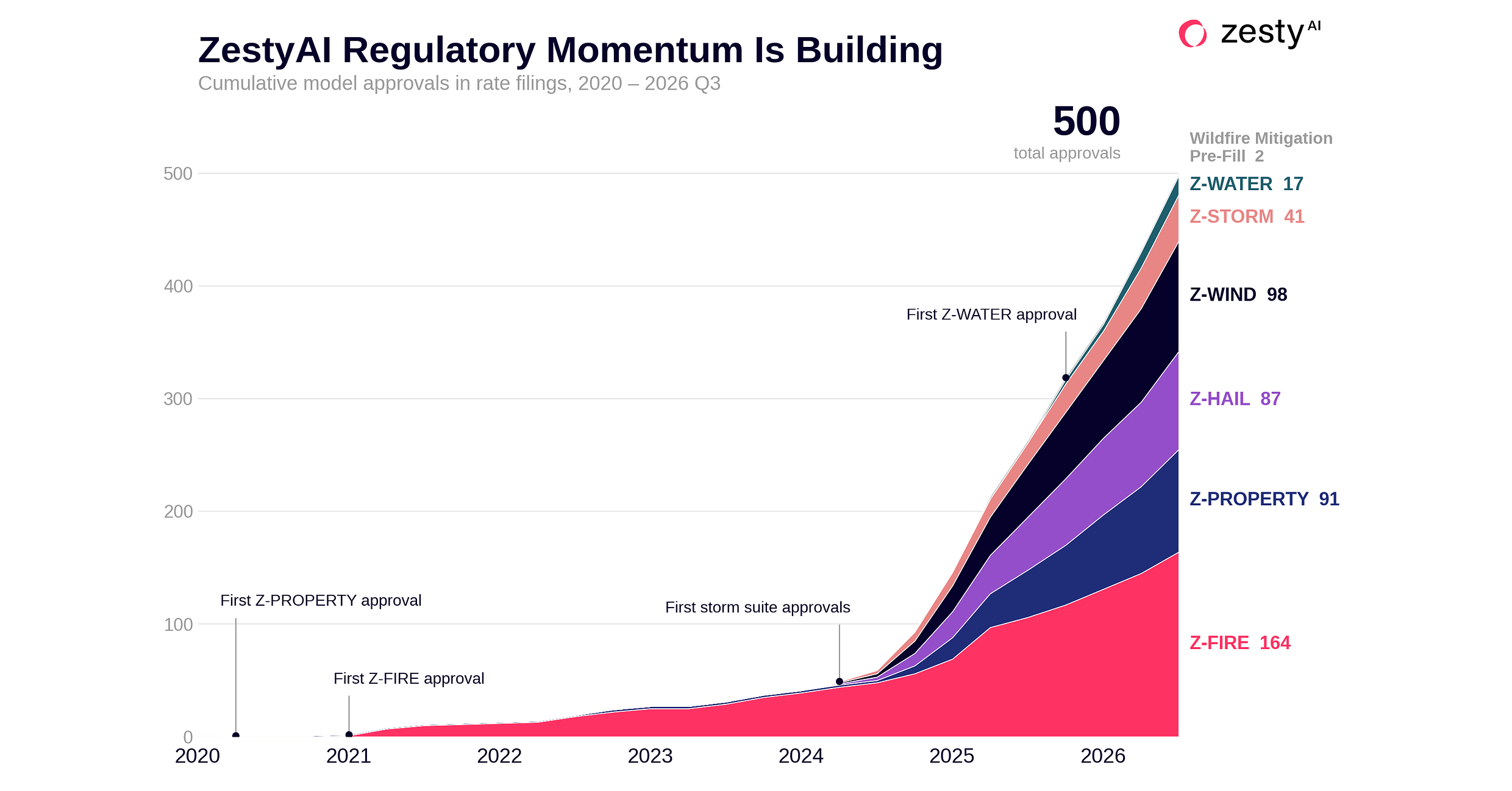
ZestyAI said its risk models have surpassed 500 regulatory approvals across 317 carrier rate and rule filings in 44 states, covering major property perils including wildfire, severe storm, hail, fire and water. The company said more than half of the top 100 U.S. P&C insurers rely on its models; approvals include the first AI model used in a carrier wildfire rate filing in California.
Analysis
The investable signal is a lower-friction path for carriers to use property-level risk selection—not proof that the models improve underwriting economics. Regulatory acceptance can widen the pool of eligible users and make model review a competitive moat for ZestyAI, but approvals do not establish deployment depth, pricing adequacy, or loss-ratio benefit. The key economic test is whether carriers can translate finer risk segmentation into durable rate adequacy without losing attractive business or triggering consumer and regulatory backlash.
Second-order effects cut both ways. Better identification of mitigation may reward hardened properties and support capacity in exposed areas; more precise risk sorting can also concentrate unaffordable or uninsurable risks among residual-market programs and public backstops. Reinsurers may benefit from clearer portfolio-level risk information, but only if independent validation shows the scores improve accumulation control rather than simply re-labeling known catastrophe exposure.
For public markets, the read-through is incremental and sector-wide; ZestyAI is not identified here as a listed company. A press-release milestone is not a standalone catalyst for insurer multiples. The contrarian risk is that approval counts measure regulatory reach, not model performance, and state-by-state acceptance can be constrained by evolving fairness, explainability, and consumer-protection standards. Near term, avoid chasing the announcement. Over 1–3 months, look for carrier filings and earnings evidence of deployment and rate adequacy; over 6–18 months, monitor whether property-level pricing sustains capacity without worsening retention or regulatory friction.
AllMind Terminal
AI-powered research, real-time alerts, and portfolio analytics for institutional investors.
Request TrialMarket Sentiment
Overall Sentiment
moderately positive
Sentiment Score
0.40
Key Decisions for Investors
- No direct trade on this release: treat the approval count as a distribution indicator, not evidence of incremental earnings or a validated underwriting edge.
- Watch public P&C carrier disclosures and state rate filings for measurable adoption, premium mix, rate changes, loss trends, and retention. A credible improvement in catastrophe-exposed property results would support a relative preference for carriers demonstrating disciplined, risk-based pricing over broad sector exposure.
- Track California capacity and residual-market trends as the key near-term test. If private-market availability improves without deterioration in reported catastrophe loss experience, the capacity-restoration thesis strengthens; continued insurer exits or worsening residual-market exposure would falsify it.
- For a 6–18 month thesis, monitor regulatory actions on model fairness and explainability, plus independent validation of loss-prediction performance. Restrictions, adverse consumer outcomes, or no observable underwriting benefit would weaken the technology-adoption case.
More News
- Why is Samsung Electronics stock plunging today?
- SK Hynix plunges 8% amid Asia tech rout as Fed rate hike fears, AI funding worries mount
- Elon Musk says Trump is 'ultimately' responsible for any curbs on Ukraine's Starshield systems
- SK Hynix seeks U.S. chip equipment exports to China tied to new factory
- Dell stock plunges 11%, leading data center sell-off on concerns about 'enterprise AI timing'
- UBS considers leaving Switzerland over capital rule plans, WSJ reports