
Data Center Restrictions Make the Ballot in Dozens of US Cities
Source: Bloomberg
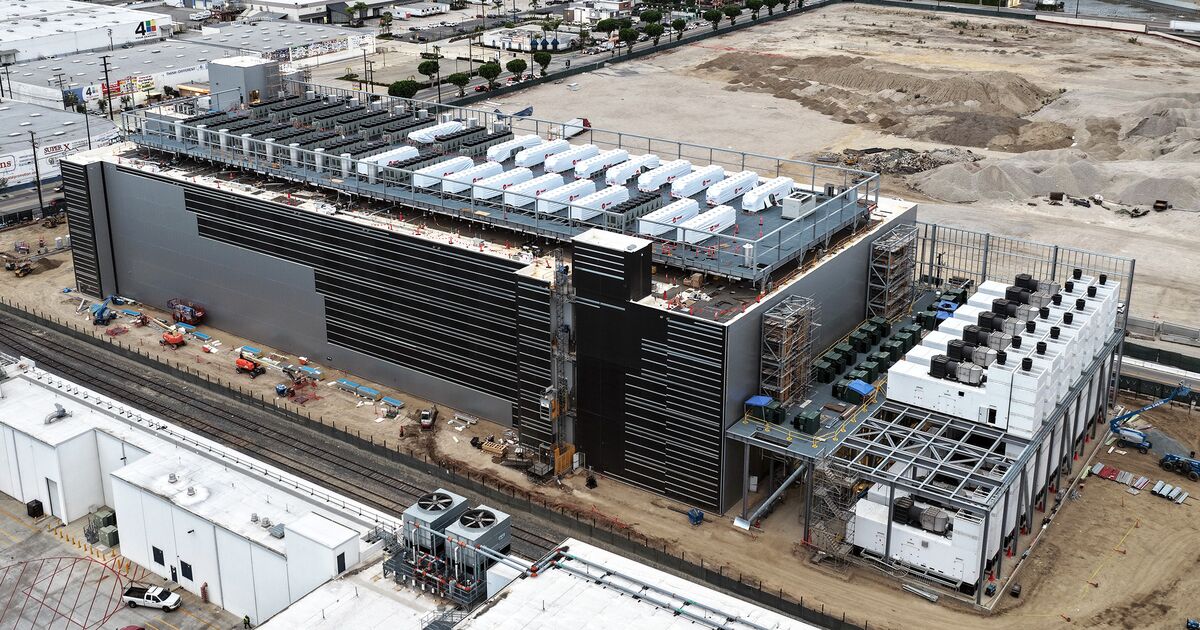
Voters in dozens of US cities and counties may decide on measures to tax, regulate or ban data-center development. The proposals could put hundreds of billions of dollars of investment at stake and create challenges for hyperscalers such as Meta Platforms and developers such as Applied Digital, but no outcomes are reported.
Analysis
The key exposure is not a nationwide demand shock but a rising location-and-permitting premium. If votes constrain a subset of municipalities, projects may move rather than disappear: already-permitted sites and jurisdictions willing to supply power and water could gain bargaining power, while developers with less flexible project pipelines face delay and higher site, utility, or compliance costs. That asymmetry makes Applied Digital more vulnerable than Meta in principle; verify the share of Applied Digital’s contracted and planned capacity in affected jurisdictions before sizing any position. Meta’s scale may help it reroute investment, but relocation still risks slower capacity delivery and higher infrastructure costs.
Near term, treat ballot headlines as volatility, not proof of impaired cash flows. Over 1–3 months, election outcomes and subsequent permitting rules matter more than proposal counts. Over 6–18 months, watch whether restrictions spread, whether projects migrate to alternative regions, and whether power availability—not data-center demand—becomes the binding constraint. The contrarian point: local resistance could redistribute investment and reinforce the advantage of large operators and permitted sites rather than halt AI infrastructure spending. The thesis weakens if affected proposals fail, rules are narrowed, or company disclosures show little project exposure; it strengthens with material project delays, cancellations, or downward revisions to capacity plans.
AllMind Terminal
AI-powered research, real-time alerts, and portfolio analytics for institutional investors.
Request TrialMarket Sentiment
Overall Sentiment
mildly negative
Sentiment Score
-0.20
Ticker Sentiment
Key Decisions for Investors
- Avoid treating this as a broad short of AI infrastructure. Keep exposure selective until ballot results and jurisdiction-level rules clarify whether projects are blocked, taxed, or merely delayed.
- Consider a modest relative underweight in Applied Digital versus Meta only after verifying Applied Digital’s site-level exposure, contracted megawatts, and cancellation or delay terms. The pair thesis is invalidated if those projects are largely outside affected jurisdictions or Meta faces comparable delivery constraints.
- Track election results and permitting decisions over the next 1–3 months; over 6–18 months, monitor capacity-plan revisions, project milestone slippage, and migration to alternative power markets. These are more decision-useful than headline counts of proposed restrictions.
- Watch for beneficiaries among operators with already-permitted capacity and jurisdictions with available power, but do not assume higher pricing or margins without evidence of utilization and contract repricing. No high-conviction trade is warranted on the article alone.
More News
- S&P’s negative outlook on Meta underscores the risks of the AI spending boom
- Google says Asian advertisers spending less due to Europe's customs changes
- Apple’s new CEO Ternus to face first earnings test as memory costs surge
- Google says Asian advertisers spending less off due to Europe's customs changes
- The agentic web is here
- Shadowy Indian election ‘consultants’ add US midterms to global footprint