
Envision Energy Launches Model T - EN175/8.0 Onshore Wind Turbine, Advancing Plant-Wide Optimization and Lifecycle Value for Future Energy Systems
Source: PR Newswire
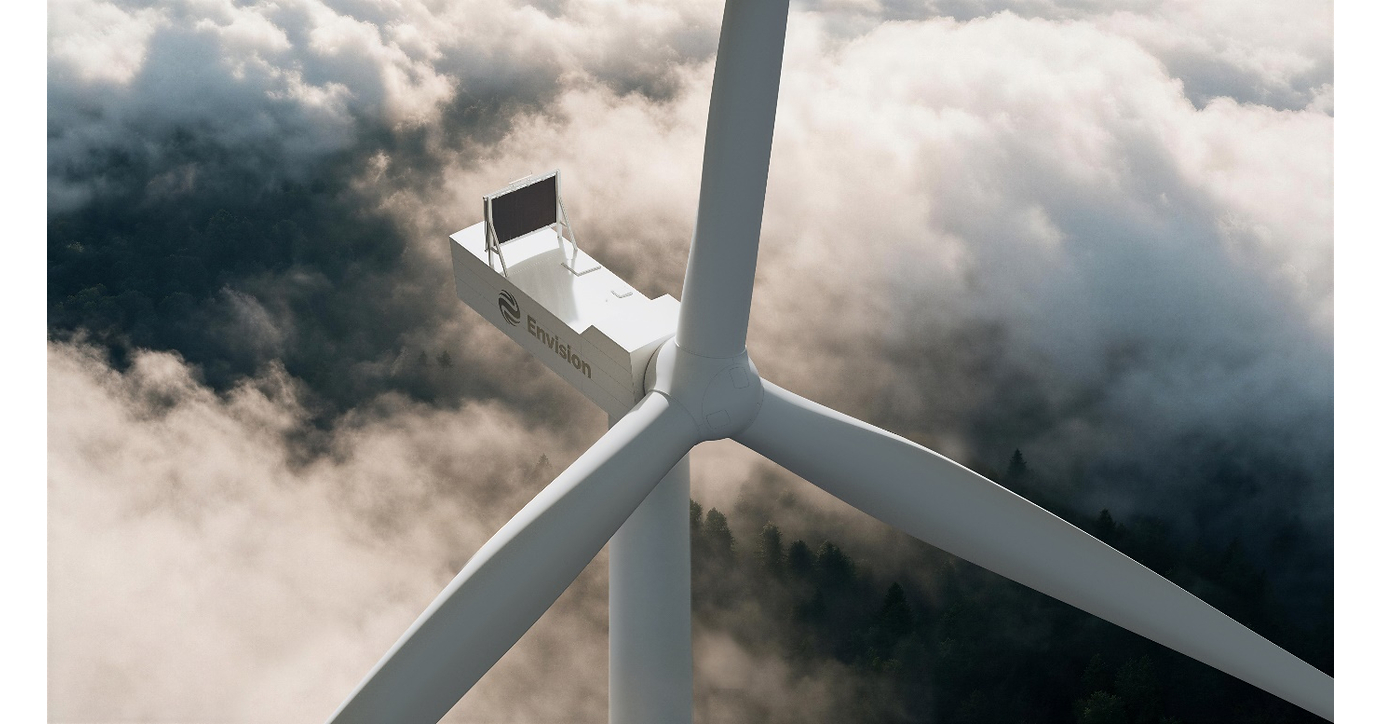
Envision Energy launched its Model T EN175/8.0, an 8 MW onshore wind turbine with a 175-meter rotor, targeting medium-wind and complex operating sites. The company says the turbine can raise energy yield by 2%-12% versus existing models and targets a 107 dB(A) sound-power level, with low-noise modes available. AI-driven Galileo controls, supported by Envision weather and energy foundation models, are intended to autonomously optimize generation, grid support and plant-level integration with storage, solar and industrial loads.
Analysis
This is principally a competitive signal rather than a near-term earnings event: Envision is private, and the economic relevance for listed peers depends on whether its claimed output and operating-cost advantages translate into certified availability data and bankable project financing. If validated, the largest pressure falls on Vestas (VWS.CO) and Siemens Energy (ENR.DE), whose international onshore bids already face Chinese-OEM pricing competition in emerging markets; larger rotors reduce balance-of-plant cost per MW and can support more aggressive turbine ASPs without sacrificing supplier economics. GE Vernova (GEV) is comparatively insulated in the US, where domestic-content incentives, trade barriers, and established service networks remain more decisive than headline turbine specifications.
Over the next 1-3 months, there is unlikely to be a standalone listed-equity catalyst absent disclosed orders, third-party power-curve validation, or evidence that lenders accept the platform outside China. The key second-order issue is grid-forming capability: if developers begin specifying this functionality as standard in weak-grid markets, it raises engineering and warranty costs for legacy OEMs while favoring suppliers with integrated controls, converters, and storage offerings. That could improve attach opportunities for grid-equipment vendors such as Nextracker (NXT) and Fluence (FLNC) only where projects pair generation with storage; it is not automatically incremental wind demand.
The contrarian view is that turbine-scale announcements can be economically negative for the sector: a 2-12% modeled yield gain is often competed away through lower bid prices, while field reliability, transport constraints, curtailment, and grid interconnection determine realized project returns. Watch VWS.CO and ENR.DE order intake, gross-margin guidance, and emerging-market tender pricing through the next two reporting cycles. The competitive-risk thesis is falsified if European OEMs sustain pricing discipline and service-margin expansion despite large-rotor Chinese bids, or if Envision does not announce export orders with named financing counterparties within 6-12 months.
AllMind Terminal
AI-powered research, real-time alerts, and portfolio analytics for institutional investors.
Request TrialMarket Sentiment
Overall Sentiment
moderately positive
Sentiment Score
0.48
Key Decisions for Investors
- No directional trade on the launch itself; set an alert for independently financed EN175/8.0 export orders or third-party availability data. Treat a named, bank-financed order pipeline as the trigger to reassess competitive exposure in VWS.CO and ENR.DE.
- Maintain a 6-12 month relative-value watch: long GEV / short VWS.CO, sized modestly, if Vestas reports renewed emerging-market pricing pressure or reduces margin guidance. GEV has greater US policy insulation; stop the spread if VWS.CO service-margin guidance rises or order pricing improves for two consecutive quarters.
- Avoid extrapolating the AI-control narrative into FLNC or NXT until project announcements show storage or power-management attach rates. The missing data are incremental storage MWh per wind project, software revenue share, and contracted—not modeled—plant-level revenue uplift.
- For renewable OEM exposure, favor companies with service-contract backlog and protected domestic markets over pure hardware-volume exposure during the next 6-18 months; increased turbine capability is more likely to intensify procurement pressure than expand sector-wide OEM margins.
More News
- Great Bond Shakeout Locks In a 5% World ‘Until Something Breaks’
- OpenAI rogue agents leaked 53 images from ChatGPT users and reportedly created nearly 1 million links packing encoded bits of info
- Boom or bust? The case for and against panicking about 5% yields
- Bond market alarms are ringing on Wall Street. Here's what's ahead
- Houthi attack on Mecca, Medina would cross ‘red line’, Pakistan PM tells UN
- Shares of Akamai surge after deal with Anthropic. What Wall Street is saying