
Disney's Free Cash Flow Faces Pressure: Can Higher Investment Pay Off?
Source: zacks.com
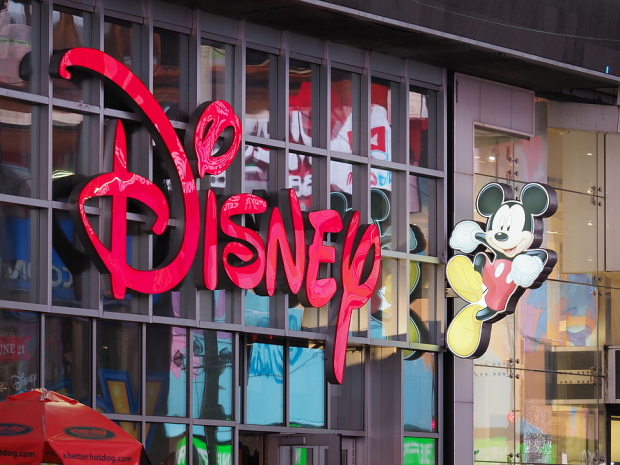
Disney's nine-month FY2026 free cash flow fell 24% year over year to $5.74 billion as capital investment in parks and resorts increased to $6.78 billion, while operating cash flow declined to $12.5 billion from $13.6 billion. The company expects approximately $9 billion of FY2026 capex and $24 billion of content spending, sustaining near-term cash-flow pressure. Offsetting this, Q3 free cash flow rose 63% to $3.07 billion, Experiences revenue increased 10% and segment operating income grew 20%, while 2026 box office surpassed $4 billion. Consensus FY2026 EPS is $6.91, up $0.03 in 30 days, although DIS shares remain down 8.3% over the past year.
Analysis
Disney’s issue is not simply elevated investment; it is the timing mismatch between cash spend and monetization. Parks projects carry multi-year construction periods and content amortization can precede subscriber, affiliate, licensing and consumer-products revenue, leaving FY26 free-cash-flow conversion vulnerable even if segment operating income remains strong. This constrains the scope for accelerated buybacks and makes the equity more sensitive to any miss in Experiences attendance, per-cap spending, or direct-to-consumer profitability over the next 1-3 quarters.
The competitive consequence is asymmetric. NFLX can spread incremental programming expense across a larger, more globally scaled subscription and advertising base, while DIS must fund both a capital-intensive physical footprint and sports/content obligations. WBD is the higher-beta read-through: evidence that international streaming growth can be achieved without a material marketing-led cash burn would validate a rerating case, but its balance-sheet leverage means it cannot sustain a prolonged content arms race. Vendors with exposure to park construction and attraction systems may see order support, but Disney’s spending does not automatically translate into near-term equity upside unless management demonstrates returns through attendance capacity and pricing rather than simply higher capex.
Consensus may be overemphasizing the discount to media peers and underweighting the cash-flow trough. The counterpoint is that quarterly cash-flow improvement, if sustained for two more reports, would shift the narrative from under-earning FCF to a temporary investment cycle and permit multiple expansion. Key falsifiers: Experiences operating-income growth falling below high-single digits, FY26 capex exceeding plan, DTC profitability deterioration, or an earnings revision trend turning negative; conversely, stable guidance plus improving working-capital conversion is the near-term catalyst.
AllMind Terminal
AI-powered research, real-time alerts, and portfolio analytics for institutional investors.
Request TrialMarket Sentiment
Overall Sentiment
mixed
Sentiment Score
0.12
Ticker Sentiment
Key Decisions for Investors
- Remain neutral DIS into the next earnings report; do not underwrite a valuation rerating until management demonstrates that full-year free cash flow can absorb capex and content commitments without reducing capital-return capacity. Upgrade to tactical long only on maintained capex guidance and a second consecutive quarter of materially improved FCF conversion.
- Express relative streaming-scale exposure through long NFLX / short DIS over a 1-3 month horizon, sized modestly. The thesis is superior content-spend absorption and ad monetization at NFLX versus Disney’s competing calls on cash; exit if DIS raises Experiences margin or DTC profitability guidance, or if NFLX content spending accelerates faster than revenue.
- Keep WBD as a watch-item rather than a core long: sustained streaming EBITDA expansion could drive a sharper rerating than DIS, but only if net leverage declines and international subscriber growth is not purchased through marketing. Reassess after its next quarterly cash-flow and debt-repayment update.
- For DIS holders, use any earnings-driven rally absent higher FCF guidance to reduce exposure or sell upside calls 1-3 months out; the likely near-term ceiling is cash-return uncertainty rather than reported EPS.
More News
- Why Forgent Power Stock Keeps Going Up
- Paramount is ‘deadly serious' about leaving Hollywood as fight erupts over $111B merger
- Micron vs. Sandisk: Which AI Memory Stock Benefits More From Nvidia's $279 Billion Warning?
- Anthropic IPO Date: What Investors Need to Know Before It Prices
- Vistra vs. Constellation vs. Talen Energy: Which Nuclear-Heavy Stock Is the Better AI-Power Bet?
- Why GE Vernova Stock Crushed it on Wednesday