
States Where Trump’s Mail Voting Changes Would Matter Most
Source: Bloomberg
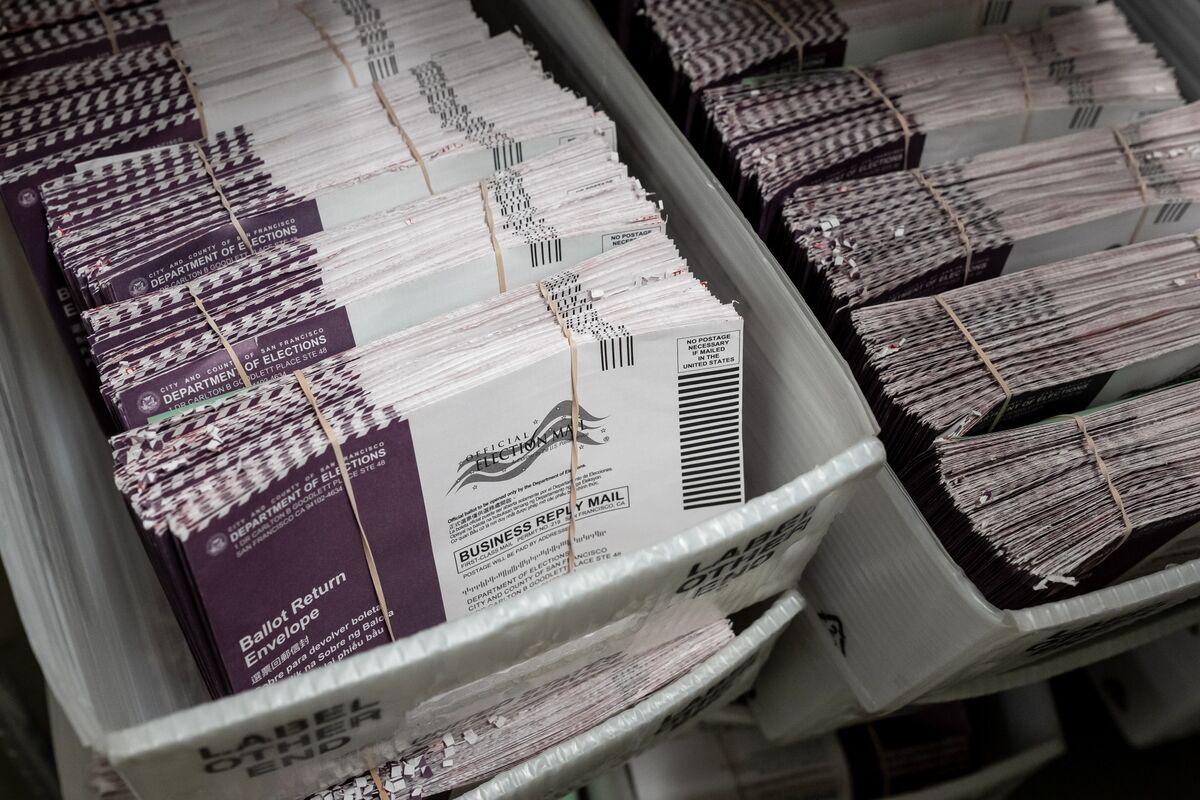
The piece frames mail-voting changes as a potential swing factor across key battleground states, with coverage spanning from Florida to California. It does not provide specific policy details, quantified election outcomes, or direct financial/economic effects, so the near-term market implications are likely limited.
Analysis
This is less an election headline than a forecast-input story: anything that changes ballot access changes which state-level coalitions can survive close margins, and that feeds into regulation with a lag. For CVX, the only durable channel is policy optionality — permitting, drilling approvals, and litigation posture — which matters over 6-18 months, not next week. In the near term, oil beta still dominates; don’t pay up for a political thesis if crude is not confirming it.
The immediate winners are campaigns with disciplined election-day operations and strong legal infrastructure; the losers are those relying on dispersed, lower-friction turnout. Second-order, this favors firms selling compliance, election tech, and media, while pollsters and momentum traders may face a noisier tape because the usual turnout models become less predictive. For DJT, the stock is a volatility vehicle: it can gap on narrative, but the actual policy implementation path is slow and vulnerable to court setbacks.
The contrarian view is that markets may be overestimating permanence. Courts, state administrators, and campaign adaptation can neutralize part of the effect within one cycle, so the cleanest edge is not directional politics but event-driven vol around rulings and state deadlines. If the newsflow is real but the implementation is still contested, implied volatility can stay rich while realized outcome sensitivity stays modest.
AllMind Terminal
AI-powered research, real-time alerts, and portfolio analytics for institutional investors.
Request TrialMarket Sentiment
Overall Sentiment
neutral
Sentiment Score
0.00
Key Decisions for Investors
- Sell DJT rallies via 2-6 week put spreads or call spreads after headline spikes; use defined risk because the stock trades on narrative more than cash flow. Falsify if court rulings or polling materially improve Trump-linked electoral odds before November.
- Do not force CVX into a short-term trade on this headline; keep it on a 6-18 month policy watchlist and only add on evidence that state outcomes are tilting toward lower regulatory friction. The thesis is invalid if crude weakens or energy policy remains unchanged post-election.
- If close-race data starts favoring less regulation, consider a relative-value basket long CVX / short ICLN over 3-6 months. Risk/reward is best if oil stays firm and clean-energy subsidy expectations stop widening; abandon if permit reform stalls or clean-tech policy remains intact.
More News
- Undermining the UN is not a new US policy
- Denmark says NATO shares responsibility for Arctic security under Greenland deal
- CNN, Politico, MS NOW to sue Trump administration over White House ban
- Trump to sign deal with Greenland and Denmark on U.S. military expansion
- Explainer-Why is Taiwan such an important issue for China?
- Bitcoin surges past $85k as Strategy buys more coins
From AllMind Research
- Anthropic IPO Preview: Valuation, Timing, and What to Watch
- Shein After the IPO: Venue, Valuation, and What Must Be Proved
- What AI Research Tools Should a Small Hedge Fund Buy First?
- AI Software for Buy-Side Teams: Build the Research Stack
- Augmented Intelligence: AllMind, Elevate Human Judgement With an Accessible, Powerful, Data-Driven Financial AI Toolkit