
American Giving Index: The Generation Americans Rank Least Generous Is Bringing the Most New Donors In
Source: PR Newswire
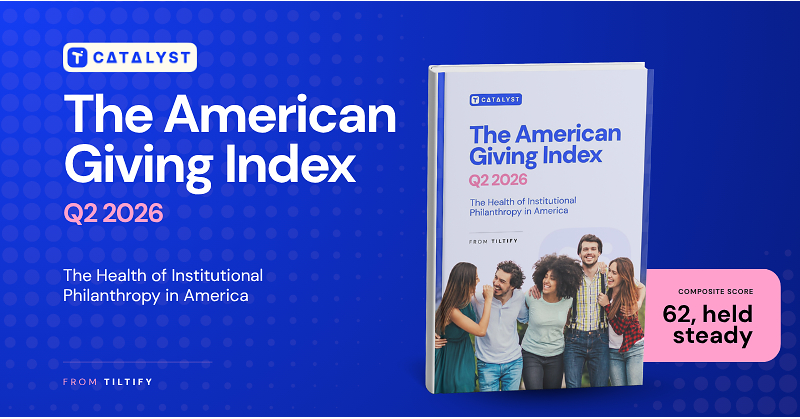
Tiltify Catalyst's Q2 2026 American Giving Index held at 62/100, unchanged from its inaugural reading, but showed materially stronger engagement among younger donors. Nine in 10 donors under 30 took an action to recruit others to a cause versus roughly one-third of donors aged 62+, while 48% of under-30 donors discover causes through social media, up from 36% in February. Financial constraints remain the main barrier to increased giving for 52% of respondents, while 28% gave through creator campaigns and 67% of those supporters backed causes they had not previously followed.
Analysis
This is not an investable read-through by itself: the survey is small, donor-screened, and issued by a private platform with a direct commercial interest in validating creator-led fundraising. The relevant public-market signal is a potential channel shift in charitable acquisition from legacy direct-mail and institutional databases toward social/creator distribution, but there is no disclosed donation-volume, retention, take-rate, or customer-acquisition evidence to quantify it.
If the behavior persists, the second-order beneficiary is payments infrastructure rather than a single fundraising platform. PYPL, SQ and GPN can benefit only where creator-led campaigns increase transaction frequency; however, charitable payment volume is immaterial to their consolidated earnings. The more meaningful medium-term implication is margin pressure for intermediaries dependent on opaque tipping or fee presentation, as fee transparency becomes a conversion and regulatory issue; private GoFundMe-like platforms are the more exposed universe, leaving no clean listed short.
Over 6-18 months, creator-mediated giving reinforces the value of social discovery and community tools, modestly supportive at the margin for META and AMZN/Twitch advertising and engagement ecosystems. The contrarian view is that recruitment activity is not donor lifetime value: younger cohorts may generate high top-of-funnel participation but lower recurring dollars, while affordability constraints can cap monetization. A recession or rising unemployment would likely reduce discretionary giving before it materially affects engagement metrics.
AllMind Terminal
AI-powered research, real-time alerts, and portfolio analytics for institutional investors.
Request TrialMarket Sentiment
Overall Sentiment
mildly positive
Sentiment Score
0.20
Key Decisions for Investors
- No standalone trade: treat this as a watch signal, not an earnings catalyst, given the absence of disclosed GMV, retention, take-rate, or nonprofit customer-growth data.
- Monitor PYPL and SQ quarterly disclosures for nonprofit/peer-to-peer payment-volume commentary and transaction-margin trends over the next 2-4 quarters; only consider incremental long exposure if management identifies measurable creator or charitable-volume growth without adverse take-rate pressure.
- Watch META engagement and creator-monetization disclosures over 6-12 months rather than attributing value to philanthropy directly. The thesis is falsified if creator engagement grows while ad pricing, time spent, and monetization fail to convert.
- For private-market diligence, flag fundraising intermediaries relying on default tips or unclear fee routing: a fee-transparency mandate or sustained donor avoidance could compress conversion and effective take rates within 12 months.
More News
- Costco makes progress on a key membership metric. Here's our new price target on the stock
- Why we like Starbucks’ latest turnaround move — plus, two more wins for Eli Lilly
- New York sues Polymarket over allegations of illegal gambling operations
- Argentina’s poverty rises to 32 percent under Milei with more pain forecast
- New York sues Polymarket U.S., two months after filing lawsuit against Kalshi
- Meta nears first new high in a year as Muse success showcases winning AI strategy