
Pressure Builds on Iran as Trump Expands US Military Presence
Source: Bloomberg
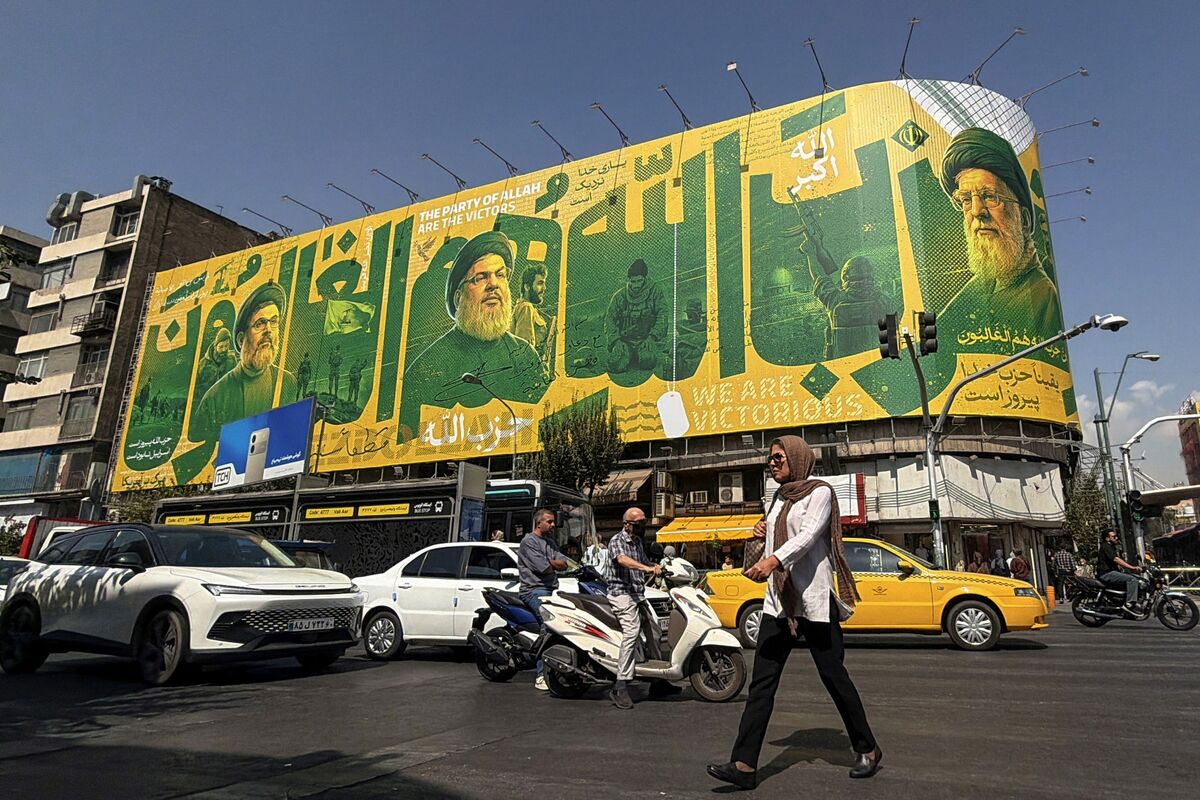
Iran faces intensifying pressure seven months into its war with the US, with inflation nearing 90% and a US blockade constraining its crude exports. President Trump is deploying another aircraft carrier and 10,000 sailors and Marines to the region as diplomacy remains stalled. Oil flows through the Strait of Hormuz are recovering despite threats of Iranian attacks, but the conflict and export disruption pose significant risks to regional energy supply and global markets.
Analysis
The market-relevant variable is not the military headline but the durability of physical transit through Hormuz versus the probability of a disruption that insurance, shipping, and refiners cannot absorb. If flows continue normalizing, the risk premium embedded in Brent and tanker rates should decay over days to weeks, pressuring crude beta while favoring refiners with discounted feedstock exposure. A sustained effective export blockade also removes Iranian barrels from Asian balancing supply, increasing marginal pricing power for Saudi/UAE spare capacity and non-OPEC Atlantic Basin exporters.
Second-order winners are defense and maritime-security suppliers rather than broad aerospace: RTX, LMT, NOC, GD and HII have the most direct exposure to missile interceptors, munitions replenishment, naval readiness and carrier maintenance. The near-term revenue impact is likely modest relative to existing backlogs, but supplemental appropriations or accelerated replenishment orders could support estimates and reduce program-risk discounts over 1-3 months. Commercial shipping is more asymmetric: tanker owners STNG, FRO and DHT benefit if war-risk premiums and longer routing persist, while container and dry-bulk names face higher fuel, insurance and schedule-disruption costs.
Consensus may overpay for a crude spike if Iran lacks the capacity to sustain a broad closure against expanded US presence. The more plausible escalation path is episodic attacks, cyber disruption, or mines—events that create sharp, tradable oil and freight spikes but not necessarily a lasting supply deficit. Conversely, any verified attack that interrupts export loadings or pushes underwriters to withdraw Hormuz coverage would rapidly invalidate the mean-reversion case; monitor Brent backwardation, VLCC spot rates, and Gulf war-risk premia rather than political rhetoric.
Over 6-18 months, prolonged enforcement tightens Tehran's fiscal constraint but also raises the incentive for asymmetric retaliation against regional energy infrastructure. Saudi and UAE production capacity becomes strategically more valuable, while Asian refiners with heavier reliance on sanctioned/discounted barrels may face margin volatility. The principal macro tail is an energy-driven inflation reacceleration: a sustained Brent move above $100 would complicate rate-cut expectations and favor energy cash-flow equities over long-duration growth.
AllMind Terminal
AI-powered research, real-time alerts, and portfolio analytics for institutional investors.
Request TrialMarket Sentiment
Overall Sentiment
strongly negative
Sentiment Score
-0.70
Key Decisions for Investors
- Initiate a 1-3 month pair: long ITA or RTX / short XLI. Defense replenishment and readiness demand have a clearer earnings pathway than broad industrial exposure if deployment persists; target 5-8% relative outperformance, exit if a credible de-escalation agreement is announced or supplemental procurement fails to emerge.
- Use tactical long tanker exposure via STNG or FRO on confirmed increases in VLCC rates or war-risk insurance premiums, not on headlines alone. Size for event risk; take profits after a 15-20% move because normalized transit would unwind freight scarcity quickly.
- Avoid chasing broad oil producers at elevated spot prices. Instead, buy 2-3 month XLE calls only if Brent breaks and holds above $90 with widening backwardation; a move toward $100 offers convexity, while a return below $85 or easing shipping premiums falsifies the supply-tightness signal.
- For inflation-risk hedging, rotate part of duration-sensitive growth exposure into XLE and select defense names if Brent sustains above $100 for two weeks. That threshold would raise the probability of higher-for-longer rates and multiple compression in long-duration equities.
- Set an alert for verified disruption to Saudi/UAE export infrastructure or insurer withdrawal from Hormuz coverage. Either would shift the base case from episodic risk premium to physical supply shock and justify increasing energy exposure while reducing airline and transport beta through JETS or IYT hedges.
More News
- Iran’s currency is getting obliterated as the regime is about to run out of oil to sell and can’t even get its money from customers
- Paramount Debt Drop Spells Trouble for Borrowers: Credit Weekly
- Brazil’s Lula and Bolsonaro close campaigns ahead of critical election
- U.S. to lend $4.2 billion to Vistra to boost nuclear power output, source says
- After threatening to ban U.S. exports of diesel fuel, Trump admits ‘we were never going to do it’
- How Nvidia, Micron and a surprising jobs report drove last week's stock action
From AllMind Research
- Anthropic IPO Preview: Valuation, Timing, and What to Watch
- Shein After the IPO: Venue, Valuation, and What Must Be Proved
- What AI Research Tools Should a Small Hedge Fund Buy First?
- AI Portfolio Monitoring: Build an Alert Policy Analysts Can Audit
- The Great Divergence: North American Banking at the Crossroads of Monetary Policy and Agentic AI (Q4 2025 Bank Earnings)