
Is the Options Market Predicting a Spike in CSX Stock?
Source: zacks.com
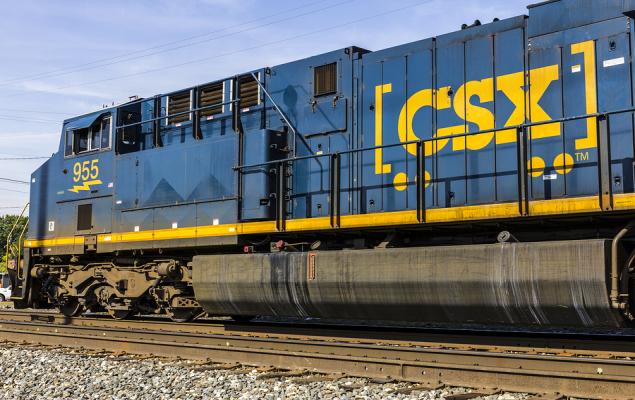
The December 18, 2026 CSX $15 call had among the highest implied volatility of equity options that day, indicating expectations of a potentially large move in either direction, not a forecast of a price spike. Over the prior 60 days, four analysts cut current-quarter estimates and none raised them, taking Zacks consensus EPS from $0.54 to $0.53; CSX retained a Zacks Rank #3 (Hold). The article notes that some options traders may sell high-volatility premium, aiming to benefit if the stock moves less than implied.
Analysis
The signal is more likely a contract-level liquidity/measurement issue than evidence of a market-wide CSX volatility event. With the December 18, 2026 expiry now roughly two months away, first establish whether the $15 call is materially in or out of the money. If it is deep in the money, little extrinsic value, a wide bid–ask spread, or sparse trading can make displayed implied volatility highly unstable; it does not, by itself, imply a large expected share-price move or direction. The modest estimate trim is not enough to validate a volatility thesis.
Near term, verify executable bid/ask, volume, open interest, last-trade time, and implied volatility across adjacent strikes and expiries before treating the print as information. Over 1–3 months, CSX’s operating indicators—volume, pricing, service performance, and cost trends—are more actionable catalysts than a single option quote. Over 6–18 months, rail-sector demand and operating execution matter, but this article supplies no evidence of a changed structural outlook. A genuine, broad-based repricing across liquid contracts or a material guidance/operating change would falsify the stale-quote interpretation.
AllMind Terminal
AI-powered research, real-time alerts, and portfolio analytics for institutional investors.
Request TrialMarket Sentiment
Overall Sentiment
mixed
Sentiment Score
-0.10
Ticker Sentiment
Key Decisions for Investors
- No trade on the reported IV spike alone. Request a live option-chain check, including spread width, open interest, trade timestamps, and comparable-strike/expiry volatility; treat the signal as unconfirmed until then.
- If elevated implied volatility is executable across liquid CSX strikes and exceeds a suitable realized-volatility benchmark, consider a defined-risk premium-selling structure rather than naked short calls. Avoid the $15 contract unless its extrinsic value and liquidity are demonstrably meaningful.
- Do not infer bearish direction from the estimate revisions or bullish direction from call IV. Reassess after CSX operating updates or earnings guidance; a broad IV normalization without deterioration in volumes, pricing, or service would support fading the volatility premium.
- Falsification watch: a persistent repricing across the CSX volatility surface, a material change in company guidance or operating metrics, or confirmation of a near-term event could make the options activity informative rather than a contract-specific anomaly.
More News
- Namibia battles cattle disease outbreak as EU suspends several meat imports
- Airport attacks put aviation in crosshairs of geopolitical conflicts
- Houthis threaten Saudi Arabia’s Aramco facilities and airports
- Why is Bank of America stock sliding today?
- The SpaceX threat to telecom is real. How it could play out
- Iran reportedly fortifies nuclear sites as it prepares for possible U.S. strikes after midterms