
AI is Becoming a Shopping Channel: New Acosta Group Study Finds 34% of Shoppers Use AI
Source: PR Newswire
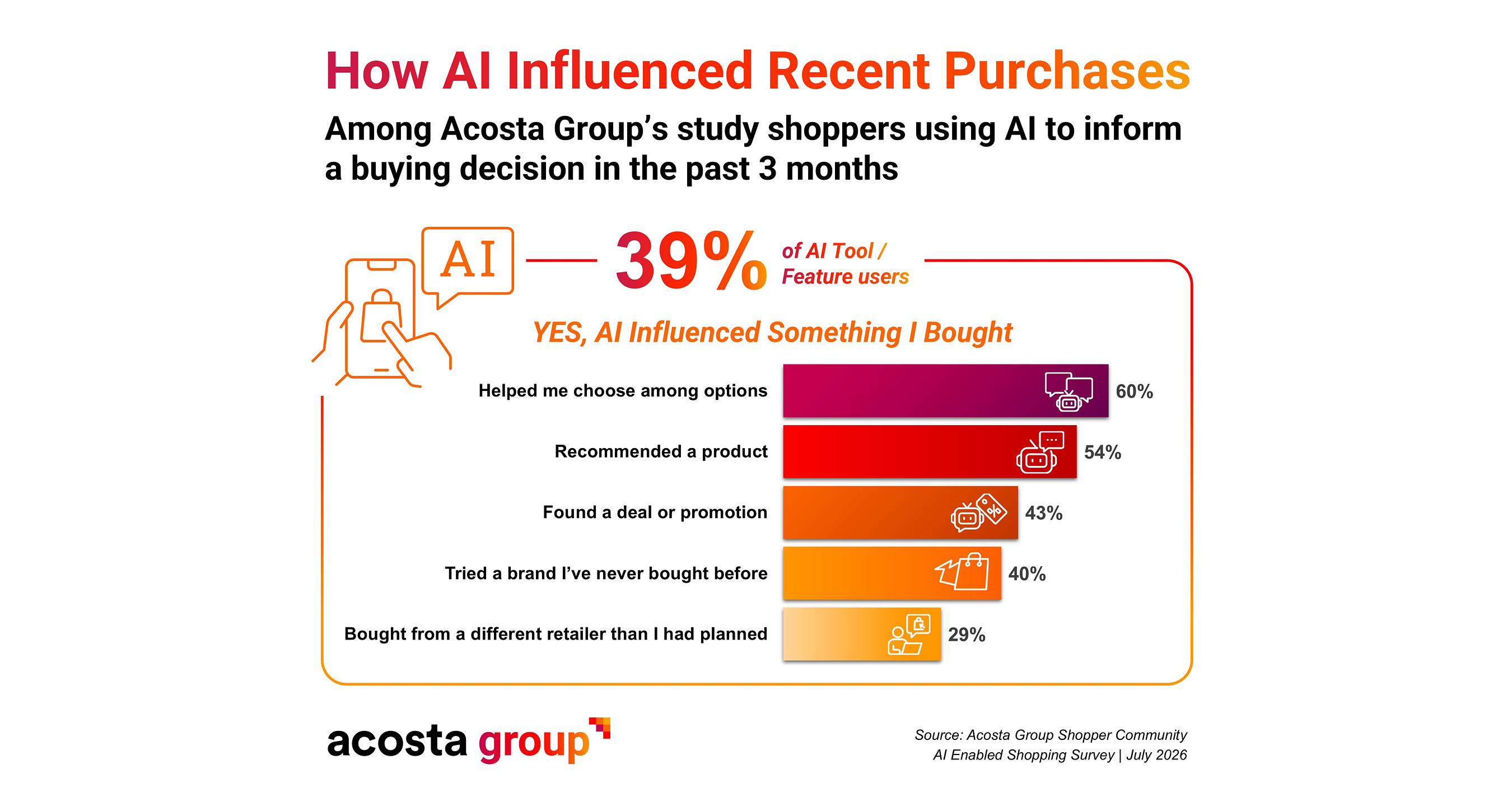
Acosta Group's May 2026 survey of 1,271 U.S. shoppers found that 34% use AI shopping tools, while 50% of Gen Z and Millennial AI users said AI influenced purchases in the prior three months. Adoption is broadening, with 74% usage among Gen Z and Millennials and 45% among Boomers, but only 22% of AI-shopping users trust agents to make purchases autonomously. Privacy remains a material constraint, with 48% concerned about how shopper data is stored and protected, creating an opportunity for retailers and brands that improve product-data accuracy, AI discoverability and transparency.
Analysis
The investable implication is not near-term autonomous checkout; it is a redistribution of product discovery from keyword search and retailer shelf placement toward recommendation-layer eligibility. GOOG is better positioned than most to retain this activity because Gemini can sit inside both search and Android, but AI-mediated comparison queries create a monetization risk: fewer, higher-intent interactions may improve conversion while reducing the number of auctionable clicks. The key 1-3 month datapoint is whether Google converts product recommendations into clearly labeled sponsored placements without degrading trust; that determines whether retail-media budgets expand into Gemini or simply cannibalize Search and Shopping spend.
For consumer brands, AI recommendation layers should favor products with clean, consistent attributes, strong review histories and broad retailer availability over brands reliant on packaging-led impulse discovery. Large branded CPG suppliers may gain conversion share when recommendations emphasize recognized names, while smaller challenger brands can gain only where differentiated claims are machine-readable and independently validated. CART and WMT are second-order beneficiaries if their first-party product catalogs, fulfillment data and loyalty signals become inputs to AI shopping workflows; AMZN remains the harder competitive hurdle because it controls both product data and transaction completion.
The survey is directional rather than independently investable evidence: its sample and sponsor create selection and framing risk, while stated influence does not establish incremental spend. Privacy concerns are the binding constraint on personalized recommendations, making regulatory scrutiny or a high-profile data incident a more material 6-18 month catalyst than adoption headlines. MOS has no apparent read-through; the named Mosaic entity is an Acosta affiliate, not Mosaic Co.
AllMind Terminal
AI-powered research, real-time alerts, and portfolio analytics for institutional investors.
Request TrialMarket Sentiment
Overall Sentiment
mildly positive
Sentiment Score
0.32
Ticker Sentiment
Key Decisions for Investors
- Maintain a tactical long GOOG only on evidence that Gemini Shopping launches monetizable sponsored-product inventory or management discloses incremental commercial-query engagement; use a 1-3 month catalyst window. Thesis is falsified by sequential Search/Shopping paid-click weakness without offsetting revenue per query improvement.
- Watch CART versus WMT as a retail-AI implementation spread rather than initiate on this survey alone: favor CART if retailer integrations and ad-revenue growth accelerate, favor WMT if its first-party data and fulfillment ecosystem show measurable marketplace/advertising share gains. Require quarterly KPI confirmation before sizing.
- For 6-18 months, screen long branded CPG names with high digital shelf quality and broad omnichannel distribution against short subscale, undifferentiated consumer brands dependent on paid social discovery. Do not execute without SKU-level availability, review and retail-media-spend data; AI discovery is more likely to amplify existing catalog advantages than create them.
- Avoid MOS as an AI-commerce expression; there is no fundamental linkage to the cited marketing-services business.
More News
- Investors react to Fed hike and market sell-off: Brace for 'higher for longer' rates
- Hyperscaler debt signals warning sign, Apollo cautions
- Banks provide $22 billion chip loan to Blackstone, Alphabet cloud venture, Bloomberg News reports
- OpenAI, Anthropic Safety Talks Stir Startup Concerns
- Anthropic IPO Date: What Investors Need to Know Before It Prices
- Data centers can be good citizens. It’s why we’re partnering with Google and Nvidia to create the AI Energy Management Alliance
From AllMind Research
- Anthropic IPO Preview: Valuation, Timing, and What to Watch
- Shein After the IPO: Venue, Valuation, and What Must Be Proved
- What AI Research Tools Should a Small Hedge Fund Buy First?
- Capital IQ Alternatives for Research and Deal Work
- Research Workflows, Report Format Selection, and Interactive Synthesis