
3 Stocks in Focus That Declared Dividend Hikes Amid Economic Woes
Source: zacks.com
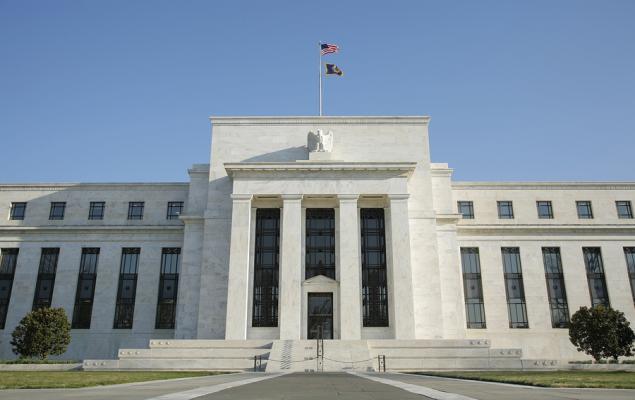
First United (FUNC), Fifth Third (FITB), and McDonald's (MCD) announced dividends of $0.28, $0.42, and $1.93 per share, respectively, with yields of 2.43%, 3.10%, and 3.12%. Each company has raised its payout at least five times over the past five years, supporting their appeal as income holdings. The article frames the dividend increases against a cautious macro backdrop of a 25bp Fed rate hike to a 3.75%-4.00% target range, persistent inflation risks, and higher oil prices tied to Middle East tensions.
Analysis
The dividend actions are not incremental valuation catalysts; payout growth is largely backward-looking and the article’s macro chronology appears unreliable, reducing its usefulness as a trading signal. The relevant mechanism is rate/inflation persistence: FITB initially benefits from asset repricing and deposit-beta lag, but a higher-for-longer outcome eventually raises commercial real estate, consumer-credit, and funding-cost risk. For a regional bank, credit costs and deposit migration matter far more to equity value than a modest dividend increase over the next 1-3 quarters.
MCD is the more defensible income vehicle, but not because of the payout. Its franchise-heavy model limits direct restaurant-level wage and food-cost exposure, while value positioning can capture trade-down traffic; however, franchisee cash-flow pressure can constrain pricing, remodels, and unit development if food and labor inflation reaccelerate. The second-order beneficiary of a consumer trade-down is likely QSR peers with domestic value exposure, including YUM and QSR, whereas full-service chains and discretionary restaurants face greater traffic risk.
FUNC's low payout provides theoretical capital-return flexibility, but its small-cap liquidity and concentrated local credit exposure make the dividend a poor substitute for granular disclosure on deposit costs, uninsured deposits, CRE concentrations, and criticized-loan trends. Consensus often treats dividend payers as rate-volatility shelters; that is backwards for smaller banks if long rates rise because duration marks, funding competition, and credit normalization can compress both book value and the valuation multiple. A sustained decline in oil/inflation expectations and easier policy expectations would reverse this relative view by improving regional-bank duration and credit sentiment.
AllMind Terminal
AI-powered research, real-time alerts, and portfolio analytics for institutional investors.
Request TrialMarket Sentiment
Overall Sentiment
mixed
Sentiment Score
0.05
Ticker Sentiment
Key Decisions for Investors
- No standalone trade on FUNC’s dividend: maintain a watch-only stance until next earnings disclose deposit beta, uninsured-deposit mix, CRE office exposure, and reserve build. Avoid initiating size in the next 1-3 months given liquidity and idiosyncratic credit-tail risk.
- Express higher-for-longer risk as long MCD / short KRE over a 3-6 month horizon, sized beta-neutral. MCD offers comparatively resilient franchise economics while KRE remains exposed to funding and credit-cost revisions; exit if 10-year Treasury yields fall materially and regional-bank NII guidance stabilizes or rises.
- For income exposure, prefer MCD over FITB on a 6-18 month basis, but enter only on broad consumer-risk or food-cost-driven weakness rather than chasing a dividend-related move. Thesis fails if U.S. same-store sales decelerate sharply alongside franchisee margin pressure or reduced development guidance.
- Monitor FITB’s next quarterly net interest income outlook, deposit-cost progression, and commercial-credit provisions. A guide-down in NII or provision build above consensus is a short/underweight catalyst; conversely, stable NII with contained charge-offs would invalidate the bearish regional-bank leg.
More News
- From ‘cheats’ to ‘great friendship’: How Trump’s rhetoric on China changed
- McDonald's promises to bring back colorful PlayPlaces in bid to win over frustrated parents
- ‘We’ve never gotten along better’: Trump and Xi talk Taiwan, trade and AI at state dinner—with Sam Altman and Jensen Huang in attendance
- Nike and McDonald's Are the Worst-Performing Dow Stocks This Year. Here's the 1 to Buy in October.
- 3 Stocks in Focus That Declared Dividend Hikes Amid Economic Woes
- Iran says it awaits US response on seven-day roadmap to end war