
Elon Musk Became the First Person Ever Confirmed With a Net Worth Above $1 Trillion in June 2026. Here's Why That Milestone Still Matters for Tesla and SpaceX Shareholders.
Source: fool.com
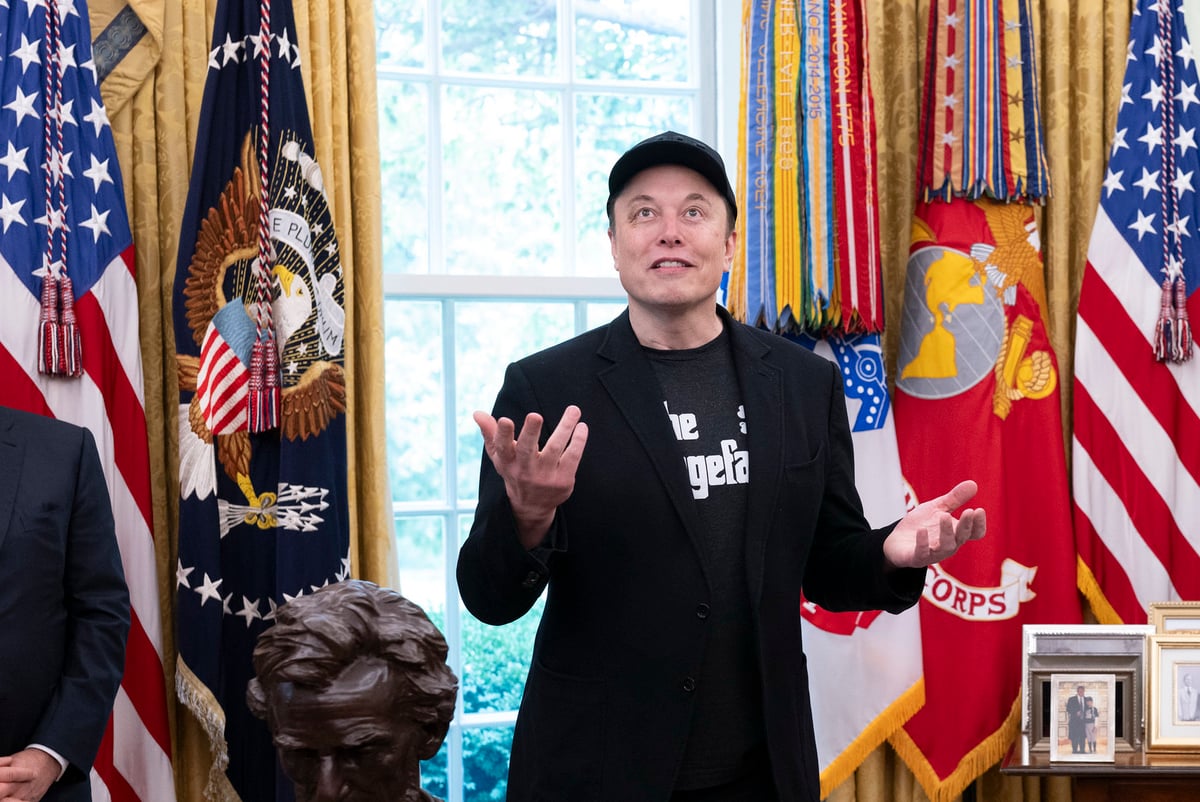
Elon Musk’s net worth was $983 billion as of Oct. 21, down from a reported peak of $1.45 trillion and previously below $700 billion; the article links its movements mainly to his SpaceX and Tesla holdings. Forbes says Musk owns about 38% of SpaceX and nearly 11% of Tesla, while SpaceX shares are locked until June 12, 2027. Both companies have performance-based compensation plans, and independent-director committees are evaluating a potential merger; the article weighs Musk’s shareholder alignment against key-person, valuation and governance risks.
Analysis
Musk’s reported wealth is a lagging, mechanically derived mark on SPCX and TSLA—not an independent leading indicator of their fundamentals. Treating it as confirmation risks buying after the same share-price move has already occurred. The more consequential signal is governance: a possible combination could transfer SpaceX’s voting architecture into a larger entity, making control rights, related-party safeguards and capital allocation central valuation variables. That creates downside for minority shareholders even if the merger offers strategic upside.
Performance-based awards align incentives on paper but also create a convex payoff: increasingly ambitious market-cap and operating milestones may encourage long-duration investment, while leaving shareholders exposed if execution or capital discipline weakens. The June 2027 SpaceX lock-up expiry is a potential liquidity and sentiment catalyst, not proof of selling; filings and any sale restrictions will determine its significance.
Near term, expect headlines about merger evaluation to move event volatility more than Musk’s wealth estimates. Over 1–3 months, focus on committee findings, transaction terms and governance protections. Over 6–18 months, monitor lock-up disclosures, dilution from awards and whether management attention or capital allocation shifts across the businesses. The contrarian point: the market may over-credit “skin in the game” and underprice concentrated control. Falsify that concern with enforceable independent oversight, transparent terms and evidence that milestone investment produces durable operating returns.
AllMind Terminal
AI-powered research, real-time alerts, and portfolio analytics for institutional investors.
Request TrialMarket Sentiment
Overall Sentiment
mixed
Sentiment Score
0.05
Ticker Sentiment
Key Decisions for Investors
- Do not trade on Musk’s net-worth changes as a standalone signal; they largely echo SPCX and TSLA price action. Keep exposure sized to each company’s fundamentals and event risk.
- For SPCX, avoid adding merger-driven exposure until the independent committees disclose terms, voting structure, related-party protections and any exchange ratio. Reassess if protections materially constrain controller discretion.
- For TSLA, treat a potential merger as a governance and capital-allocation event, not automatically as strategic upside. Watch for changes in guidance, investment commitments, share issuance and board independence over the next 1–3 months.
- Set a June 2027 SPCX lock-up alert rather than assuming an immediate supply shock: verify restrictions, insider-sale disclosures and trading liquidity before positioning for an overhang.
- Thesis risk: transparent, enforceable governance safeguards and sustained operating progress would weaken the control-risk discount; material dilution, weaker operating milestones or evidence of cross-company resource diversion would strengthen it.
More News
- SpaceX closes $40 billion debt deal for AI chips, Elon Musk says
- Earnings playbook: Alphabet, Microsoft, Amazon and more report this week. Here's what to expect
- More pain may be coming for the AI trade. Why I’m not giving up on it
- AI Spending Fears Threaten to Swamp Big Tech’s Strong Earnings
- Musk says SpaceX landed a $40 billion debt deal — and forecasts doom for some AI rivals
- Musk Says SpaceX Closed $40 Billion Debt Deal, Blasts Neoclouds