
Canada’s Oil Sands Get a Boost From Mark Carney
Source: Bloomberg
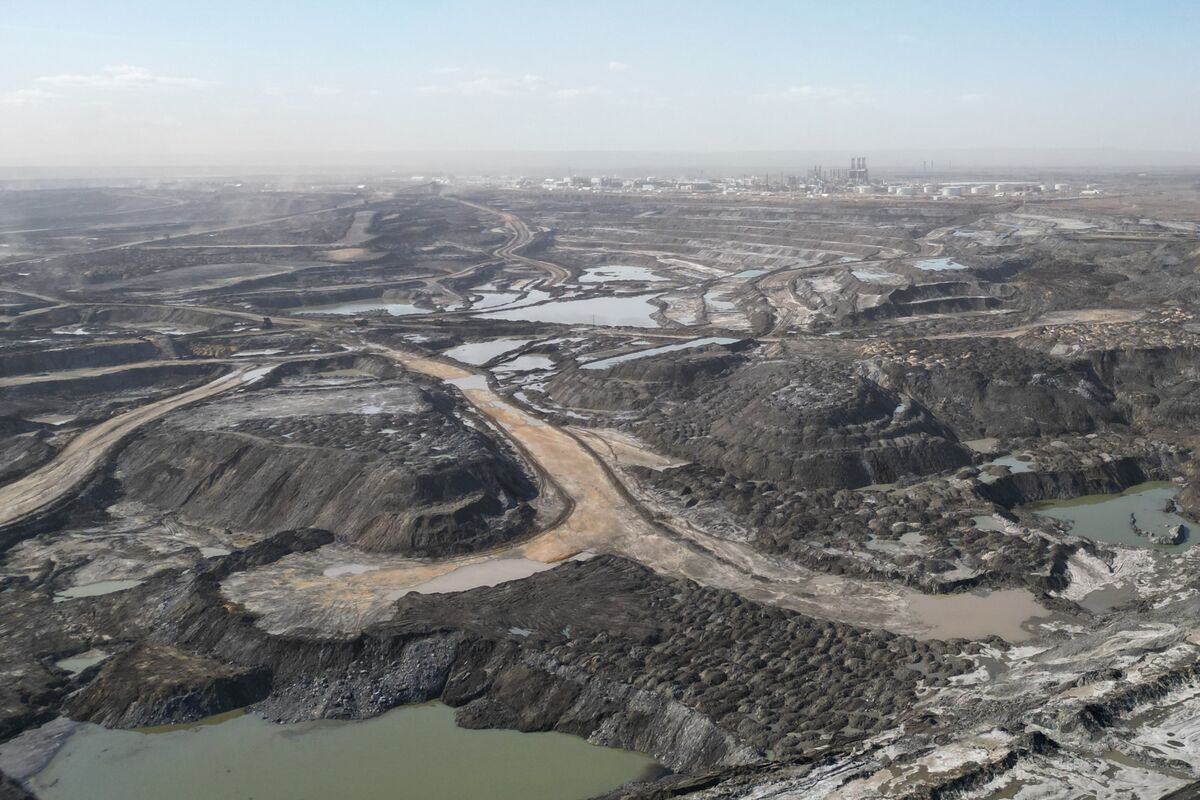
Canada's oil-sands industry is benefiting from tax breaks under Prime Minister Mark Carney's government, creating an unusually supportive alignment between Ottawa and oil producers. The industry has responded positively to the federal policy shift, though the article excerpt provides no specific tax, investment, production or earnings figures.
Analysis
The key market implication is a lower effective sustaining-capital and decarbonization burden for long-life oil-sands assets, which should disproportionately support Canadian Natural Resources (CNQ), Suncor (SU) and Imperial Oil (IMO). These businesses have unusually high operating leverage to incremental free cash flow once fixed mining/upgrading infrastructure is in place; a durable reduction in after-tax project costs can improve terminal-value assumptions rather than merely lift one year of earnings. CNQ is the cleanest expression given its oil-sands weighting and capital-return framework, while SU has greater upside if fiscal certainty allows management to accelerate brownfield optimization and shrink its valuation discount to CNQ.
The second-order beneficiary is midstream: incremental confidence in oil-sands reinvestment and export volumes improves long-duration throughput visibility for Enbridge (ENB) and TC Energy (TRP), though regulated-return structures mean their upside is slower and smaller than upstream. The principal near-term risk is that tax incentives are conditioned on carbon-capture spending, emissions-performance thresholds, or legislative implementation that changes project economics materially. Over 1-3 months, the market will require company-specific disclosure of eligible capital, expected credit monetization and revised sustaining-capex guidance; absent this, the headline is unlikely to justify a broad rerating.
Consensus may overstate the impact on production growth. Oil-sands operators are constrained less by resource quality than by egress, labor, project execution and shareholder preference for distributions over megaprojects. The more credible 6-18 month outcome is higher buyback capacity and lower decline-risk—not a major supply surge—making this constructive for CNQ/SU equity multiples but less obviously bearish for WTI or global crude prices. The thesis is falsified if managements do not raise after-tax FCF guidance or if eligible-credit rules materially reduce the value of planned capital programs.
AllMind Terminal
AI-powered research, real-time alerts, and portfolio analytics for institutional investors.
Request TrialMarket Sentiment
Overall Sentiment
mildly positive
Sentiment Score
0.32
Key Decisions for Investors
- Initiate a 6-12 month long CNQ position versus short XLE as a relative-value expression: CNQ offers direct exposure to improved Canadian fiscal economics and a higher probability of incremental buybacks, while the short leg reduces outright crude-beta risk. Reassess if CNQ does not quantify a material after-tax FCF benefit by its next earnings update.
- Buy SU on weakness over the next 1-3 months, sized smaller than CNQ: fiscal support can reinforce SU's operational-improvement and capital-return case, but execution variability warrants a wider risk budget. Exit or reduce if sustaining-capex guidance rises enough to offset any tax-credit benefit.
- Maintain ENB/TRP as secondary beneficiaries rather than primary policy trades; add only if operator guidance points to higher contracted export volumes or new brownfield commitments. Their risk/reward is more defensive, with the main upside catalyst occurring over 6-18 months through throughput and contracting visibility.
- Set an event-driven alert for final eligibility rules, transferability/refundability of credits, and issuer disclosures of qualified capital. If incentives require substantially more incremental CCUS spending than expected, avoid treating the policy as free-cash-flow accretive and consider fading any indiscriminate Canadian-energy rally.
More News
- Bank of Japan raises interest rates to 31-year high, flags concerns over inflation
- Italy to deploy warships to protect shipping through Bab al-Mandeb
- Oil prices fall as Saudi supply hopes outweigh fresh Houthi strikes
- Oil prices fall for 3rd day as supply concerns ease, diplomacy in focus
- Oil Traders Stymied by Iran War Stalemate: Evening Briefing Americas
- Australia’s central bank chief warns inflation risks materialising