
SK chemicals entwickelt regionale Kreislaufmodelle für ausgediente Werbebanner
Source: PR Newswire
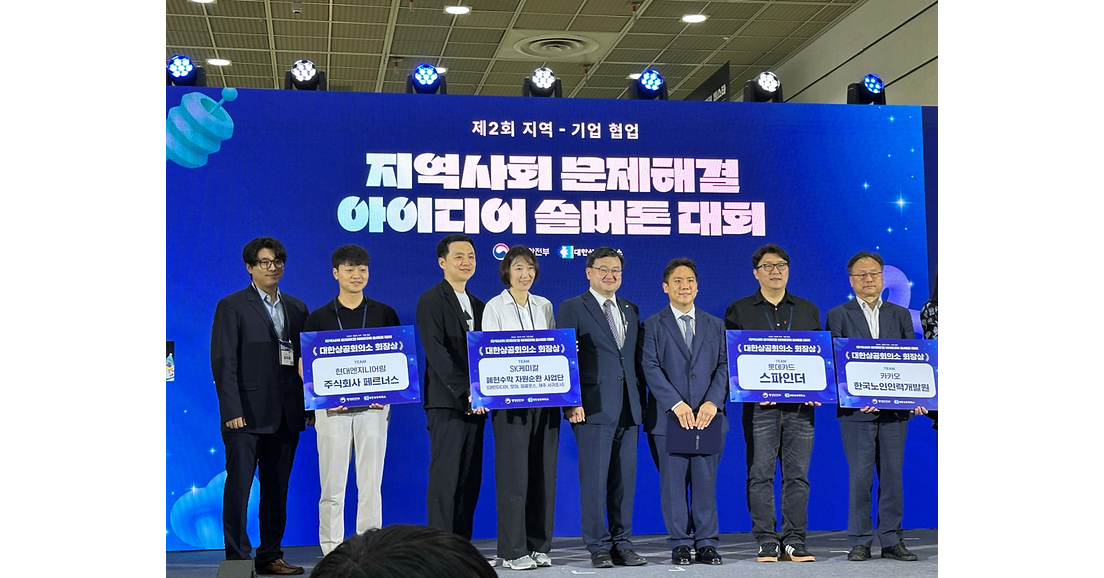
SK chemicals formed a consortium with four regional partners to collect and chemically recycle used advertising banners into new banner materials, building a closed-loop supply chain. SK estimates that more than 1,000 tonnes of used banners arise annually in the participating Gyeongsang, Honam and Jeju regions; nationally, about 6,000 tonnes arise each year, with roughly 70% reportedly landfilled or incinerated. The partners aim to establish regional collection and sorting systems before extending the model to other areas.
Analysis
This is a channel-validation exercise, not yet evidence of material earnings or a scalable recycling moat. The economic bottleneck is likely to be consistent collection, sorting and pretreatment—not simply depolymerization. Regional pickup costs and variable banner composition could erode the value of recovered feedstock before it reaches SK chemicals’ process. The disclosed regional volume is also too small, absent throughput, yield and offtake economics, to support a meaningful change to consolidated forecasts.
If execution works, the less obvious beneficiaries are the collection and pretreatment partners: a reliable buyer for prepared material could make local collection systems viable and help SK chemicals secure feedstock and downstream demand. Daehan Media’s distribution role may ease product adoption, but commercial demand and price parity with virgin material remain unproven. The model could pressure one-cycle upcycling only if closed-loop output proves cost-competitive; it does not establish that substitution yet.
Near term, expect limited fundamental price impact. Over 1–3 months, watch for operating data: tonnes collected and processed, usable output yield, repeat orders and public procurement commitments. Over 6–18 months, replication across regions could matter if standards and municipal funding make collection economical. The contrarian risk is that investors interpret a consortium announcement as proof of circularity economics; the counterpoint is potential policy-backed demand that could emerge before standalone economics are attractive. Company-reported claims about quality retention and broad feedstock suitability need independent operating evidence.
AllMind Terminal
AI-powered research, real-time alerts, and portfolio analytics for institutional investors.
Request TrialMarket Sentiment
Overall Sentiment
mildly positive
Sentiment Score
0.35
Key Decisions for Investors
- No immediate directional trade on this announcement alone; avoid extrapolating a local pilot into a material earnings catalyst for SK chemicals.
- Set a 1–3 month alert for disclosed collection volumes, conversion yields, product qualification and repeat commercial orders. Treat expansion announcements without throughput or economics as low-information.
- For any prospective SK chemicals long, require evidence that recovered-material cost and product performance are competitive with virgin inputs, plus a credible path to recurring offtake. Falsify the thesis if volumes stall, yields disappoint, or customers do not reorder.
- Monitor municipal procurement rules and waste-handling policy as potential demand catalysts; absent funded mandates or price support, collection and logistics costs may prevent regional replication.
More News
- Singapore's Temasek warns of the ‘biggest risk’ facing markets right now
- GIC Private Ltd, Medline 10% owner, sells over $721m in shares
- A 32% beat, a +6% jump: the IT solutions name our models picked in July
- Nvidia Is on the Verge of a $6 Trillion Market Value
- Controversial $110 billion mega-merger of Paramount and Warner Bros. finally closes
- What Marvell's rosy long-term guidance means for our AI chip stocks
From AllMind Research
- Anthropic IPO Preview: Valuation, Timing, and What to Watch
- Shein After the IPO: Venue, Valuation, and What Must Be Proved
- What AI Research Tools Should a Small Hedge Fund Buy First?
- What Is an AI Investment Research Platform?
- What Exactly Does Post-Training in LLMs and Finance-Focused AI Actually Mean for Asset Managers?