
Reshaping Network Value for New Growth in the AI Era
Source: PR Newswire
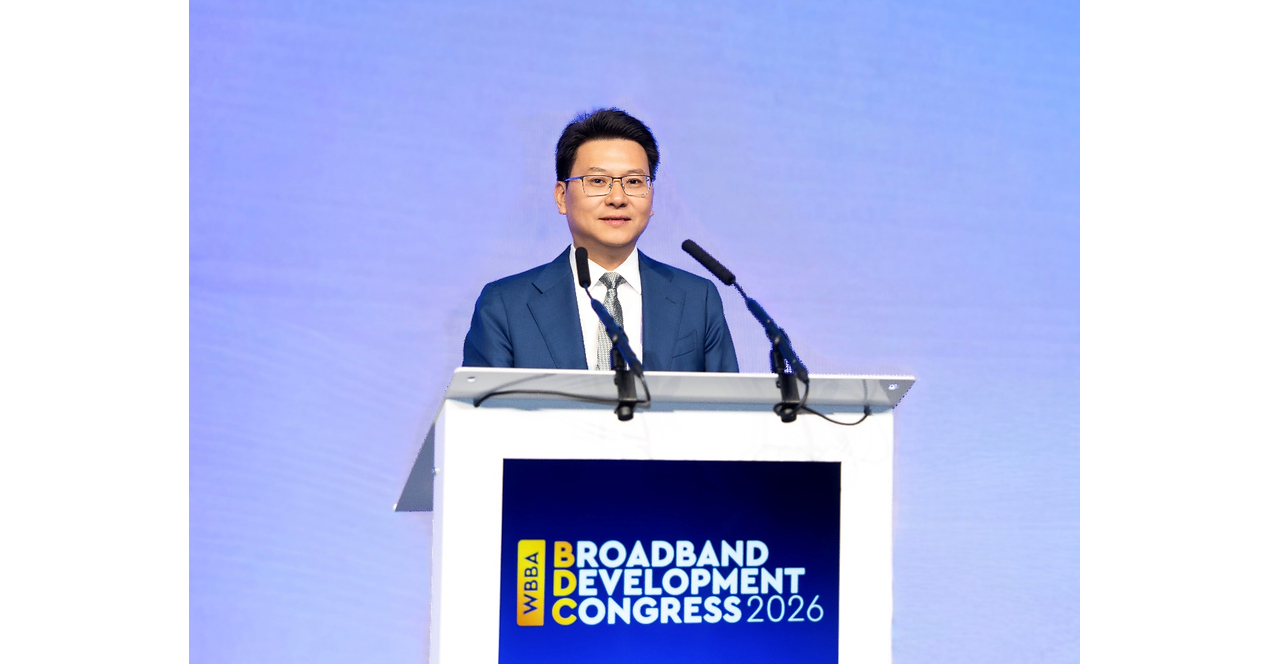
At Network X 2026, Huawei Optical Business Product Line president Bob Chen called for rebuilding network architecture around AI data-center clusters, reshaping telecom offerings, and applying AI to network operations. He cited AI models nearing 10 trillion parameters and token consumption rising almost 50-fold over the past year; in China, Zhongwei’s intelligent-computing traffic now exceeds 10% of national bandwidth, versus about 0.1% previously. Huawei said AI Wi-Fi tuning can raise speeds by about 20% in interference conditions and intelligent power control can cut equipment energy use by more than 20%; these were claims made in Chen’s speech, not reported financial results.
Analysis
The investable implication is a possible reallocation of telecom spending—not proof of a larger or more profitable capex cycle. If AI clusters pull traffic toward data-center hubs, spending should tilt from population-based access and metro upgrades toward long-haul optical transport, switching, and interconnect capacity. That favors infrastructure vendors such as Ciena and Nokia more directly than operators; Arista may benefit where the spend is inside data centers, but is less exposed to carrier transport. The second-order risk is that operators fund expensive, specialized networks while hyperscalers retain bargaining power and capture most application economics. Selling latency and reliability could improve pricing only if customers pay for service-level guarantees rather than treating them as bundled connectivity.
Near term, treat the claims as promotional: the cited performance and energy savings are not independently verified, and the article provides no operator orders, pricing, or return-on-capital evidence. Over 1–3 months, watch carrier capex guidance, optical equipment order trends, and disclosed AI/DC interconnect contracts. Over 6–18 months, the key test is whether differentiated enterprise services produce measurable revenue per connection and whether automation lowers operating costs without degrading service. The thesis weakens if carrier capex remains flat, optical orders fail to convert to revenue, or operators report no pricing uplift. China-specific network plans should not be extrapolated automatically to markets with different regulation, topology, and vendor access.
AllMind Terminal
AI-powered research, real-time alerts, and portfolio analytics for institutional investors.
Request TrialMarket Sentiment
Overall Sentiment
mildly positive
Sentiment Score
0.20
Key Decisions for Investors
- No immediate position on this announcement alone. It is a vendor-led strategic narrative, not an order or earnings catalyst.
- Conditional relative-value idea: if multiple carriers raise optical/DC-interconnect budgets and suppliers confirm order conversion, consider long Ciena versus a basket of incumbent telecom operators. The intended exposure is equipment demand without assuming operators can monetize the build; exit or reassess if supplier orders weaken or carrier capex guidance is cut.
- Monitor Nokia and Arista as adjacent beneficiaries, but distinguish carrier transport awards from data-center switching demand before sizing exposure. Verify customer concentration, order-to-revenue conversion, and whether announced projects are incremental rather than rebadged existing plans.
- Contrarian watch item: the market may overvalue network monetization and undervalue the risk of capex-heavy infrastructure becoming a low-return utility input. Require evidence of paid latency/reliability tiers, improved operator unit economics, or sustained O&M savings before extending the thesis to telecom equities.
More News
- Why did CoreWeave stock get crushed this week? Look to this corner of the debt market for clues
- AI stock sell-off ramps up over debt-fueled data center spending fears: ‘Full-blown crisis of confidence'
- Dow falls 189 points as AI stocks slide and oil prices surge
- Wall Street Anxiety Spreads as AI Rout Meets $110 Oil Shock
- Wall Street's fear gauge is ripping. Traders see it going even higher
- All the news about the iPhone Duo