
XCMG dévoile un camion lourd de nouvelle génération à énergie nouvelle destiné au transport de marchandises sur de longues distances
Source: PR Newswire
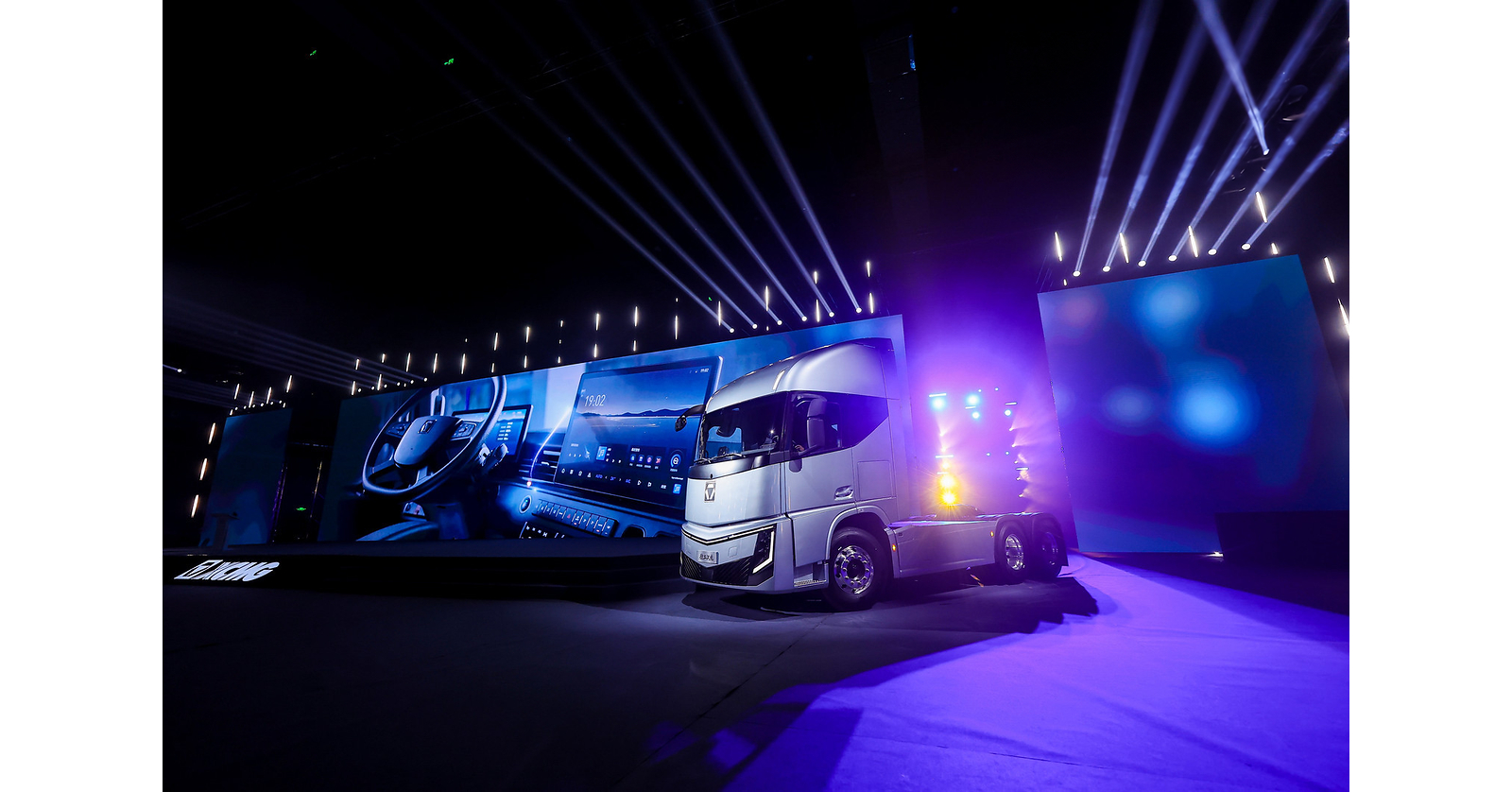
XCMG launched its Hanjing next-generation new-energy heavy truck for long-haul freight, featuring an 800-volt architecture capable of charging the battery from 20% to 80% in under 20 minutes. The truck completed a 24-hour endurance test covering 2,198 km at a 49-ton gross vehicle weight, supporting its long-distance operational claims. XCMG led China’s new-energy heavy-truck and tractor sales from January through July 2026 and has held the national sales lead for three consecutive years, while expanding sales into Southeast Asia and Africa.
Analysis
The investable implication is not the launch itself but whether megawatt charging converts heavy-duty battery EVs from captive-route assets into economically viable fleet replacements. If Chinese logistics operators can maintain utilization through sub-20-minute charging, diesel displacement shifts from a vehicle-volume story to an infrastructure-and-power-demand story. Near-term listed beneficiaries are likely charging hardware and grid-equipment suppliers—TELD/TEBA (unlisted/private exposure limits direct access), China’s State Grid ecosystem, and copper-intensive electrical-equipment demand—rather than global truck OEMs.
Competitive pressure is most acute for Chinese incumbent heavy-truck manufacturers with weaker integrated charging, fleet software, and financing offerings: a bundled vehicle-plus-energy-service model can lower customer switching costs and compress conventional truck residual values. For global OEMs such as Daimler Truck (DTG.DE), Volvo (VOLV-B.ST), and Traton (8TRA.DE), this is not an immediate earnings threat because export homologation, service networks, and charging interoperability remain gating factors; it does raise the risk that China becomes a lower-margin, faster-electrifying market and that emerging-market tenders increasingly favor Chinese vendors.
The key 1-3 month catalyst is independently verifiable order conversion, especially recurring fleet contracts and evidence that charging-network uptime supports real-world utilization. The 6-18 month issue is battery replacement cost and depot/grid capex: megawatt charging can improve truck productivity but may accelerate battery degradation and require expensive distribution upgrades, reducing total-cost-of-ownership advantages. The press-release claims do not establish delivered cost per kilometer, payload penalty, warranty reserves, or charging availability; without these data, the signal is insufficient for a directional OEM trade.
Contrarian view: long-haul electrification may be progressing faster in China than Western investors assume, but this can be margin-destructive for manufacturers. Product differentiation will likely commoditize as 800V architectures diffuse; durable economics accrue to operators controlling charging sites, fleet data, financing, and utility interconnection rather than to the truck assembler. A slowdown in freight rates, a reduction in Chinese EV-truck subsidies, or weak utilization at public charging sites would quickly expose that distinction.
AllMind Terminal
AI-powered research, real-time alerts, and portfolio analytics for institutional investors.
Request TrialMarket Sentiment
Overall Sentiment
strongly positive
Sentiment Score
0.58
Key Decisions for Investors
- No standalone position on this launch. Create an alert for disclosed fleet orders, delivered-unit economics, battery warranty terms, and charging-site utilization over the next 1-3 months; upgrade the thesis only if orders demonstrate repeatable non-captive long-haul deployment.
- Maintain a relative-value watch: short Daimler Truck (DTG.DE) or Traton (8TRA.DE) versus long a diversified China electrical-grid/charging-equipment basket only after evidence of Chinese export wins in Southeast Asia or Europe. Thesis requires tender data; without it, execution and valuation risk outweighs signal.
- For 6-18 months, monitor copper exposure through HG futures or COPX as a second-order beneficiary of megawatt-charging buildout, but enter only if Chinese heavy-duty EV registrations and grid-capex guidance accelerate together. Falsify on flat registrations for two consecutive quarters or declining State Grid distribution-investment guidance.
- Avoid extrapolating into a broad long on global battery manufacturers: higher charging power may increase battery throughput and warranty risk, while heavy-truck battery chemistry and supplier allocation are undisclosed. Watch for disclosed pack capacity, replacement-cycle data, and supplier contracts before identifying a battery beneficiary.
More News
- Taiwan benchmark Taiex rises to record intraday high as tech stocks advance
- AMD joins the $1 trillion club as chip rally surges - our AI Strategy saw it early
- Latest Oil Market News and Analysis for Sept. 22
- Oil Settles Near $100 as Hormuz Flows Stunt Rally
- 20 countries propose global oversight body to manage AI dangers
- Australia Bets on AI to Spur Economic Growth For Decades