
Hiperbaric to Present Its Hot Isostatic Pressing Systems at IMTS 2026
Source: PR Newswire
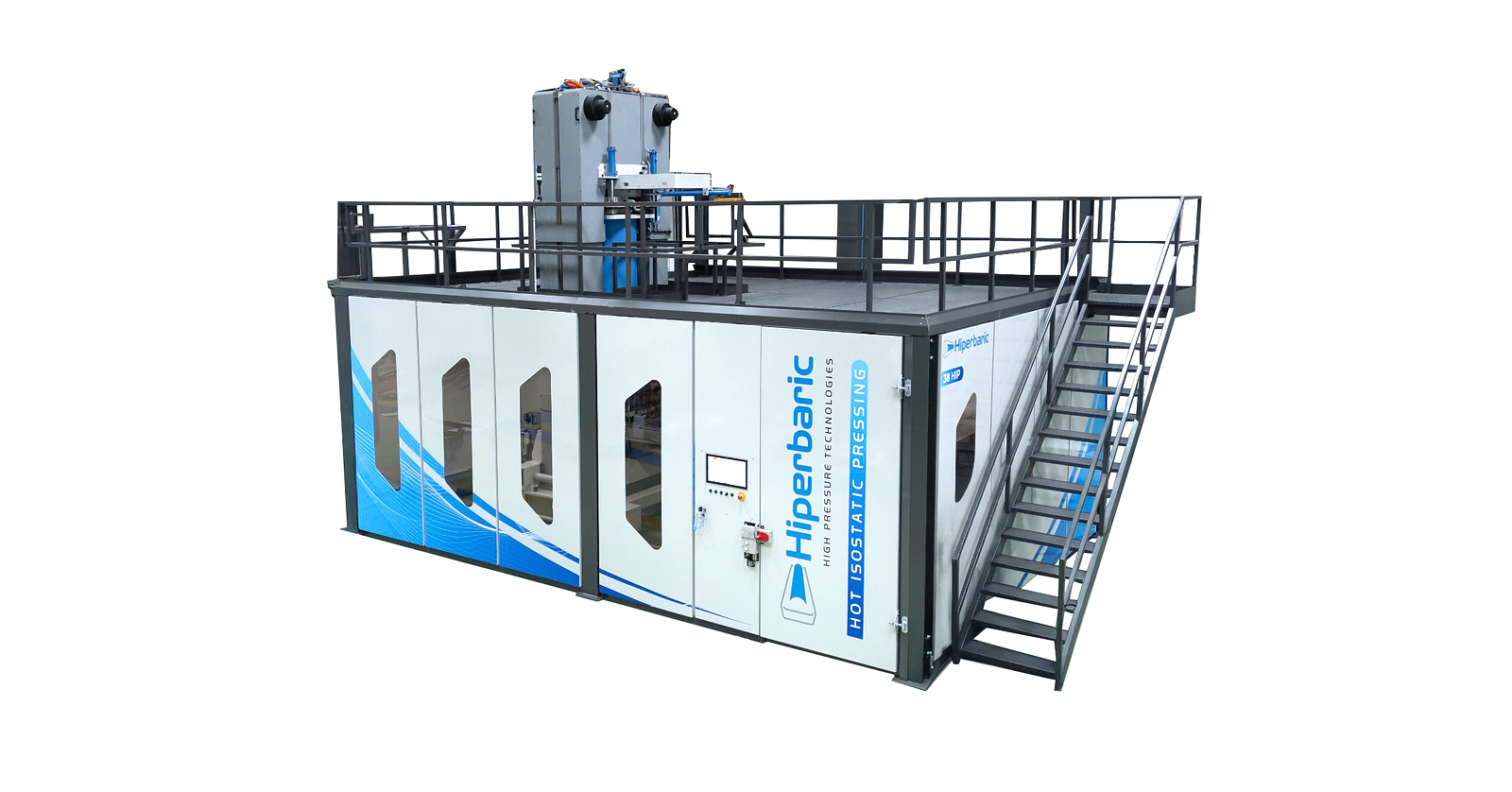
Hiperbaric will showcase its Hot Isostatic Pressing equipment at IMTS 2026 in Chicago, targeting manufacturers of cast and additive-manufactured components. Its HIP systems operate at up to 207 MPa and temperatures of up to 2,000°C, supporting aerospace, medical, energy and automotive applications by reducing porosity and improving mechanical performance. The announcement signals continued U.S. market development but provides no sales, order, financial, or guidance update.
Analysis
This is not investable on its own: a trade-show appearance by a private equipment vendor provides no order, backlog, pricing, or qualification data. The relevant public-market read-through is that HIP remains a required post-processing bottleneck for safety-critical additive parts, which favors manufacturers with qualified aerospace/medical production capacity over pure-play printer vendors whose revenue depends on customers moving from prototyping to serial production.
Over the next 1-3 months, IMTS commentary from AM peers should be monitored for evidence that capital spending is shifting toward finishing, inspection, and qualification rather than new printer installs. That would be incrementally supportive for thermal-processing and test-equipment exposure such as AMETEK (AME), Hexagon (HXGBY), and Nikon/industrial metrology proxies, while challenging 3D-printing names if system placements are not accompanied by recurring post-processing demand. The key missing datapoint is whether OEM qualification cycles are converting into production purchase orders; without it, the signal is marketing rather than a revenue catalyst.
Over 6-18 months, wider HIP adoption could lower failure rates and enable more load-bearing AM components, increasing material throughput for titanium and nickel-alloy supply chains. The contrarian view is that qualification requirements create a moat but also materially lengthen commercialization: aerospace and implant customers may adopt HIP without meaningfully accelerating printer unit demand, leaving high-multiple AM equities vulnerable if revenue remains tied to prototype activity. Falsify the cautious stance with sustained sequential backlog growth, improving utilization, and raised production-revenue guidance from AM operators rather than isolated equipment announcements.
AllMind Terminal
AI-powered research, real-time alerts, and portfolio analytics for institutional investors.
Request TrialMarket Sentiment
Overall Sentiment
mildly positive
Sentiment Score
0.12
Key Decisions for Investors
- No immediate position based solely on this release; treat IMTS as an information-gathering event and require disclosed orders, backlog, or named qualified production programs before underwriting a catalyst.
- Monitor 3D Systems (DDD), Desktop Metal (DM), and Stratasys (SSYS) for IMTS claims on aerospace/medical serial-production wins; avoid adding on promotional strength unless management quantifies recurring materials, service, or production revenue within the next 12 months.
- Prefer a 6-18 month quality pair of long AMETEK (AME) versus a basket short of high-cash-burn additive-manufacturing equities, only if upcoming results show metrology/industrial-process demand outpacing printer-system revenue. Exit if AM printer vendors report two consecutive quarters of accelerating production-system backlog and positive gross-margin inflection.
- Set an alert for disclosed aerospace Nadcap-qualified AM production contracts or major OEM part certifications. Such announcements would be the first evidence that qualification is converting from a bottleneck into an equipment-utilization catalyst and would warrant revisiting long exposure to AM names.
More News
- Energy markets are adapting to the Iran war as a ‘forever conflict’ while oil producers keep supplies flowing and avoid ‘mutually assured destruction’
- Kinder Morgan, Energy Transfer and Williams could benefit from cheap natural gas
- Vertex reports positive IgAN trial data, FDA decision due Nov. 30
- The real test for Moderna’s cancer vaccine isn’t about beating Keytruda. It’s keeping cancer from coming back in the long term.
- Elon Musk’s dangerous grip on outer space
- Brazil’s Lula and Bolsonaro debate policy proposals before run-off