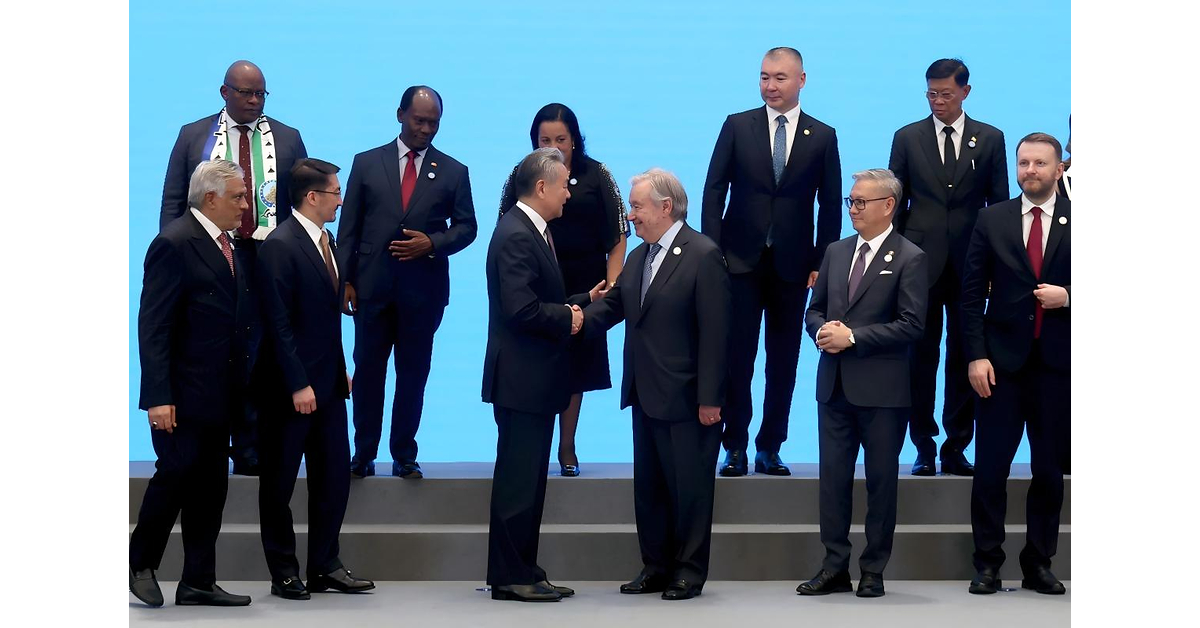
A July 16 signing ceremony in Shanghai established the World Artificial Intelligence Cooperation Organization, with representatives from 29 countries as founding members and headquarters in Shanghai. The agreement commits to UN-Charter-aligned governance and aims to promote safe, sound, orderly AI development. While primarily policy-focused, the move supports clearer international AI cooperation and could be modestly positive for AI-related stakeholders.
This is less a near-term earnings event than a signal that AI is moving toward a more formalized policy regime. That typically advantages the largest platforms and cloud vendors with the legal/compliance budgets to certify models, manage data governance, and negotiate with regulators, while raising the cost of capital for smaller model labs and open-source challengers that compete on speed rather than process.
In China, the bigger beneficiaries are likely the incumbents that can package "approved" enterprise AI into existing workflows and public-sector channels. If this body eventually standardizes auditing or interoperability, it could modestly narrow the geopolitical discount on names with domestic AI optionality like BABA, BIDU, and 0700.HK; however, the same framework can also become a toll booth that slows consumer-facing monetization and compresses the long tail of AI startups.
The contrarian risk is that the market overreads diplomacy and underprices enforcement. A ceremonial forum changes sentiment for days, but only concrete certification rules, data-residency guidance, or procurement standards matter over 1-3 months; absent that, any China AI rally should fade. The key falsifier is simple: if no implementable standards emerge within a quarter, this becomes noise; if they do, the winner set shifts toward compliance-heavy incumbents and away from speculative AI beta.
AI-powered research, real-time alerts, and portfolio analytics for institutional investors.
Request TrialOverall Sentiment
mildly positive
Sentiment Score
0.15
