
VZMORE Introduces V-Cooling™ Vapor Chamber Thermal Architecture for Mini PCs
Source: PR Newswire
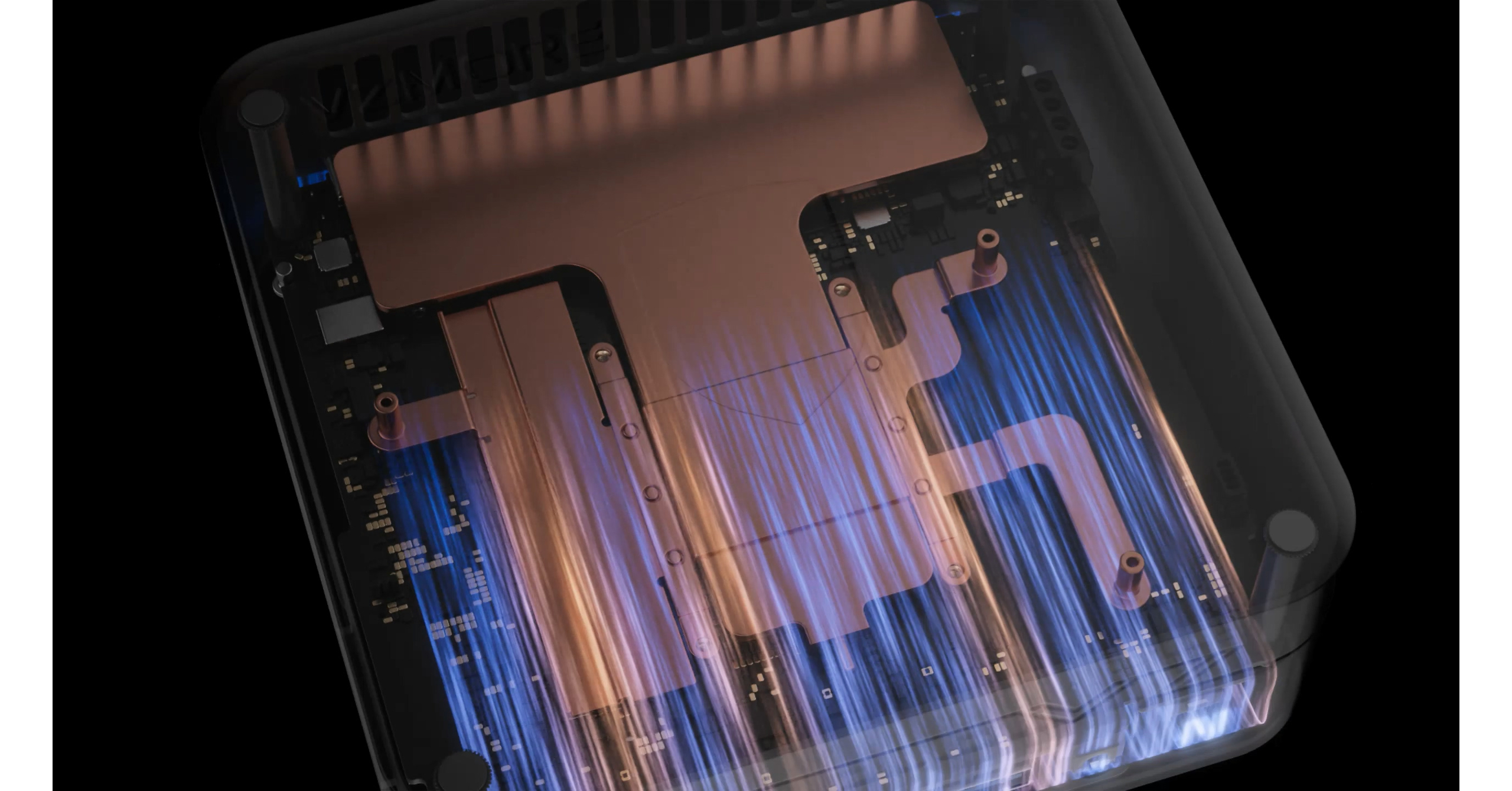
VZMORE introduced V-Cooling™, a vapor-chamber thermal architecture for Mini PCs designed to improve sustained performance and reduce operating noise. The company says the system expands heat-spreading area by about 40% and thermal-conductivity efficiency by about 50% versus conventional dual-heat-pipe designs, while reducing high-load noise to roughly 38 dB from approximately 50 dB. The higher-end cooling module costs about three times a conventional solution and supports performance output of up to 80W.
Analysis
This is not investable as a standalone catalyst: VZMORE is private, unit volumes and pricing are undisclosed, and the claimed thermal gains have not been independently benchmarked against comparable systems. A cooling module costing roughly 3x conventional designs is more likely to pressure gross margin unless the company can sustain a premium ASP or reduce warranty/return costs; neither is established. The relevant near-term read-through for AMD and INTC is immaterial absent evidence that the design materially expands the addressable market for higher-TDP mini-PC processors rather than merely reallocating share among OEMs.
The more interesting 6-18 month implication is architectural: if compact PCs can reliably sustain 65-80W workloads without unacceptable acoustics, they could modestly cannibalize entry gaming desktops and mobile workstations at the margin. That would favor higher-performance desktop/mobile CPU mix at AMD over low-end notebook volumes, but only if OEM adoption broadens beyond a niche brand. Thermal-component vendors such as Delta Electronics (2308 TT) and Sunon Wealth Electric (2421 TT) are possible second-order beneficiaries, yet vapor-chamber content is too small and customer concentration too opaque to justify a directional position now.
Consensus is likely to overvalue the acoustic-performance marketing angle while underweighting the cost and reliability trade-off. Vapor chambers introduce manufacturing-yield, sealing, and long-cycle reliability risks; any field failure rate or inability to hold sustained clocks at elevated ambient temperatures would eliminate the proposed premium. The actionable catalyst is independent testing showing sustained wattage, CPU clock retention, acoustic levels, and retail pricing versus established mini-PC vendors over the next 1-3 months.
AllMind Terminal
AI-powered research, real-time alerts, and portfolio analytics for institutional investors.
Request TrialMarket Sentiment
Overall Sentiment
mildly positive
Sentiment Score
0.32
Key Decisions for Investors
- No standalone trade: do not extrapolate a private-company launch into AMD, INTC, or thermal-supplier earnings before channel volume, BOM content, and retail ASP are disclosed.
- Create an alert on AMD: revisit a tactical long only if independent reviews demonstrate sustained 65-80W AMD-based mini-PC performance at a retail premium below 10-15% versus comparable conventional-cooled systems; this would support a modest mix-upside thesis over the next 2-4 quarters.
- Monitor Delta Electronics (2308 TT) and Sunon Wealth Electric (2421 TT) for disclosed vapor-chamber or compact-PC cooling order growth; require segment revenue acceleration or named OEM wins before initiating exposure, as the current addressable revenue is likely immaterial.
- Falsification watch: sustained-load testing showing thermal throttling, noise above peer systems, or a retail price premium exceeding roughly 20% would indicate that cooling cost is being absorbed through margin compression rather than product differentiation.
More News
- Taiwan benchmark Taiex rises to record intraday high as tech stocks advance
- AMD joins the $1 trillion club as chip rally surges - our AI Strategy saw it early
- Here's who we know is going to the Trump-Xi dinner so far
- +17% in a single session: This AI-picked stock catches a data-center breakout
- Asia stocks rise tracking U.S. tech rally; Trump-Xi meeting eyed
- Perpetual underdog AMD nips at Nvidia's heels as it joins the $1T club
From AllMind Research
- Anthropic IPO Preview: Valuation, Timing, and What to Watch
- Shein After the IPO: Venue, Valuation, and What Must Be Proved
- What AI Research Tools Should a Small Hedge Fund Buy First?
- AI Tools for Private Equity Due Diligence: A Buyer Workflow
- Weekly Update: In-App Tutorials, Futures Data, and Watchlist Enhancements