
Toys"R"Us Asia Leads the Return to Play
Source: PR Newswire
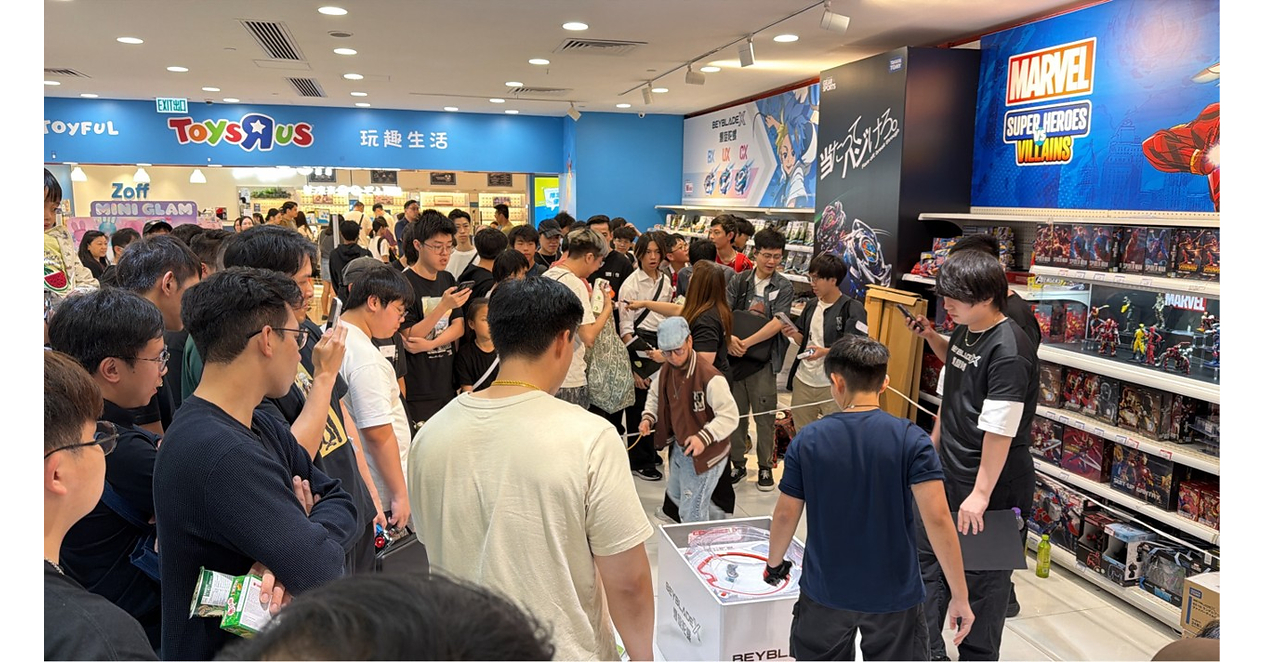
Governments including the UK and other countries are moving toward bans/curbs on social media use for under-16s, prompting a shift toward offline childhood activities. Toys"R"Us Asia positions its “Live Toyful” strategy and physical store formats (e.g., interactive play/collectibles) as a substitute for screen time, citing renewed interest in products like Beyblade and Pokémon trading cards. While the news frames a regulatory headwind for teen social platforms, it suggests a modest retail opportunity for toy and hobby categories rather than a clear financial impact for specific companies.
Analysis
This is more of a demand-shape story than a direct earnings catalyst. The likely beneficiaries are the companies that monetize shared, offline rituals — collectibles, trading card ecosystems, and small-format experiential retail — because the policy backdrop may nudge parents toward repeatable, in-store spend rather than app-based entertainment. The key second-order effect is mix: higher growth should accrue to licensed/IP-heavy products with collectible economics, while undifferentiated toy inventory and generalist retailers may see little lift.
The near-term market reaction is likely to overstate the newsflow: governments can cap screen time, but they cannot force discretionary dollars into toys. Over 1-3 months, watch whether retailers convert the narrative into foot traffic and basket expansion; if not, this becomes a sentiment trade, not a fundamentals trade. Over 6-18 months, the more durable winners are brands that build community flywheels around tournaments, blind-box reveals, and parent-child events — formats that raise frequency without requiring major product innovation.
Contrarian view: the consensus may be missing substitution risk. Teens constrained on social media often migrate to gaming, messaging, or creator platforms rather than physical play, so the demand uplift to toys could be partial and slower than the headline implies. That said, the policy trend is a marginal headwind for teen-targeted ad platforms and a modest tailwind for IP owners that can sell nostalgia to adults and children simultaneously; the trade is better framed as a selective consumer-IP rotation than a broad toy sector call.
AllMind Terminal
AI-powered research, real-time alerts, and portfolio analytics for institutional investors.
Request TrialMarket Sentiment
Overall Sentiment
neutral
Sentiment Score
-0.08
Ticker Sentiment
Key Decisions for Investors
- Watchlist only on ASGXF for 1-3 months: small tactical long on a comp/same-store-sales inflection, but only if management shows measurable foot-traffic or collectible mix gains; otherwise this is narrative-driven and likely fades.
- Prefer selective exposure to Disney (DIS) as a secondary beneficiary of cross-generational franchise consumption, but keep sizing small — the toy-store read-through is too indirect to justify a standalone re-rating; re-underwrite only if merchandising/box-office data confirms a sell-through lift over the next 1-2 quarters.
- Avoid broad long baskets in generic toy retailers until channel checks confirm that offline demand is incremental rather than cannibalized from existing spend; the risk/reward is poor if the policy shift merely reallocates attention without expanding wallet share.
- If liquidity permits, consider a pair long ASGXF / short a general consumer discretionary proxy over 3-6 months; the thesis is that collectible and experiential formats outgrow the broader retail tape if family foot traffic improves, but cut the trade if comps fail to outperform by mid-single digits.
- Set an alert for retailer guidance revisions and store traffic data in the next earnings cycle; if there is no upward revision in 1-2 quarters, treat this as a false signal and exit any long exposure.
More News
- Netflix big Bela Bajaria out after decade calling shots on shows. Peter Rice is steamer's new chief content officer
- ‘No one was coming to save me’: How Reese Witherspoon built a $900 million company from a problem Hollywood wouldn’t fix
- Netflix Chief Content Officer Bela Bajaria is leaving, will be replaced by Peter Rice
- AI Capex, Gamble or Jackpot?: Market Snapshot
- Indonesia stocks suffer biggest daily slump since 1998 as MSCI weighs downgrade
- ‘I told you so’: China’s chip sector is making breakthroughs—and U.S. export controls are the reasons why