
HelpMeSee Guwahati Training Operation Reaches 51 Ophthalmologists Across Northeast India
Source: PR Newswire
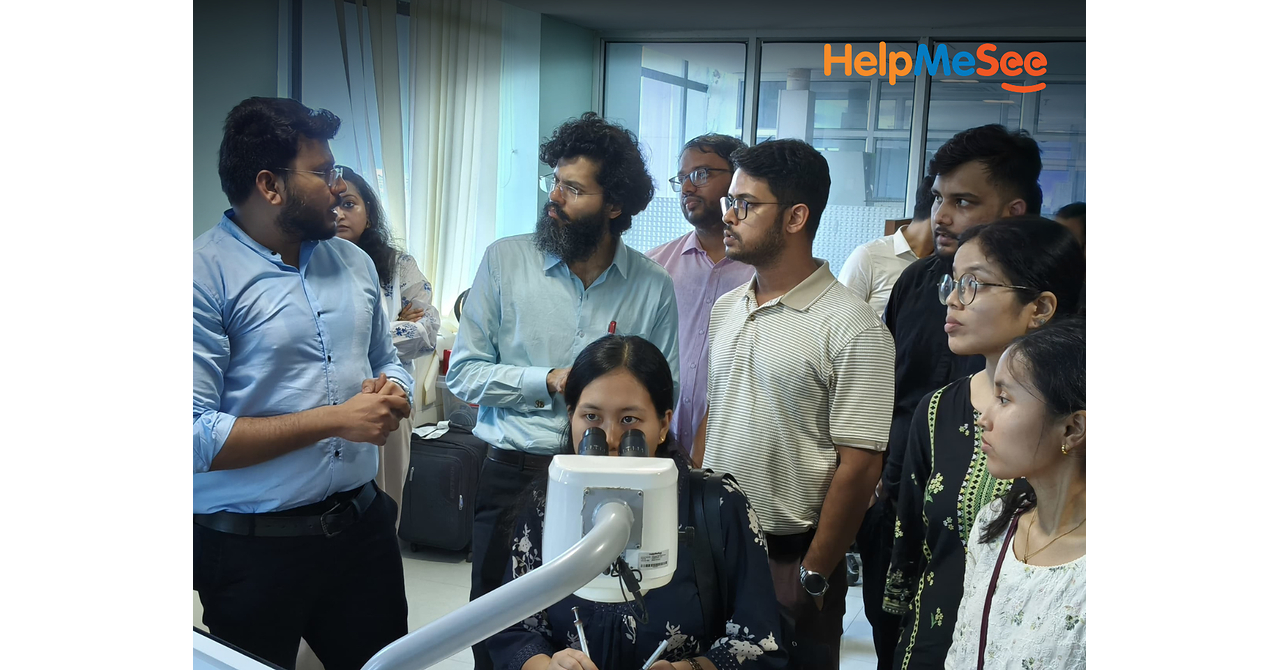
HelpMeSee, HMS Vision Private Limited and Sri Sankaradeva Nethralaya trained 51 ophthalmologists in a four-and-a-half-month simulation-based cataract surgery program in Guwahati, exceeding the original target of 30. The April–August 2026 operation deployed two simulators and served participants from Assam, Arunachal Pradesh, Manipur and Tripura; 12 participants had progressed to independent surgery and another 17 to assisting with surgical steps. The results support a flexible model for expanding access to surgical training, but the announcement is unlikely to have broad market impact.
Analysis
The investable signal is the operating model, not this cohort’s scale: portable simulators deployed through an established eye-care institution may lower the cost and friction of training surgeons outside major metros. If replicated, more trained surgeons could expand low-cost cataract procedure capacity and increase demand for intraocular lenses and surgical consumables. The countervailing effect is that added surgical supply does not guarantee profitable volume: reimbursement, patient affordability, operating-room capacity and referral flows determine whether training converts into procedures. More capacity could also intensify price competition among local providers.
Treat the reported progression into independent surgery as an early operational indicator, not evidence of durable clinical outcomes, higher procedure volumes or financial returns. The release provides no cost per trainee, post-training case volumes, patient outcomes or evidence that the deployment model is cheaper than permanent centers. Those are the metrics needed to underwrite scalability.
Near term, no clear listed-company catalyst or direct trade emerges: the named organizations are nonprofit/private, and the supplied data identifies no tickers. Over 1–3 months, watch for independently tracked conversion from training to supervised and independent case volumes. Over 6–18 months, replication across regions could support demand for ophthalmic devices and consumables, but also widen provider capacity and pricing pressure. The contrarian point is that access and training counts can be mistaken for commercial impact; utilization and outcomes, rather than enrollment, are the real scaling test.
AllMind Terminal
AI-powered research, real-time alerts, and portfolio analytics for institutional investors.
Request TrialMarket Sentiment
Overall Sentiment
moderately positive
Sentiment Score
0.40
Key Decisions for Investors
- No trade on this announcement alone. Do not infer listed-company revenue exposure from a nonprofit program or private subsidiary without evidence of paid deployments, unit economics and materiality.
- Add a watch item for subsequent cohorts: seek cost per trained surgeon, simulator utilization, independent case volumes, patient outcomes and deployment/revenue terms before underwriting a scalable model.
- For Indian healthcare and ophthalmic-equipment exposure, monitor procedure-volume and pricing data alongside any training expansion. A rise in surgeons without commensurate patient throughput or reimbursement would weaken the demand thesis and could increase local price competition.
- Falsification: the scalability thesis weakens if follow-up shows little transition to independent surgery, poor or unreported patient outcomes, low simulator utilization, or no repeat deployments beyond partner-supported pilots.
More News
- Meta put out an ambitious roadmap to Muse monetization after strong quarter and guide
- Elon Musk Thinks $3.5 Trillion Tesla-SpaceX Mashup Is a Good Idea
- Futures orbit around SpaceX as Tesla merger talk cheers investors
- Critical web security flaws spark global alarm as Google, OpenAI and Amazon respond
- SpaceX gives the AI trade a shot in the arm. What it means for our stocks
- World leaders warn against security flaw found in PHP computer programming