
At ZWorld 2026, ZWSOFT Outlines Its Next Chapter in Engineering Software
Source: PR Newswire
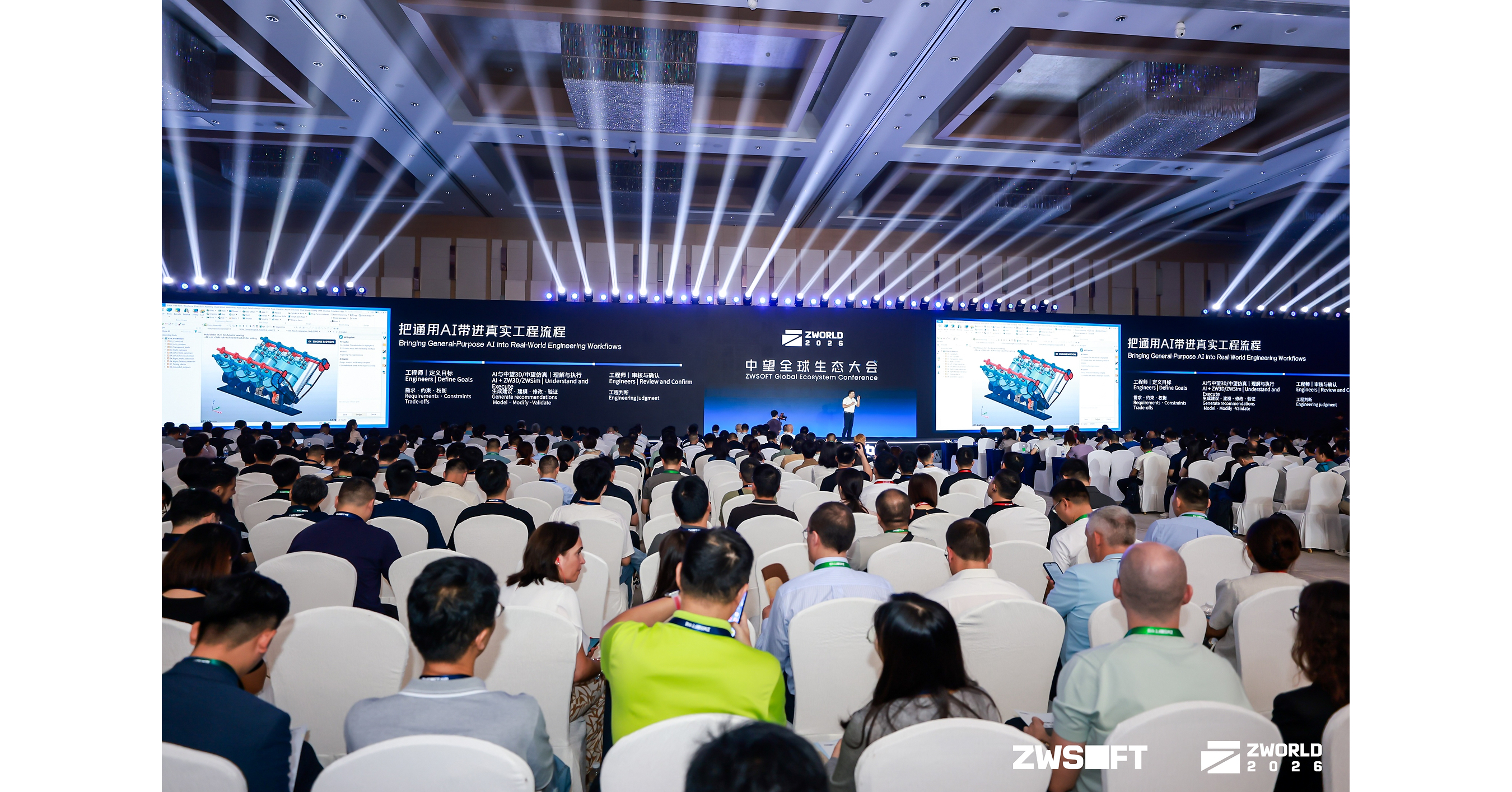
ZWSOFT outlined an AI-led expansion of its CAD, AEC and manufacturing software ecosystem at ZWorld 2026, including AI developments for ZW3D, ZWCAD and its CAx AI Agent Platform alongside a Tencent Cloud partnership. In a ZTE fixture-design test, AI reduced complex 3D model creation from roughly six hours to about 70 minutes including engineering review, a nearly 6x efficiency improvement; drawing generation fell from 1.8 hours to within 30 minutes. The company also highlighted cloud/BIM collaboration and next-generation ZW3D architecture, but the announcement provided no financial guidance or revenue impact.
Analysis
This is not a near-term public-markets catalyst: ZWSOFT is not an obvious listed U.S. equity proxy, and the disclosed productivity examples are vendor-validated pilot results rather than evidence of recurring revenue, pricing power, or production-scale adoption. The relevant competitive implication is that low-cost CAD vendors are attempting to shift the purchase decision from perpetual-license price toward workflow automation and cloud collaboration. That raises the bar for Autodesk (ADSK), Dassault Systèmes (DSY.PA), Siemens (SIEGY), and PTC (PTC) to demonstrate that their installed-base, data-management, and vertical-workflow advantages translate into measurable AI ROI.
Near term, the announcement is more likely to reinforce AI-feature expectations across engineering software than alter estimates. The 1-3 month read-through is strongest for ADSK and PTC: if enterprise customers validate material design-cycle compression, they may accept higher subscription ARPU and expand seats into adjacent users; if AI merely reduces billable engineering hours without lowering implementation burden, procurement could instead intensify price competition. A six- to eighteen-month risk is Chinese vendors using AI-enabled interoperability and local cloud partnerships to gain share in price-sensitive AEC and manufacturing markets, pressuring international vendors' emerging-market growth and reseller economics.
Contrarian view: AI automation is not automatically margin accretive for software suppliers. Engineering customers require traceability, version control, liability protection, and review workflows; those requirements favor incumbents with PLM/PDM integration and validated partner ecosystems, but also lengthen sales cycles and increase support costs. The investable trigger is independently reported enterprise conversion, net revenue retention, or attach-rate improvement—not conference demonstrations or claimed time savings.
AllMind Terminal
AI-powered research, real-time alerts, and portfolio analytics for institutional investors.
Request TrialMarket Sentiment
Overall Sentiment
moderately positive
Sentiment Score
0.42
Key Decisions for Investors
- No immediate directional trade from this release; maintain an alert for ADSK, PTC, DSY.PA and SIEGY quarterly commentary on AI attach rates, cloud conversion, and emerging-market pricing through the next two earnings cycles.
- If ADSK trades down more than 10% on concerns that lower-cost Asian CAD vendors are commoditizing core drafting, evaluate a 6-12 month long: Autodesk's BIM, construction-data, and installed-base workflow integration should be more defensible than standalone CAD. Falsify on sustained billings deceleration or margin guidance cuts tied to pricing.
- Prefer a 6-12 month relative-value expression long PTC / short a broad design-software basket only if PTC reports measurable AI-led PLM/CAD expansion and stable ARR retention. PTC's differentiated exposure is in connected product data and industrial workflow orchestration, where governance needs make substitution harder.
- Avoid treating this as a short catalyst for ADSK or PTC absent evidence of tender losses, reseller channel disruption, or a meaningful pricing gap in multinational accounts. Watch Chinese AEC/manufacturing contract wins and third-party interoperability benchmarks as the first falsification signals for incumbent resilience.
More News
- All Iranian airlines to be 'shut down' from Wednesday, Bessent tells CNBC
- Taiwan benchmark Taiex rises to record intraday high as tech stocks advance
- AMD joins the $1 trillion club as chip rally surges - our AI Strategy saw it early
- Jamie Dimon says hyperscaler AI spending could hit $1 trillion next year
- Factbox-Key issues for this week’s Trump-Xi summit in Washington
- 20 countries propose global oversight body to manage AI dangers
From AllMind Research
- Anthropic IPO Preview: Valuation, Timing, and What to Watch
- Shein After the IPO: Venue, Valuation, and What Must Be Proved
- What AI Research Tools Should a Small Hedge Fund Buy First?
- Stop Treating AI Like a Chatbot: What Are Agents, SubAgents, MCP, and Skills, and How Do They Actually Work?
- Earnings-Triggered Research Automations: A Control Guide