
Envision Energy získala certifikát TÜV SÜD pre riadiaci systém veterných elektrární, čím posilňuje dlhodobú odolnosť budúcich energetických systémov
Source: PR Newswire
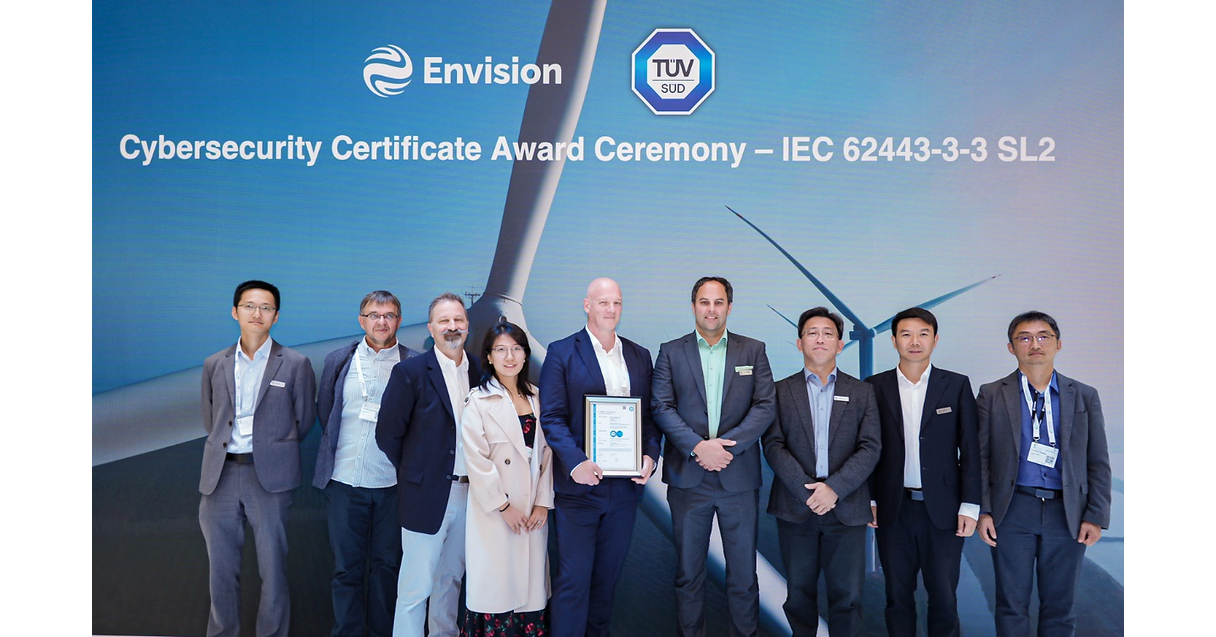
Envision Energy received TÜV SÜD certification under IEC 62443-3-3 Security Level 2 (SL2) for its wind-power-plant control system, covering SCADA, PPC, PLC and industrial network devices. The independent certification extends Envision’s verified cybersecurity coverage from component-level controls to the full wind-farm system, supporting compliance and customer confidence in European and international markets. The announcement is strategically positive for Envision’s renewable-energy technology positioning but provides no financial guidance or quantified commercial impact.
Analysis
This is not a standalone valuation catalyst; it is a procurement-enablement signal. European wind tenders and utility RFPs are increasingly embedding operational-technology cybersecurity requirements, so independently validated system-level controls can reduce bid friction, shorten customer due diligence, and lower the probability that cybersecurity becomes a project-finance or grid-connection delay. The benefit is most relevant over 6-18 months and only converts into economics if Envision wins incremental European orders or commands lower warranty/insurance reserves.
The second-order implication is less favorable for wind OEMs and control-system vendors with fragmented legacy fleets. Vestas (VWS.CO) and Siemens Energy (ENR.DE) have greater installed-base exposure and can monetize retrofit, monitoring, and service upgrades, but also face higher remediation costs and potentially greater liability after an OT-security incident. Cybersecurity vendors with industrial control-system exposure—Palo Alto Networks (PANW), Fortinet (FTNT), and Claroty/private peers—benefit structurally as compliance shifts from component certification toward continuous monitoring, segmentation, patching, and incident response.
Consensus may overestimate the immediate competitive impact: SL2 is meaningful for standardization but not a durable moat, because major OEMs can obtain comparable certification and buyers still prioritize levelized cost, turbine availability, financing bankability, and local-service capacity. The key near-term catalyst is not further certification, but evidence that EU cyber rules translate into tender disqualifications, explicit scoring advantages, or higher service attach rates. A material cyber event at a wind or grid operator would accelerate this spending cycle within days; absent that, adoption is likely budgeted gradually through multi-year fleet upgrades.
AllMind Terminal
AI-powered research, real-time alerts, and portfolio analytics for institutional investors.
Request TrialMarket Sentiment
Overall Sentiment
mildly positive
Sentiment Score
0.32
Key Decisions for Investors
- No directional trade on this announcement alone; Envision is not a readily investable public equity and the claimed commercial impact lacks disclosed order, pricing, or backlog data.
- Watch VWS.CO and ENR.DE quarterly disclosures for cybersecurity-related service bookings, retrofit backlog, warranty provisions, and European tender win rates over the next 1-3 quarters. Upgrade the theme only if management identifies compliance-driven service revenue or competitors cite qualification delays.
- For a liquid structural expression, maintain a small 6-18 month long PANW versus short ICLN basket only after confirmation that EU utility/renewable operators are increasing OT-security budgets; PANW has a clearer recurring-software capture mechanism while broad clean-energy ETFs do not directly monetize compliance spend.
- Falsifier for the cyber-spend thesis: European tender documents continue treating IEC 62443 equivalency as non-scored compliance, with no increase in OEM service attach rates or security capex commentary by the next two reporting cycles.
More News
- Anthropic CEO Amodei to have dinner with Trump at White House
- Mike Waltz: US offered to sell Iran uranium for civilian programme
- Debt-hungry AI companies face increased risk as bond yields spike
- Yemen government forces widen attacks against Houthis: What we know
- Can Iran shift trade north to Caspian Sea as war impairs Strait of Hormuz?
- Healey pledges “new age of industrialisation” as Government backs British shipbuilding