
Micron: The Memory Peak Is Still Ahead
Source: seekingalpha.com
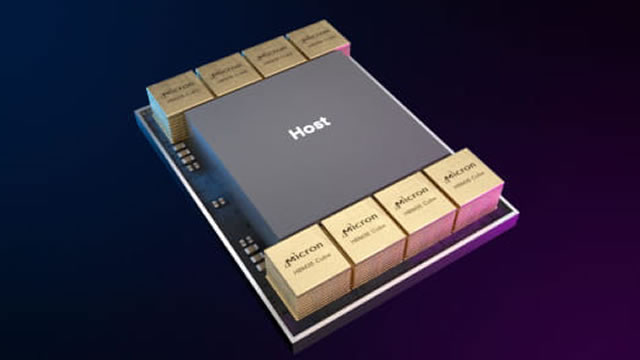
Micron reported $54.2 billion in revenue, 87% gross margin and $33.2 billion in Q4 adjusted free cash flow. Although Q1 gross-margin guidance declines to 86.25%, management expects it to be FY2027's profitability floor. More than 75% of FY2027 shipments are already committed, and 26 strategic agreements provide revenue visibility through 2030.
Analysis
The key investable issue is not the headline profitability level but whether Micron can convert contracted volume into durable pricing power as customers qualify second sources. If tight HBM and server-DRAM supply persists, MU’s incremental revenue should carry unusually high operating leverage; the larger second-order beneficiary is NAND/nearline storage pricing, supporting WDC and STX as hyperscaler capex broadens beyond accelerator memory. Conversely, a concentrated set of strategic agreements can create a sharp revenue-air-pocket risk if one or two cloud customers defer AI infrastructure deployments.
The stated margin and free-cash-flow figures are sufficiently outside normal memory-industry ranges that they require confirmation against SEC filings, accounting definitions, and whether they represent annualized, cumulative, or non-GAAP measures. Until verified, the market should not capitalize them at face value; an eventual clarification could drive a violent reversal in a stock where expectations are already likely elevated. Over the next 1-3 months, the relevant catalyst is not shipment commitments but evidence that contract pricing, HBM yields, and capex discipline support earnings estimates beyond the current fiscal year.
Consensus may be underestimating the structural value of longer-duration supply commitments, which reduce the traditional memory-cycle downside if they include enforceable minimum-volume and price provisions. But it may also be overestimating their protection: commitments without take-or-pay terms do not eliminate customer inventory corrections, while aggressive industry capacity additions can compress pricing with a 6-18 month lag. The thesis is falsified by sequential DRAM/NAND price declines, lower HBM bit shipments or yield commentary, customer inventory growth, or FY2028 capex plans that imply materially faster supply growth.
AllMind Terminal
AI-powered research, real-time alerts, and portfolio analytics for institutional investors.
Request TrialMarket Sentiment
Overall Sentiment
strongly positive
Sentiment Score
0.72
Ticker Sentiment
Key Decisions for Investors
- Do not add directional MU exposure solely on the reported metrics until the next 10-Q/earnings materials reconcile revenue, gross-margin, and adjusted-FCF definitions; treat this as a verification alert rather than a trade signal.
- If filings validate sustained high-margin contracted economics, initiate a 3-6 month long MU / short SOXX pair to isolate company-specific estimate revisions from broader AI-semiconductor beta; target 10-15% relative upside, with a 5-7% relative-stop if HBM pricing or gross-margin guidance weakens.
- For a broader AI-memory-supply thesis, favor a 6-12 month basket long MU, WDC, and STX rather than MU alone: WDC/STX offer catch-up exposure if hyperscaler spending migrates from accelerator build-outs to storage and data-lake capacity.
- Trim or hedge MU into any material guide-up unless management discloses the contractual protections behind the committed shipment base; buy 3-6 month downside puts only if implied volatility remains below the expected post-earnings move, with invalidation on confirmed take-or-pay agreements and rising spot-memory pricing.
More News
- How Nvidia, Micron and a surprising jobs report drove last week's stock action
- Micron, Snowflake Lead Techs Near Buy Points. Two Consumer Plays Also Are Stocks To Watch.
- Micron Just Extended Its Forecast for the AI Build-Out to 2031. Its Stock Is Bound to Defy History.
- The Memory Boom Helped Micron Deliver a Record Year. Here’s Where the Stock Will Be in 3 Years
- Micron: The Memory Equity Cycle Is At Its Zenith
- 3 No-Brainer Stocks to Buy If Data Center Expenditures Hit $3 Trillion by 2030