
Pharmaceutical Logistics Market to Reach USD 194.0 Billion by 2034 at 7.7% CAGR, Driven by Rising Demand for Cold-Chain Logistics and Digital Supply Chain Solutions, Says Maximize Market Research
Source: PR Newswire
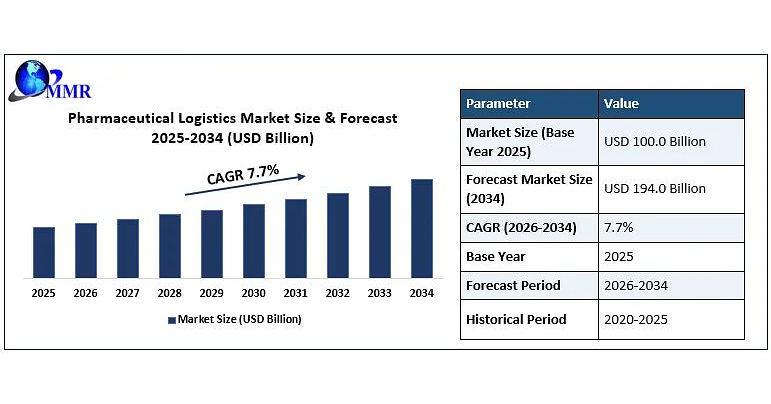
The global pharmaceutical logistics market is projected to grow from $100.0 billion in 2025 to approximately $194.0 billion by 2034, representing a 7.7% CAGR from 2026. Growth is being driven by expanding biologics, vaccines and specialty medicines, which increase demand for temperature-controlled transportation, cold storage and specialized warehousing. IoT monitoring, GPS tracking and digital shipment-visibility tools are supporting supply-chain traceability, while third-party logistics providers expand integrated healthcare logistics services.
Analysis
This is a low-conviction sector datapoint rather than a company-specific catalyst: the forecast is vendor-produced and lacks disclosed methodology, contract awards, pricing data, or utilization evidence. The investable implication is narrower than the headline—cold-chain capacity and validated handling can earn structurally better returns than general parcel or freight, but only where network density prevents capacity additions from eroding yield. DHL Group (DHL) and Kuehne+Nagel (KNIN) are better positioned than FedEx (FDX) to monetize this through dedicated healthcare networks; FDX's healthcare exposure is less likely to move consolidated earnings absent evidence of premium-service mix gains.
Over 1-3 months, the relevant catalyst is not market-growth forecasts but life-sciences revenue growth, healthcare shipment yields, capex, and asset utilization disclosed in quarterly results. A surge in biologics and advanced-therapy volumes could improve warehouse absorption and pricing for specialist providers, while broad freight softness would leave large integrated carriers with excess fixed-cost capacity and limit margin conversion. Cencora (COR), McKesson (MCK), and Cardinal Health (CAH) are indirect beneficiaries only if specialty-drug volumes rise faster than distribution operating costs; their economics are more dependent on drug mix, manufacturer contracts, and working capital than on transportation demand.
The consensus risk is that digital traceability is increasingly table stakes, not a standalone profit pool. Sensors, tracking software, and automation may reduce claims and spoilage, but most of the value can be competed away unless embedded in regulatory-validated workflows; this argues against extrapolating logistics growth into broad technology multiple expansion. The thesis is falsified if healthcare logistics revenue grows but yield, utilization, or segment margins fail to improve, signaling commoditization and cold-storage overbuild.
For the 6-18 month horizon, cross-border specialty-drug production could favor asset-light global forwarders with regulatory expertise over domestic distributors, particularly in Asia-Pacific lanes. Conversely, reimbursement pressure, biosimilar-led price deflation, or a reduction in clinical-trial activity would slow the highest-margin temperature-controlled volumes before headline pharmaceutical spending weakens.
AllMind Terminal
AI-powered research, real-time alerts, and portfolio analytics for institutional investors.
Request TrialMarket Sentiment
Overall Sentiment
moderately positive
Sentiment Score
0.42
Ticker Sentiment
Key Decisions for Investors
- No immediate directional trade on this release; treat it as a watch item until DHL, KNIN, or FDX reports healthcare-specific revenue, yield, and cold-chain capacity utilization. A generic market forecast is insufficient to revise earnings estimates.
- For a 6-12 month relative-value expression, screen for long DHL or KNIN versus short FDX only after two consecutive quarters of superior healthcare/logistics yield growth and stable freight margins. The pair targets differentiated specialty-network economics while reducing broad transport-cycle beta; exit if the yield gap fails to widen or FDX's cost actions drive a material consolidated-margin surprise.
- Maintain COR/MCK/CAH as specialty-pharma volume monitors rather than logistics beneficiaries. Add only if management guides to specialty distribution growth above operating-expense growth and working-capital turns remain stable; deterioration in gross-profit rate or cash conversion would invalidate the indirect benefit.
- Set an earnings alert for healthcare logistics capex and capacity additions at DHL and KNIN. Rising capex without matching utilization or pricing would indicate cold-chain overcapacity and argues against multiple expansion despite secular volume growth.
More News
- Morgan Stanley's top picks list trounced the S&P 500 the last 12 months. Here are the new members
- Taiwan benchmark Taiex rises to record intraday high as tech stocks advance
- AMD joins the $1 trillion club as chip rally surges - our AI Strategy saw it early
- Latest Oil Market News and Analysis for Sept. 22
- Oil Settles Near $100 as Hormuz Flows Stunt Rally
- 20 countries propose global oversight body to manage AI dangers
From AllMind Research
- Anthropic IPO Preview: Valuation, Timing, and What to Watch
- Shein After the IPO: Venue, Valuation, and What Must Be Proved
- What AI Research Tools Should a Small Hedge Fund Buy First?
- Weekly Update: Sector Analysis, Improvements on Research Data, and Performance Enhancements
- Choosing an AI Copilot for Equity Research