
Richmond Fed’s Tom Barkin on the Surprisingly Resilient Real Economy
Source: Bloomberg
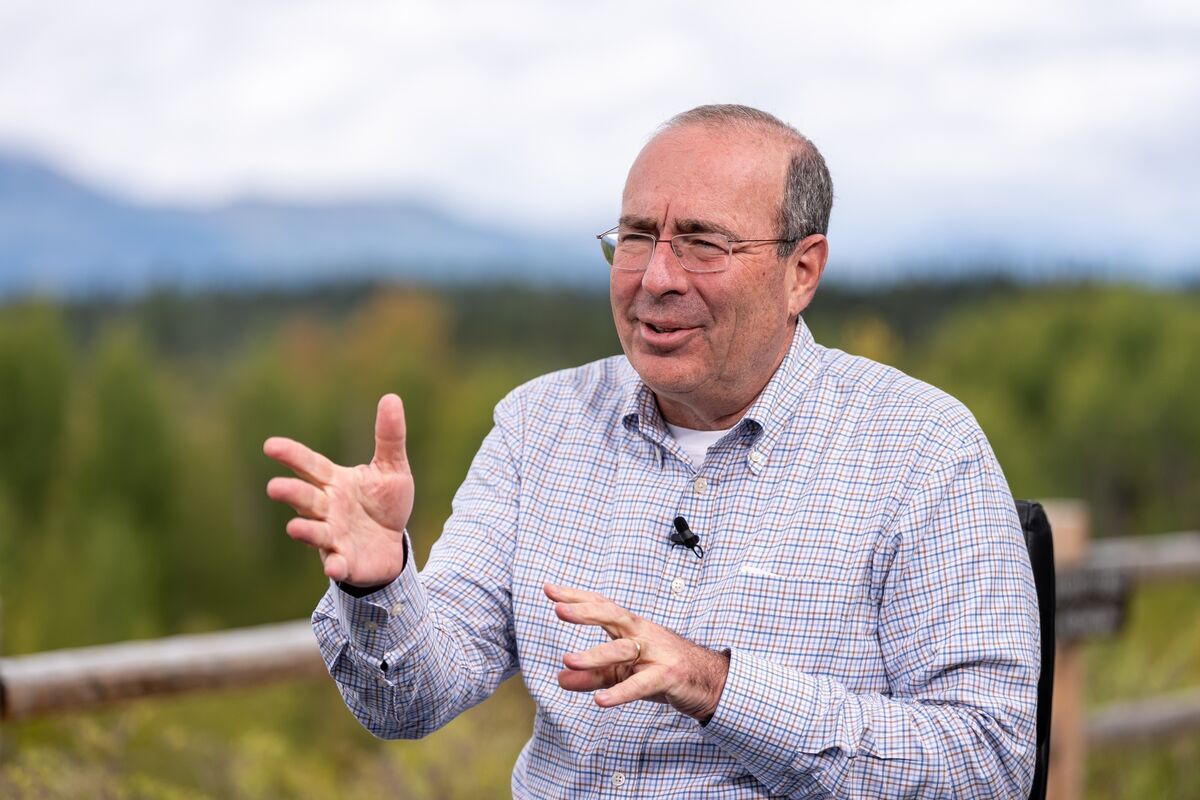
Market focus remains on Fed Chair Kevin Warsh’s Jackson Hole message, where hawkish, inflation-focused hints have led traders to expect a rate hike, despite unclear forward guidance. Richmond Fed President Tom Barkin highlights the real economy’s surprising resilience while discussing how Fed communication (including the usefulness of the dot plot) may be evolving. The segment also touches on business behavior around tariff refund checks and emerging local impacts from AI, but no specific policy action or rate change is announced.
Analysis
This is more about duration than demand: a hawkish Fed on top of a still-resilient economy pressures valuation multiples first, earnings later. That favors the highest-quality cash generators and punishes the weakest self-funding stories; among the names here, SPOT is the cleanest short candidate because its growth case depends on sustained consumer and advertiser willingness to spend, which tends to soften fastest when real yields stay elevated.
GOOGL is less exposed at the headline level because the core ad franchise can absorb modest tightening, but the second-order risk is capex discipline. If AI/data-center investment keeps rising while local permitting, power, and political friction lengthen payback periods, the market can start discounting lower marginal returns on incremental AI spend even without a near-term revenue miss. That creates a path to FCF multiple compression over 1-3 months if rates back up further.
AAPL is comparatively insulated: its balance sheet and buyback engine make it the least fragile to a higher-for-longer regime. The vulnerability is not a collapse in iPhone demand, but slower repurchases and a more cautious consumer at the margin if financing conditions tighten for several more quarters. Relative to SPOT and the more capex-heavy parts of internet, AAPL is the cleaner defensive expression.
Contrarian view: the market may be overpricing immediate economic damage from one hawkish shift. The bigger tell is whether businesses actually cut hiring, ad budgets, and discretionary capex over the next 1-3 months; absent that, this is mostly a multiple reset, not a fundamentals break. The thesis fails if yields retrace quickly or if upcoming inflation prints force the Fed to sound less restrictive than expected.
AllMind Terminal
AI-powered research, real-time alerts, and portfolio analytics for institutional investors.
Request TrialMarket Sentiment
Overall Sentiment
neutral
Sentiment Score
-0.05
Key Decisions for Investors
- Relative value: long AAPL / short SPOT for 1-3 months. AAPL has stronger balance-sheet support and buyback optionality, while SPOT is more exposed to consumer budget elasticity and ad-cycle sensitivity. Use as a modest-size pair; cover if SPOT outperforms AAPL by >10% or if real yields fall back sharply.
- Hedge duration risk with a small QQQ put spread into any further backup in Treasury yields. Higher-for-longer is a multiple headwind for the entire internet complex; use 2-3 month maturity and structure it as a defined-risk hedge rather than a directional macro bet.
- Trim/add-light on GOOGL until the next capex commentary. If management confirms heavier AI/data-center spend without a commensurate guide to monetization, the stock can underperform on FCF revisions even if ad growth holds; that is a 1-2 quarter catalyst, not a same-day trade.
- Do not chase a broad long in AAPL/GOOGL on this headline alone. Wait for either a softer CPI/PCE path or a clear yield reversal; otherwise the setup is better for relative-value and hedged exposure than outright beta.
More News
- Suddenly, Wall Street is worried that the U.S. economy is more ‘vulnerable’ than it looks
- Giant Taiwanese chipmaker TSMC confirms it’s in talks with Elon Musk to join ‘Terafab’ complex in Texas: ‘The AI market continues to be very strong’
- TSMC chip capacity is ‘fierce’ battleground for AI customers, amid record quarter
- Apple and Meta team up to make Muse AI model run on Mac computers
- Nvidia’s European spending spree is about much more than Europe
- Here's our monthly update on our 32 stocks, including 2 more names to buy
From AllMind Research
- Anthropic IPO Preview: Valuation, Timing, and What to Watch
- Shein After the IPO: Venue, Valuation, and What Must Be Proved
- What AI Research Tools Should a Small Hedge Fund Buy First?
- AI for Sell-Side Models, Estimates, and Internal Data
- How to Write an Investment Memo with AI: A Decision-Record Template