
Target's $5 Billion Capex Plan Puts Stores and Technology in Focus
Source: zacks.com
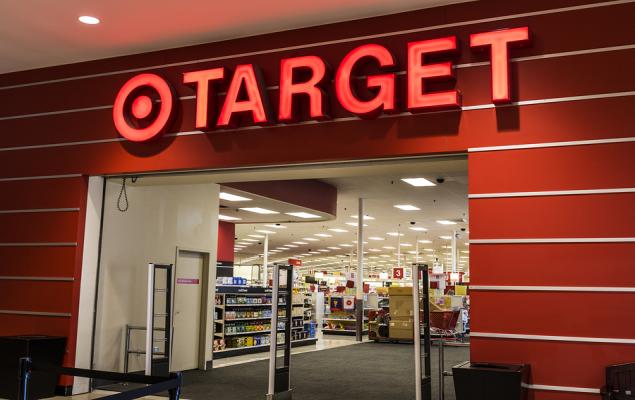
Target expects approximately $5 billion in fiscal 2026 capital expenditures, after spending about $2.4 billion in the first half—nearly 30% more than a year earlier—on stores, remodels, technology and fulfillment capabilities. It opened 24 stores in the first half, had more than 100 remodels underway, and fulfilled nearly 30% more same-day and next-day units in Q2 year over year; management also reported external AI-platform traffic growing more than 3.5 times the industry rate. Target shares gained 23.7% over three months, while consensus estimates project next-fiscal-year sales growth of 3.1% but EPS decline of 9.5%.
Analysis
The investment case hinges on returns from the asset base, not the headline spend. Store-based fulfillment can improve speed and inventory availability, but it also raises the execution bar: if incremental volume does not lift order economics, reduce markdowns, or improve comparable sales, higher depreciation and operating complexity can pressure margins. Watch fulfillment cost per unit, in-stock rates, comparable sales, and operating margin—not unit growth alone.
For TGT, the setup is asymmetric near term: the recent share rally and valuation above its own historical median leave less room for capex optimism, while the supplied estimates point to weaker EPS next year despite sales growth. That is a reason to demand evidence of productivity before adding exposure, not proof the investment will fail. WMT’s parallel spending may raise the competitive standard for delivery speed and availability; scale could make execution harder for smaller peers, including DG, but the article provides no comparative return data. Google Gemini exposure is not yet an earnings thesis: AI-referred traffic may be low-base, and third-party discovery platforms could capture customer data or influence rather than create durable retailer-owned economics.
Over 1–3 months, earnings commentary on margins, inventory and fulfillment economics is the key catalyst. Over 6–18 months, the thesis turns on capex returns and whether stores support profitable omnichannel demand. Falsification for a cautious TGT view: improving comparable sales and margins alongside better fulfillment economics, without further earnings-estimate cuts. Conversely, continued margin deterioration or weaker guidance would validate it.
AllMind Terminal
AI-powered research, real-time alerts, and portfolio analytics for institutional investors.
Request TrialMarket Sentiment
Overall Sentiment
mildly positive
Sentiment Score
0.25
Ticker Sentiment
Key Decisions for Investors
- Keep TGT exposure neutral-to-underweight after the rally; do not capitalize management’s technology and remodel claims as proven earnings improvement. Reassess after the next results using comparable sales, operating margin, and fulfillment cost/productivity disclosures.
- For a relative-value expression, consider a modest TGT-underweight versus WMT rather than an outright short: the thesis is relative execution risk, not a claim that WMT’s higher spending guarantees superior returns. Exit if TGT demonstrates sustained margin and inventory improvement or WMT’s investment returns weaken.
- Treat AI-platform traffic as an alert, not a catalyst trade. Verify its revenue contribution, conversion, customer-acquisition economics, and retail-media monetization before assigning material value to TGT’s partnerships or Alphabet’s Gemini exposure.
- Monitor DG for evidence that store and distribution investment improves same-store sales and operating efficiency; absent that evidence, the planned real-estate activity alone is not a buy signal.
More News
- Security researcher claims to they found KVM guest-host escape flaw
- SpaceX stock climbs to highest since June, returning Musk to trillionaire status
- Security researcher claims they found KVM guest-host escape flaw
- How Christina Zhu turned Sam’s Club into Walmart’s unlikely growth engine in China
- Wall Street rewards Microsoft's AI pivot. A longtime skeptic says it's just the beginning
- Nvidia-backed Reflection AI unveils its first open model, Beam. Could it be America’s best chance to compete with China?